Five States delay full roll out of Comesa-EAC-SADC bloc

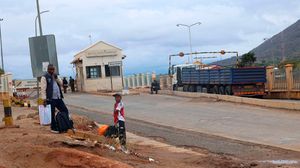
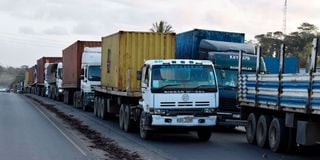
 Trucks jam the Bonje section as they leave Mombasa to deliver cargo to Nairobi and beyond. 

Photo credit: File | Nation Media Group

Five members of the Common Market for Eastern and Southern Africa (Comesa) are holding back the full rollout of a mega free-trade area (FTA) stretching across 26 African countries from Cape Town to Cairo, it has been revealed.

The mega trade bloc comprising Comesa, the East African Community (EAC), and the Southern African Development Community (SADC) was formed with the aim of harmonising trade between some 26 countries.
The mega trade bloc is, however, yet to be fully implemented, with leaders who attended the just concluded 24th Comesa Heads of State Summit in Nairobi calling on the Democratic Republic of Congo, Ethiopia, Eritrea, Eswatini, and Somalia to fully join the Tripartite to avoid further delaying its full operation.

“The Summit urged member states that have not yet signed and ratified the TFTA to do so as soon as possible to enable the three RECs to embark on an integrated development planning and resource mobilisation,” Chileshe Mpundu Kapwepwe, the Secretary-General of Comesa, in a communique.

“The summit noted the efforts being undertaken by the Secretariat to engage with the five Member States that are not participating or participate only partially in the Comesa FTA and urged them to expeditiously and fully join the FTA,” she added.

The Comesa-EAC-SADC Tripartite TFTA agreement came into force in July 2024 following the full attainment of the required threshold when Malawi, Angola, and Lesotho ratified the tripartite.

The other countries that have ratified the agreement include Botswana, Burundi, Egypt, Eswatini, Kenya, Namibia, Rwanda, Uganda, South Africa, and Zambia.

Within the EAC, Kenya, Rwanda, and Uganda have ratified the tripartite, while the Democratic Republic of Congo and Tanzania have yet to.
Even though Eswatini has ratified the TFTA, its trading is still minimal under the Tripartite.

“Eswatini is both a member of Comesa and the Southern African Customs Union (SACU). In SACU, Eswatini is in a customs union, a factor that makes it tricky to operate in a full TFTA,” said Dr Chris Onyango, the Director of Trade and Customs in Comesa.

“The other countries, even though they are not full members of the TFTA, have reduced tariffs. When you have reduced tariffs under 20 percent, you trade under a reciprocal basis.”

Currently, SACU and EAC, both of which are Customs Unions, have exchanged tariff offers and concluded the first phase of negotiations with indications that, on average, 90 percent of their tariff books would be liberalised immediately at the start of trading under the Agreement.

The 24th Comesa Heads of State summit now wants the five to move with speed and fully join to achieve its objective, which includes enhancing market access, harmonising and coordinating policies that spur trade within the tripartite.

“We encourage Comesa Member States to accelerate the domestication and implementation of instruments that have been adopted by the Tripartite TFA Council of Ministers, including the harmonised road transport policies, laws, regulations, systems and standards which govern drivers, loads, vehicles and road infrastructure,” said Ms Kapwepwe.

“We emphasised the advantages of close collaboration between the TFTA structures and the AfCFTA Secretariat to upscale and build upon the instruments already developed by the Tripartite Member/Partner States at the continental level.”

The Comesa-EAC-SADC TFTA was established to promote economic and social development of the region by creating a large single market with free movement of goods and services to promote intra-regional trade.

Among its objectives is to enhance the regional and continental integration processes.

Building a strong TFTA will facilitate the effective reduction of existing obstacles to intra-regional trade and investments. It will also be promoting value chain and industrial production and physical connectivity through infrastructure development, the three pillars necessary for sustainable economic growth and development.

The Comesa - EAC - SADC TFTA, which was signed in 2015, comprises 29 countries representing 53 percent of the African Union Membership, more than 60 percent of continental GDP ($1.88 trillion; 2019), and a combined population of 800 million.

Under the market integration pillar, the Tripartite has a more ambitious tariff liberalisation schedule compared to the AfCFTA.

The resolution to have the five countries join was made during the 24th Comesa Heads of State and Government Summit, held on 9 October 2025 in Nairobi, Kenya.

The Summit was held under the theme: ‘Leveraging digitalization to deepen Regional Value Chains for Sustainable and Inclusive Growth’.
During the summit, President William Ruto of Kenya took over as Chair of the Comesa Authority from Burundi’s President Evariste Ndayishimiye.

Zimbabwe’s President Emmerson Mnangagwa becomes the Vice Chair of the Comesa Authority.

Heads of State from Burundi, Comoros, Ethiopia, Kenya, and Zimbabwe were joined by Prime Ministers, Vice Presidents, and other leaders from the Member States, the African Union, and cooperating partners to discuss regional integration programmes being implemented in the Comesa region.

Presidents Ndayishimiye, the outgoing COMESA chair, Azali Assoumani (Comoros), Emmerson Mnangagwa (Zimbabwe), and Prime Ministers Ahmed Abiy (Ethiopia), Russell Mmiso Dlamini (Eswatini), and Mustafa Madbouly (Egypt) were present.

Others were African Union Commission Chair Mahmoud Youssouf and Secretary-General of the African Continental Free Trade Area Wamkele Mene.

The summit ended with a call for concerted efforts to deepen intra-regional trade among the 21 Member States.

The Summit discussed various issues centering on regional integration, peace and security, and efforts towards the digitalisation of various trade facilitation instruments.

Member States were urged to adopt and implement these instruments to increase efficiency and reduce the costs of trade, including the Electronic Certificate of Origin, Electronic Cargo Tracking System, Online Non-Tariff Barriers System, and National Single Windows, among other issues.

PAYE Tax Calculator

Note: The results are not exact but very close to the actual.