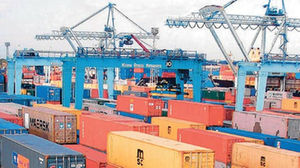
The Federal Reserve of the US is today set to cut interest rates for the first time this year, easing Kenyans’ burden of servicing nearly Sh1 trillion loans from the standard gauge railway (SGR) and syndicated debt pegged on America’s global benchmark lending rate.
The 12-member Federal Open Market Committee (FOMC) of America’s central bank, under pressure from President Donald Trump to lower borrowing costs, is seen cutting the benchmark interest rates by about 0.25 percentage points.
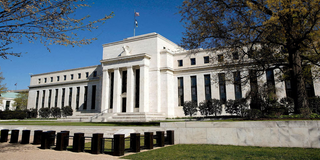
The Fed funds rate, set by the FOMC, is the interest rate at which American banks borrow and lend to one another overnight.
The movements in the key lending rate affect all other rates, including the Secured Overnight Financing Rate (SOFR) — the global benchmark rate that Chinese State-owned lenders and multinational banks use in calculating interest on Kenya’s debt.
Kenya’s debt stock influenced by SOFR is largely the SGR loans and syndicated loans arranged by multinational lenders such as Citibank, Rand Merchant Bank and Standard Bank, which are cumulatively estimated at Sh982 billion.
Treasury Cabinet Secretary John Mbadi this year singled out repayments towards the $5.08 billion (about Sh657 billion) SGR and Sh325 billion syndicated loans as a major drain on the Exchequer.
“The biggest problem … [is on] Chinese loans which we don’t refinance— we pay interest and principal when they fall due. But the syndicated loans are the most expensive, with interest of between 12 and 14 percent,” Mbadi told lawmakers earlier.
The looming first Fed funds rate cut since December 2024, from current level of between 4.25 percent and 4.50 percent, will come as a respite for Treasury officials at a time debt servicing costs already consume the lion’s share of the Sh4.29 trillion budget.
The lower Fed funds rate would ease the SOFR rate, thereby reducing the projected debt servicing cost burden for SGR at Sh129 billion (paid in July and January) and syndicated loans at $646 million (Sh83.49 billion) to be wired this month and October.
The SGR loans, secured under the previous administration of Uhuru Kenyatta, were dollar-denominated and with two floating interest rates, which were reportedly set at 3.6 or 3.0 percent above the average London Interbank Offered Rate (Libor) — a global benchmark that was retired in June 2023 and replaced by SOFR.
The SOFR benchmark interest rate stood at 4.51 percent on Monday from compared with 1.71 percent Libor rate in January 2020 when Kenya started repaying the SGR loans.
A fall in SOFR in line with a lower Fed funds rate will thus give respite to Mr Mbadi who is battling a cash crunch due to debt repayments to Chinese lenders and commercial banks which arranged Kenya’s syndicated loans, as well as interest payments to local lenders to government who hold Sh6.43 trillion worth of Treasury bills and bonds.
Eric Musau, executive director for research at Standard Investment Bank, said while markets expect the Fed to embark on rate cutting, there is lingering uncertainty because the US economy has traditionally been resilient.
“There has been little consensus among policymakers to cut rates [aggressively],” Mr Musau told the Business Daily. “But if the cut comes, it will provide some relief to Kenya’s SOFR-linked loans.”
Nearly all 107 respondents polled by Reuters last week put their bet on FOMC lowering the Fed funds rate, arguing a softening US job market outweighs inflation concerns that have kept interest rates elevated.
Kenya’s debt servicing expenses have been climbing in recent years to become the largest single line in the budget, leaving little cash for critical public investments such as education, health and infrastructure.
Spending on debt repayments is projected at Sh1.9 trillion this fiscal year, more than 44 percent of the Sh4.29 trillion budget.
Mr Mbadi says while the domestic debts account for 69.16 percent of estimated total debt servicing expenses, the biggest headache is coming from foreign debt costs, which make up less than a third (30.84 percent) of the burden, or Sh586.46 billion.
“Let’s not talk about the multilateral loans and I want to also leave aside domestic loans because we refinance these and our rates are even cheaper —so we are taking cheaper loans to retire more expensive loans,” Mr Mbadi said earlier. “Kenya does not have a problem with repaying its debts, but we have a problem of maturing debts.”
Even as it eyes relief from the expected Fed funds rate cut, the Treasury has also been negotiating with Beijing to convert the SGR loan from dollars to Chinese renminbi (RMB), which will replace the floating SOFR-based rate with a fixed Chinese currency rate.
Mr Mbadi said in August savings could be significant — slashing the cost from more than six percent in dollar terms to about three percent if denominated in RMB.
“This is a very sensitive process,” he told the Business Daily. “When the loan is in US dollars, it is SOFR plus a markup. In renminbi, it is a fixed rate that is almost half. That is a huge saving. But we are still discussing and agreeing on the details.”
Analysts, however, caution that shifting from dollar to RMB debt comes with trade-offs. Mr Musau said while lower Chinese rates are attractive, Kenya would introduce new currency risks.
“It means Kenya has to hold a broader basket of currencies -- taking into consideration the increased debt in renminbi terms. The negotiated rate is also critical and whether any other terms are changed during this process,” he said.
Churchill Ogutu, an economist at IC Group, echoed this sentiment. He noted that Kenya was trying to diversify from the dollar which accounts for more than 60 percent of debt stock, but the dollar’s dominance as a reserve and trade currency means Nairobi might still need to maintain underlying swap mechanisms.
“Unlike the dollar loans which are variable-rate, the renminbi option would be fixed interest rate payments,” Mr Ogutu said. “That is what gives the Treasury confidence that service costs could fall by half.”
China’s central bank has maintained historically low interest rates to stimulate growth. Its seven-day reverse repo rate, a key tool which influences money supply, has stood at 1.4 percent since May.
By comparison, the US Fed funds target range is at 4.25 to 4.5 percent, among the highest in the world’s major economies.
It is the high rates in the US which sparked wrangling between Mr Trump and the central bank, and its chairman Jerome Powell, whom he has accused of ignoring his call for lower interest rates.