Consumers are staring at elevated prices in the coming months after factory costs rose to levels last seen in March last year, bucking a sustained falling trend observed for four consecutive quarters starting in June 2024.
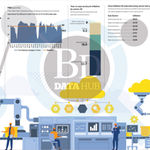
New data from the Kenya National Bureau of Statistics (KNBS) shows that the Producer Price Index (PPI) – which tracks the movement of production costs – stood at 138.16 at the close of June 2025, up from 137.95 at a corresponding time last year.

This resulted in a 0.15 percent year-on-year producer inflation rate, reversing a full-year deflation trend that stood as low as -5.67 percent in March this year.
During the period under review (quarter to June 2025), electricity, gas and steam supply costs rose 1.26 percent compared to a similar quarter last year, while manufacturing expenses grew by a marginal 0.31 percent.
Producer prices in the mining sector, on the other hand, declined 7.55 percent, while water supply, sewerage and waste management costs dropped 2.69 percent.
“On year-on-year change, the manufacture of motor vehicles registered the most significant increase in prices at 25.23 per cent, whereas the mining of metal ores recorded the largest decline, with prices falling by 14.73 percent,” wrote KNBS in a latest release.
Compared to the quarter to March 2025, however, electricity and gas costs rose 4.36 percent while manufacturing budgets ballooned 1.03 percent, as overall producer prices rose 1.13 percent.
An elevated PPI translates to higher consumer prices as the manufacturers seek to recoup the additional cost incurred in production.
The Consumer Price Index, which measures the actual change of retail prices, climbed to a three-month high of 4.1 percent last month, with key pressure coming from the prices of food and non-alcoholic beverages, transport, housing, and utilities.
The rate had remained unchanged for two months in May and June at 3.8 percent as costs of key household essentials, including electricity, cooking gas, and kerosene, dropped.
The country’s consumer inflation rate has remained below the five percent mark since July last year, aided by a stronger shilling and the previously high interest rates signaled by the Central Bank of Kenya (CBK).
The strengthening of the local currency to stabilise at around Sh129 for 11 months now has particularly helped to tame the cost of imported goods.