Jobs at risk as President Ruto spend on projects hits 5-year low

DNSenateNdungu1705wq

National Treasury & Economic Planning Cabinet Secretary Prof Njuguna Ndung'u on May 17, 2023. PHOTO | DENNIS ONSONGO | NMG

Ministerial expenditure on development projects has fallen to a five-year low in the first quarter of this financial year, signalling a slowdown in job opportunities in the public sector.

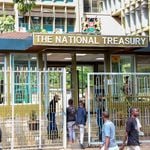
Ministries, departments, and agencies (MDAs) spent Sh31.64 billion in three months ended September, according to official statistics published by Treasury Cabinet Secretary Njuguna Ndung’u.
This means that the William Ruto administration more than halved spend on capital projects compared with a similar period in the prior year when Sh68.06 billion was absorbed amid the transition from the regime of Uhuru Kenyatta.

The absorption of development cash, excluding funding from development partners, was slowest since Sh22.26 billion in the corresponding period in the 2018/19 financial year.

Economists say reduced spending on development projects such as roads, water, power plants, housing, and electricity transmission lines slows down economic activities, hurting the creation of jobs and generation of government revenue, largely taxes.

Cement makers, steel manufacturers, contractors, and the thousands of workers employed in the infrastructure pipeline benefit from public spending and usually feel the pinch of a drop in public expenditure on development.

The drop in absorption of development funds for the first quarter is the second in a row having fallen 16.86 percent last year from Sh81.85 billion in the three months ended September 2021.

This came at a time when the Ruto administration blamed the under-spending of the budget for projects for the last fiscal year ended June 2023 largely on “below the target disbursements for externally funded projects and low revenue collection.

“The government will put in place appropriate measures to increase revenue collection, improve absorption of resources from development partners, and explore alternative financing strategies early in the financial year to ensure the budget is fully funded,” Treasury officials wrote in the draft 2023 Budget Review and Outlook Paper last month.

Development projects were the main casualties of budget revision as the administration sought to realign its expenditure to priority areas in its agenda amid rising debt servicing costs.

As a result, allocation to development projects, including cash from partners, was cut to 27.9 percent of the revised budget, falling below the statutory threshold of 30 percent.

Actual spending for the year through June was 25.2 percent, according to the Treasury.

“In the financial year 2023/24, the allocation for development expenditure is 34.4 percent of ministerial Government expenditure and is projected to remain above the 30 percent threshold over the medium term,” the Treasury says in the BROP.

The Sh31.64 billion spent in the review period represents a measly 6.58 percent of the Sh480.82 billion ministerial development budget for the full year through June 2024.

The Ruto administration under its ambitious Bottom-Up Economic Transformation Agenda (BETA) has prioritised investments in nine value chains: leather, cotton, dairy, edible oils, tea, rice, blue economy, building materials, and natural resources such as minerals and forestry.

Key projects to be undertaken to achieve the target include the construction of dams, improvement of road networks and ports, and laying of an additional national fibre optic network.

“Enhanced digitalisation is expected to improve efficiency and productivity in the economy,” the Treasury states in the budgetary outlook paper.

“In particular, investment in digital superhighway will result in enhanced connectivity and access to broadband services which will lower the cost of doing business, enhance efficiency and create employment opportunity.”

PAYE Tax Calculator

Note: The results are not exact but very close to the actual.