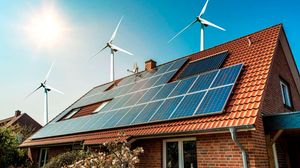
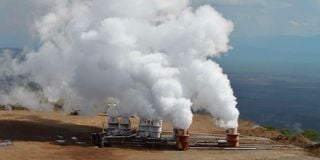
The 300MW Bogoria-Silale geothermal power project is being built to settle a €60 million (Sh8 billion) loan that Kenya owes Germany, marking Nairobi’s first debt-for-climate swap.
Disclosures contained in a report by the African Development Bank (AfDB) show that Germany agreed to forgive the debt on condition that Kenya fully delivers the project meant to supply more clean power to the national grid and light up the local communities.
These special agreements, also known as debt-for-nature swaps, allow a country to restructure its debt, including securing a lower interest rate or longer repayment period, on condition that the borrower uses the proceeds for conservation or green projects.
The model also reallocates a portion of ongoing debt obligations towards investments in climate action, allowing the indebted country to enhance fiscal stability and climate resilience and mobilising critical investments in areas such as renewable energy.
Kenya’s mounting debt servicing obligations have made it increasingly hard to tap fresh loans and pay maturing ones besides crowding out funds needed to finance capital-intensive development projects, notably in the energy and transport sectors. In the deal with Germany, Kenya is required to complete the specific project to qualify for the debt forgiveness.
“The Kenyan government is directly investing the equivalent of 60 million euros over several years in renewable energy projects identified in a bilateral agreement with Germany’s Federal Ministry of Economic Cooperation and Development,” the AfDB disclosures say. “Once the projects have been successfully implemented, an equivalent amount of the debt obligation from Kenya to Germany will be retired.”
It is anticipated that the project and associated grid upgrades will result in generation of renewable energy and more stable access to power for rural households.
The Bogoria-Silale geothermal project involves three wells –Silale, Korosi, and Paka— each with a generation output of 100MW.
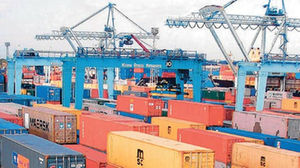
Kenya’s ability to fund capital-intensive projects has been hampered by the huge debt payment obligations, including expensive Chinese loans for the standard gauge railway project.
In the six months to December last year, for example, debt payment gobbled Sh653.5 billion or 60.8 percent of the Sh1.07 trillion that the Kenya Revenue Authority (KRA) collected as taxes in the period.
It is part of Kenya’s plans to tap the vast potential of geothermal power in the Rift Valley area to boost the supply of cheaper power, which will in turn help lower electricity prices.
Geothermal is currently the biggest single source of electricity to the national grid, accounting for 5,074.66 million kilowatt hours (kWh) or 44.08 percent of the 11,510.32 million kWh that was locally generated from January to November last year.
It is also the cheapest, underlining why developing blocks such as the Bogoria-Silale is key to Kenya’s plans to steady the national grid while at the same time lowering electricity prices.
Debt-for-nature or climate swaps financing model has gained traction among developing countries and has been successfully deployed in Seychelles, Belize, and Barbados — relieving the countries of some of the pressure of paying back international loans through nature conservation agreements.
The IMF —one of Kenya’s key financiers— holds that the model offers countries an avenue to deliver high-value projects without triggering a fiscal crisis or sacrificing spending on other development priorities.
Creditors provide debt relief in return for a government commitment to decarbonise the economy, invest in climate-resilient infrastructure, or protect biodiversity.