Ketraco eyes Sh111bn from banks, pension funds

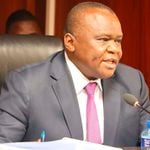
Kenya Electricity Transmission Company (Ketraco) Managing Director John Mativo at Kawi complex, Nairobi on September 16, 2024.

Photo credit: File | Nation Media Group

The Kenya Electricity Transmission Company (Ketraco) has revealed that it is in talks with commercial banks and pension funds, targeting at least Sh6.5 billion annually over the next 17 years as part of a strategy to wean itself from reliance on erratic Exchequer cash.

This means that Ketraco hopes to borrow Sh110.5 billion from banks and pension funds over the period to help tackle funding gaps, which have hindered plans to upgrade and expand the electricity transmission infrastructure.
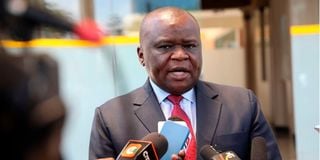
“Kenya’s transmission masterplan has a funding gap of $5 billion (Sh646.1 billion), and Ketraco requires $250 million (Sh32.3 billion) annually for new projects. We estimate that 20 percent of this should easily be done as public-private partnerships (PPPs),” Managing Director John Mativo told the Business Daily.

“I have met players from the Kenya Bankers Association and pension schemes, and they have expressed interest in coming on board and financing some of our sub-stations, and when we look at the numbers, they make sense because they can start investing in transmission infrastructure and get their returns.”

The Ketraco boss said the preliminary talks with commercial banks and pension funds suggest interest in investing in substations, which convert and regulate voltage levels to enable efficient transmission of power from stations to the end user.

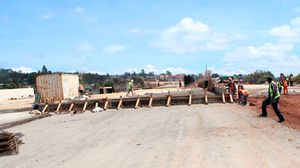
Disclosures by the State Department for Energy show that in 2025 alone, the country is expected to link six new substations onto the national grid at a total cost of $194.8 million (Sh25.2 billion).

According to Ketraco, steps towards unlocking financing for the 132 kilovolts (kV) Sondu sub-station from commercial banks and pension funds are gaining momentum with an anticipated capital injection of $10 million (Sh1.3 billion).

Kenya’s pension funds have been under pressure to diversify away from government securities and unlock investment in different asset classes, including infrastructure. As of December 2024, the fund held assets under management worth Sh2.3 trillion, 53 percent (Sh1.2 trillion) of which was in government securities.

“The model we have been using since Ketraco’s formation in December 2008 has been that the Treasury borrows money from development partners and on-lends the money to Ketraco, which we then use to set up infrastructure,” said Mr Mativo.

“Unfortunately, we are in an environment where the government’s scope for borrowing further is now limited. The good thing is that the Energy Act of 2019 and the PPP Act of 2021 opened space for the private sector to come in and finance some projects.”

According to Ketraco, stable and predictable funding from the private sector will be crucial in meeting the infrastructure needs created by rising energy demand. The country’s peak demand hit a new high of 2,363.4 megawatts on August 7, 2025.

“Demand is increasing, and unfortunately, we have gone through a period of three or four years without bringing in any new power plants, especially baseload. Where we are as a country, our spinning reserve is very small, and at any time if there’s a fault in the line between Kenya and Ethiopia, close to 15 percent of the country has to be load shed, and so there is a need to increase the baseload,” said the Ketraco boss.

The agency last April restarted a push for the construction of Sh31.8 billion ($245.93 million) transmission lines under a maiden PPP arrangement, barely six months after the cancellation of a similar deal that had been awarded to the beleaguered Adani Group of India.

The State agency invited bids for transaction advisory services for the construction of four electricity transmission lines under a PPP arrangement.

The consultants would undertake feasibility studies, identify the best PPP model, and guide financial closure that will pave the way for the construction of the electricity transmission lines, with the first project set to start in 2026.

The 220 kV Kiambere-Maua-Isiolo spanning 145 kilometres (km) will be the costliest at $120 million (Sh15.51 billion) and is scheduled to start in 2029, while the 220kV Kwale - Shimoni (Kibuyuni) will be the second most expensive of the four lines at $84.9 million (Sh10.97 billion) and is set to start in 2027.

The third line targeted is the 132kV Meru-Maua, which is estimated to cost $26.63 million (Sh3.44 billion) and is set to start in 2028, while the fourth line is the 132kV Kipevu-Mbaraki line spanning seven kilometres for $14.4 million (Sh1.86 billion) and will start next year.

Three of these lines will be used to reinforce the existing medium voltage lines used for transmission, while a fourth will provide an alternative path for evacuating and supplying solar and wind power in Isiolo.

PAYE Tax Calculator

Note: The results are not exact but very close to the actual.