Mau Summit toll road contractor set to earn Sh339.8bn in 30 years

Contract

On the government side, KeNHA is identified as the contracting authority and is expected to hand over the right of way, coordinate utility relocations, and ensure environmental and social safeguards are completed before financial close.

Photo credit: Shutterstock

The winning contractor for the Mau Summit Highway expects to earn an operating profit of about $2.63 billion (Sh339.8 billion) over the 30-year concession by charging motorists a minimum toll of Sh8 per kilometre to use the upgraded corridor.

A project summary shows the consortium of China Road and Bridge Corporation (CRBC) and National Social Security Fund (NSSF) projects total revenues of $4.88 billion (Sh630.3 billion) against total costs of $2.25 billion (Sh290.5 billion), yielding a project-level surplus before financing and tax of roughly Sh11.3 billion a year.

The totals cover both the 175-kilometre Nairobi–Nakuru–Mau Summit (A8) section and the 56-kilometre Nairobi–Mai Mahiu–Naivasha (A8 South) link.

The investment envelope includes $1.49 billion (Sh193.4 billion) of capital expenditure and $753.8 million (Sh97.6 billion) of life-cycle costs for operations, routine maintenance and periodic rehabilitation.

The financing structure is 75 percent debt and 25 percent equity, translating to about $1.11 billion (Sh144 billion) in debt and $371 million (Sh48 billion) in equity. The concession runs 30 years, with two years of construction followed by operations for the remaining period before hand-back.

At the heart of the model is a base toll of Sh8 per kilometre for passenger cars in the first operational year, with tolls escalating by one percent annually through the concession.

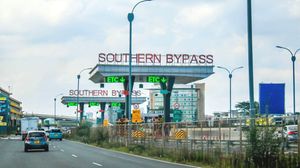
Higher tariffs are set out for heavier vehicle classes. The plan proposes Electronic Toll Collection (ETC) to reduce leakage and queues, backed by a toll back-office for reconciliation and enforcement.

Traffic underpins the revenue case.

The summary cites traffic assessments undertaken for the A8 and A8 South corridors and provides station-by-station forecasts for the opening year and growth across the concession period. It also calls for a comparative assessment of the Mau Summit–Eldoret–Malaba route versus the Mau Summit–Kericho–Kisumu–Busia–Malaba corridor to determine the most economically feasible alternative for subsequent phases.

To improve bankability, the developer seeks standard government support during negotiations. These include discussions on viability-gap funding, a Letter of Support to mitigate political or demand risks, and assured access to foreign exchange for debt service and dividend repatriation.

The package also proposes tax exemptions/zero-rating for specified construction inputs, equipment and tolling systems to manage upfront costs.

A potential flashpoint is the question of a free alternative. The summary states: “CRBC & NSSF has raised the aspect of a free alternative as being a likely contested issue and the need for NNM (Nairobi–Nakuru–Mau Summit) to be declared a Toll Road by the Cabinet Secretary (Minister).”

The consortium argues that clear designation is necessary to avoid revenue dilution and public confusion once tolling begins.

The PPP will follow a Design–Build–Finance–Operate–Maintain–Transfer (DBFOMT) structure. The private party will add capacity and safety features and operate the facility under pre-set performance standards.

The design includes dual four-lane and six-lane carriageways at different sections, upgraded shoulders and medians, improved geometry on hilly stretches, and a four-lane viaduct through Nakuru to separate through-traffic from local movements. The plan also provides for service areas and EV-charging points to future-proof the corridor.

On the government side, the Kenya National Highways Authority (KeNHA) is identified as the contracting authority and is expected to hand over the right of way, coordinate utility relocations, and ensure environmental and social safeguards are completed before financial close.

The documentation also calls for toll road gazettement, ETC implementation, and anti-leakage safeguards as part of the enabling framework.

While the starting tariff is set at Sh8 per kilometre, affordability over time will depend on how foreign-currency movements and key operating and maintenance inputs are treated.

The summary indicates the developer favours pass-through treatment for such items—an approach that protects lenders and equity but requires contractual limits and performance triggers to manage user impact. The final toll structure—covering vehicle-class multipliers and any discounts—will be set at financial close.

If implemented as proposed, the scheme is designed to significantly cut travel times along the Nairobi–Western Kenya spine through access control and capacity upgrades, while aligning with a user-pay model intended to deliver predictable cash flows over the concession.

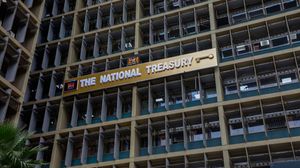
The CRBC-NSSF consortium edged out Shandong Hi-Speed Road & Bridge International Engineering Co., Ltd. (SDRBI), which had also submitted a Privately Initiated Proposal (P-i-P). The National Treasury’s Public-Private Partnership (PPP) Committee cited CRBC’s extensive experience, including building and operating Kenya’s first toll road, the Nairobi Expressway.

At its 47th extraordinary meeting on October 9, 2025, the PPP Committee resolved that the project met all PPP requirements, including public interest and affordability tests.

The NSSF earlier disclosed its intention to acquire half of the stake in the consortium, committing Sh20 billion to Sh25 billion for a 30-year investment, which it expects to recoup through toll collections over the concession period.

PAYE Tax Calculator

Note: The results are not exact but very close to the actual.