Time flies with great content! Renew in to keep enjoying all our premium content.
Prime
Oil majors exit Kenya as retail market competition erodes profit margins
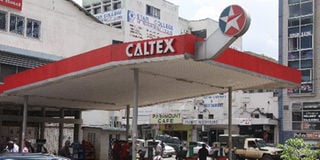
The past decade has seen Esso, Agip, Mobil, BP, Caltex (Chevron) exit the country, leaving behind only two majors — Shell and Total . File
When analysts predicted that it was only a matter of time before American oil majors Esso, Mobil and Chevron left Kenya, few would have expected it to happen so soon.
The recent exits of Agip and BP from most operating markets on the continent also raised concerns of whether European multinationals were following suit. But Shell Africa, has recently denied reports that it plans to quit 20 out of 24 markets on the continent.
For multinationals who have stringent compliance requirements, Africa is a very difficult region. The cost of compliance especially in areas of safety, health, environment and business ethics are very high.
Industry experts say petroleum standards appear to be increasingly becoming a challenge multinational oil firms. This is especially so for the Kenyan downstream market because retail is no longer an appealing area with margins being generally low.
Analysts say the Kenyan market is overcrowded and some multinationals may be seeing an erosion of their profitability and the expected returns on investment not being realised.
“Retail has matured and is no longer profitable with no growth in market share. The Investment is high as well as the risks so Business is tough,” said an industry chief executive .
But other industry players acknowledge that oil firms are torn between provision of quality service as well as their margins. “Consumers want cheap products and Companies that try to enhance their product offers may end up making losses,” said another CEO.
It is understood that US firms have all along had a problem in Africa with the endemic culture of non-compliance with basic business ethics and values coupled with weak business regulatory regimes. Now, these companies are exiting the petroleum market and only remain in the high profile oil and gas exploration projects especially in West Africa.
European majors Shell and Total on the other hand have always demonstrated perseverance in the African business environment. Total, which has been consolidating is presence through takeovers, can be expected to be in this market for the long-term.
But The French firm recently announced it will close down and sell its service stations in Zambia, because they are non-profitable. This came barely a month after Total Zambia sold 50 per cent of its share holding in Zambia’s sole oil refinery, Indeni Oil Refinery for $5.5 million (Sh440 million).
Experts say as much as 80 per cent of multinational corporate profits are being made in the upstream exploration and production segment of oil and gas. For most of these firms, African operations must remain profitable or parent companies will wind them up.
In November 2008, Chevron announced that it was exiting all operating markets except South Africa and Egypt as part of a global downstream diversification strategy.
George Wachira, an industry expert says the main thrust by the multinationals is to upstream oil exploration and production. Marketing is no longer considered an attractive investment as stiff competition has reduced profitability.
Industry regulator — the Energy Regulatory Commission (ERC), whose role was recently expanded to include the petroleum sub-sector is in the process of publishing regulations for the sector.
An official says the more multinationals exit the Kenyan market, the worse it is for the consumer who will lose out especially on pricing. The majors are known to uphold values and codes of practice that guarantee consumers good quality service.
“It is the multinationals who have been a moderating force on this market. They have set some standards for the industry while indigenous firms are not known for high standards,” said an ERC official but who did not wish to be quoted on the same companies he regulates.
Other analysts say multinationals are restructuring their asset portfolios globally to enable them cope with oscillating oil prices. “In Africa we have attached marketing maturity and it is not really that necessary to have multinationals around as local capacity has sufficiently evolved,”
Another industry concern among multinationals who are ready to fully comply with environmental and safety regulations is the cost of doing it while it places them at a competitive disadvantage compared to ‘smaller’ companies that do not comply.“If regulatory compliance is not fully enforced it will put compliant companies at a disadvantage in the market,” says Mr Wachira . He says market consolidation will drive petroleum brands in future. The Petroleum market in Kenya which is expected to grow five per cent annually, is evolving and new market consolidation will bring about a new landscape altogether. If the new legal and regulatory instruments take effect, an orderly petroleum market will be maintained and a level playing field for all to compete fairly.
Local entrepreneurs in Kenya have come of age in petroleum marketing, the industry has been demystified and local petroleum businesses have professionally matured and this will gradually make a strong challenge to multinational presence. This is probably one of the reasons why multinationals are leaving.
The past decade has seen Esso, Agip, Mobil, BP, Caltex (Chevron) exit the country, leaving behind only two majors — Shell and Total which have a combined market share of 45 per cent in Kenya. Whereas BP and Chevron quit only Kenya, they are still in Tanzania which is considered to be a country with huge untapped potential especially in the mining, agriculture and energy sectors .
However, the exit by the international brands is set to open doors for national and regional brands that are making an impact in the Kenyan market, especially those that are seeking to build their networks.
“Gapco is in Uganda and Tanzania but has nearly zero presence in Kenya. Engen has tried to grow but without success and Essar which has just acquired the refinery will want to have outlets,” said an industry analyst on condition of anonymity.
Market presence
Liberalisation of the sector in the 1990s witnessed the entry of new players who engage in import, export, wholesale and retail businesses, the impact of the new entrants in the industry has however, been insignificant due to prohibitive entry barriers, denying the economy the inherent gains of free market and competitive pricing of petroleum products.
Some of the critical market entry barriers include the high initial investment capital requirement, which is made worse by the high cost of credit in the domestic financial market.
These requirements include base load processing of at least 500 metric tonnes per month, line fill and dead stock contribution by the Kenya Pipeline Company (KPC) and the presence of truck loading facilities.
In the 1990s, most independent oil marketers turned their focus on the regional segment when penetrating the local market proved difficult in a multinationals-controlled arrangement.
Industry players say because of tight margins, petroleum trading is a volume-based business, pushing more players to enter the downstream marketing. Some companies have also restructured their operations and diversified product offering for a wider portfolio. With 1,100 service stations in Kenya (450 of which are independent) the average throughput per station is quite low compared with a typical service station in Europe. Local operators normally have lower overheads and as long as they comply with regulatory requirements they will command strong market presence in future.
Newly established players like Addax Oil and Mogas are already winning industry supply tenders on behalf of other marketers. Hass Energy is aggressively advertising and is mostly visible in western Kenya where many multinationals left because of illegal activities such as fuel dumping.
“Note the strength of Hass. They are now dealing in more volumes and have been building a presence in western Kenya. Any small change in yearly volumes causes significant changes in market share,” says ERC director for Petroleum, Mr Peter Nduru.
There are also strong indications that Indian petroleum marketing companies will be making a strong market presence and this will certainly change the status quo.
The Reliance Group (through Gapco) and Essar have indicated that they will seek full market presence. Asian based firms are renown for their effective cost management and this will give them an edge in a very competitive market like Kenya.
OiLibya and Engen with continental parentage appear to be growing their market shares. Other local brands that one needs to watch include Hashi Energy and Gulf Energy which are well capitalised.
The country has about 29 registered and active petroleum marketers, however most appear to be under-capitalized and may have a problem in growing unless they do what others have done elsewhere in the world — merge among themselves into fewer and larger companies to strengthen their capital base and market presence.
Unlock a world of exclusive content today!Unlock a world of exclusive content today!