Traders win as court halts new KRA cargo clearance rule

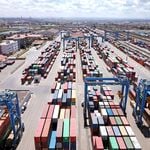
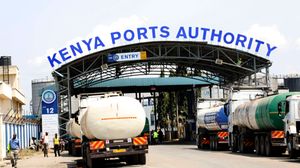
Containers at Port of Mombasa. 

Photo credit: File | Nation Media Group

The court has suspended a recent decision by the Kenya Revenue Authority (KRA) to shift cargo clearance back to its offices instead of the Mombasa port and the 22 custom bond warehouses amid protest by traders and clearing and forwarding agents.

In the changes introduced in July 2024, clearing, and forwarding agents had been required to submit a two-page duly filled form to the head verification officers (HVOs) who are stationed at various KRA offices—unlike before when the documents were approved and signed at the port and warehouses.
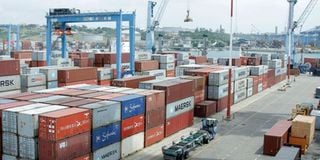
The move by KRA was, however, opposed by traders amid claims that it had triggered a fresh upsurge in delays and pilling storage costs.

One of the traders, Mohammed Samow, sued the KRA for shifting cargo clearance to the HVOs without public participation, despite the adverse impact of the move on stakeholders in the logistics sector.

The petitioner argued that there are massive delays in clearing goods, a high rise of storage/demurrage charges, the introduction of new verification forms, centralisation of the clearance process, and an increase in the number of days to clear consignments.

He said the new process is cumbersome, increased tariffs and barriers, resulting in greater business frustration among stakeholders and the public, and that it lacks transparency, accountability and efficiency, which resulted in several breaches.

The petitioner asked the court to declare the system unlawful having been implemented without notice to the stakeholders and the public.

In his ruling, High Court Judge Julius Kipkosgei Ng'arng'ar declared that KRA violated the Constitution by implementing the new system and that it should only operationalise the new system after conducting public participation and in compliance with the law.

“Public participation is a mandatory pre-condition in administrative action by public bodies and/or in actions that affect the public. And that the centralisation of head verification officers is a new system with far-reaching implications on numerous port users, which requires public participation” the judge said.

The court ruled that the clearance of goods should continue as per the provisions of the East African Community Customs Management Act supported by the existing Integrated Customs Management Systems (iCMS), and that the payment gateway should remain unchanged.

To improve transparency in the exports, the government implemented the use of the iCMS where no cargo will be cleared unless it is logged in the iCMS and the Kilindini Waterfront Automated Terminal Operations Systems (Kwatos) at the time of acceptance at the port.

24-hour cut-off

At the same time, the KPA has enforced a 24-hour cut-off acceptance time for fresh produce exports and all government agencies involved in port operations as well as exporters expected to operate 24 hours.

The government has also addressed several bottlenecks of doing business such as the reduction of the number of weighbridges for transit and the implementation of pre-arrival clearance to streamline the export process.

PAYE Tax Calculator

Note: The results are not exact but very close to the actual.