Treasury extends tax relief to home construction loans

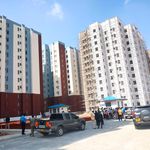
Data by the Kenya National Bureau of Statistics shows that homeownership rates in Kenya have decreased, with 61 percent of households owning homes compared to 64 percent a decade ago.

Photo credit: Shutterstock

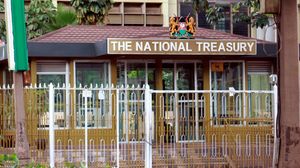
Kenyans tapping loans to build their residential homes have been handed a boost after the Treasury expanded a preferential provision that now allows them access to interest deductions against their taxable income.

In changes through the Finance Act 2025, taxpayers can now claim an annual deduction of up to Sh360,000 on interest paid for building, buying, or improving a residential property—provided the loan is from one of the prescribed lenders.

Previously, the deduction only applied to home purchases or renovations, leaving out those constructing houses from scratch.

Analysts said the new provision would encourage homeownership and real estate investment, by allowing borrowers to reduce their taxable income through mortgage interest deductions, even for newly built homes.

“The Act now introduces a construction mortgage so that one can claim interest deduction on a loan obtained for constructing one’s house, buying or improvement of the premises as long as one intends to reside in it and not for rental purpose,” Caroline Owala, an Associate at Grant Thornton said in a commentary.

“Taxpayers are now able to build houses from the ground up and claim the interest deduction up to Sh360,000, therefore encouraging investment and home ownership. This change supports housing affordability, particularly for middle-income earners investing in construction” she added.

Some would-be homeowners prefer to design and build their own units to match their specifications and taste.

“The Act has expanded the use of such a loan to which the interest relates to include the construction of residential premises. This will encourage the uptake of this benefit by recognising that some individuals prefer to construct their own homes rather than purchase homes” analysts at law firm, Bowmans said in a note.

Ms Owala, pointed out that the limit of deduction is, however, low given the high cost of construction.

“There are key restrictions: The deduction applies to only one residential property. If the homeowner occupies the property for less than a year, the deduction is reduced proportionally. The Sh360,000 cap remains, limiting relief for high-value mortgages,” Ms Owala said.

Data by the Kenya National Bureau of Statistics shows that homeownership rates in Kenya have decreased, with 61 percent of households owning homes compared to 64 percent a decade ago.

This decline is more distinct in urban areas, where a larger proportion of households rent.

The KNBS 2023/24 Kenya Housing Survey shows that the majority of homeowners are in the rural areas at 85.5 per cent, while urban areas' home ownership was at 22.8 percent. Urban areas had higher percentages of households paying rent/leasing at 72.3 percent, while the proportion of households that paid rent in rural areas was 8.9 percent.

Bungalows were the most owned type of house in both rural and urban setups at 76.3 percent and 69.1 percent, respectively.

The KNBS survey said that more than half of the tenants (55.5 percent) preferred to build, while 12.5 percent preferred to buy, and 32.0 percent of the tenants neither wanted to build nor buy.

PAYE Tax Calculator

Note: The results are not exact but very close to the actual.