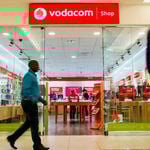
The government has given up Sh15.5 billion worth of future dividends from Safaricom in a rush to receive an upfront payment of Sh40.2 billion on the 20 percent stake it will retain in the company after selling part of its shares to South Africa's Vodacom Group.
It has now emerged that the National Treasury has sold the right to receive future dividends of Sh55.7 billion to Vodacom at the price of Sh40.2 billion, effectively giving the latter a discount of 27.8 percent.
The accelerated dividend payout to the government is part of the deal with the multinational, which will also buy a 15 percent stake in Safaricom from the Treasury for Sh204.3 billion or Sh34 per share through its Kenyan investment vehicle known as Vodafone Kenya.
The dividend discount has been disclosed by Vodacom to its shareholders via the official disclosures bulletin of the Johannesburg Stock Exchange (JSE), but the Sh55.7 billion amount was omitted by the Treasury and Safaricom in notices to Kenyan investors.
"Vodafone Kenya has agreed to buy the right to receive future Safaricom dividends amounting to Sh55.7 billion (7.4 billion rands), that would have accrued to the government of Kenya on its remaining shares in Safaricom for an upfront payment of Sh40.2 billion (5.3 billion rands)," said Vodacom in its disclosure.
The government's stake in Safaricom will drop from the current 35 percent to 20 percent, with the Treasury leveraging future dividend entitlement on the residual stake to get more cash in the transaction.
Concurrent with the purchase of the 15 percent stake from the government, Vodacom is also buying a five percent stake in Safaricom that is held by its parent firm, Vodafone Group, at the same price of Sh34 per share.
Once the twin transactions are concluded, Vodacom will raise its ownership in the telco to 55 percent, giving it control after spending a total of Sh272.4 billion on the share purchases. The Vodafone stake will cost it Sh68.1 billion.
Public investors in the telco hold a 25 percent stake equivalent to 10 billion shares, which was offloaded by the Treasury in a March 2008 initial public offer that raised Sh51.75 billion after being oversubscribed by 532 percent.
In the year ended March 2025, the Treasury banked full-year dividends worth Sh16.83 billion from its 14.02 billion shares in Safaricom, which paid shareholders Sh1.20 per share for the period.
If the telco were to maintain the same dividend rate going forward, the Treasury would be in line to earn Sh9.6 billion annually from its reduced stake of 8.01 billion shares, meaning that it would take about six years to offset the dividend rights sold to Vodacom.
Last week, Safaricom disclosed that it will maintain its policy of paying out 80 percent of its net profit as dividends, despite dipping into the debt market with a Sh40 billion green bond programme.
The sale of the first tranche of the bond closes today, targeting Sh15 billion with a green shoe option to take an additional Sh5 billion.
The Sh1.20 per share payout for the year to March 2025 amounted to a total distribution of Sh48.08 billion.
The payout was split between an interim dividend of Sh0.55 per share and a final dividend of Sh0.65 per share.
For the current financial year, Safaricom announced that its net profit for the six months to September 2025 rose by 52.1 per cent to Sh42.7 billion, helped by a smaller loss in Ethiopia and M-Pesa's double-digit growth.
For the Treasury, Safaricom's annual payouts have been one of the largest sources of investment income owing to its long track record of profitability and generous dividend policy.
The government is now looking to frontload on these returns through the dividend and share sale deal with Vodacom.
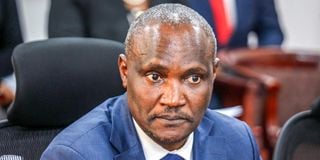
Speaking yesterday, Treasury Cabinet Secretary John Mbadi said the share sale proceeds would provide the seed capital for the proposed Infrastructure and Sovereign Wealth Funds, which will support projects in energy, roads, water and irrigation, as well as airports.
"This money is not going to finance our budget deficit support. We are investing it in the National Infrastructure Fund towards commercially viable public investment infrastructure. We feel this is converting it into a higher-value asset," said Mr Mbadi, who urged Parliament to operationalise the fund before the share transfer is concluded.
However, in a separate briefing, former National Assembly Budget and Appropriations Committee chair Ndindi Nyoro said the government was risking an undervaluation of a key asset despite the premium it has extracted in the Vodacom sale.
He said that Safaricom is likely to unlock more returns from its Ethiopia operation going forward, which could ultimately yield a higher share price valuation.
"In 2021, the share touched a high of Sh45, valuing the company at Sh1.8 trillion, and that was before the Ethiopia investment," said Mr Nyoro.
Safaricom's share closed at Sh29.45 yesterday, having gained 4.4 percent for the day on the news of the transaction.
This closing price values the company at Sh1.18 trillion, while the government's price of Sh34 in its deal with Vodacom values the company at Sh1.36 trillion.