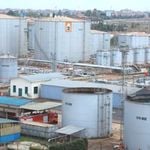
Treasury mulls budget cuts amid Kenya Pipeline sale jitters

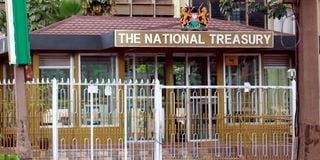
National Treasury

The National Treasury has put on a brave face with hopes that the KPC IPO will overcome all the legal hurdles to come through.

Photo credit: File | Nation Media Group

The Treasury may ask Parliament to scale down its budget for the fiscal year 2025-26 if the planned sale of the Kenya Pipeline Company (KPC) collapses in the wake of a suit seeking to block the initial public offering (IPO).

The government has announced plans to sell its 65 percent controlling stake in the petroleum logistics company to the public at an estimated total price of Sh100 billion, potentially becoming the largest IPO in almost 17 years after the Safaricom listing in 2008.
However, the transaction has been temporarily halted by the High Court pending the determination of an application filed by the Consumer Federation of Kenya (Cofek) on allegations that due process has not been followed in the planned sale of the public company.

The hearing date of the application has been fixed on September 5, 2025, effectively delaying the planned transaction. The delay has been compounded by the new Privatisation Bill (2025), which is yet to be enacted by Parliament.

Treasury PS Chris Kiptoo now says that should the government fail to raise the targeted Sh100 billion from the sale of KPC, then it (government) would table a supplementary budget that “scales down the budget accordingly”.

“As is normally the case, when revenue targets are missed, we will have to come up with a supplementary budget that scales down the budget accordingly should we fail to realise the said revenue,” Dr Kiptoo told the Business Daily on Monday.

The National Assembly’s Budget and Appropriations Committee says this revenue from the government’s share sale in KPC is not definite because of the legal process, adding that the timeline for realising the revenue also remains uncertain.

“What this means is that it is not a definite revenue expected as it is something that must undergo a legal process, and the timeline for realising the revenue is not certain,” says Samuel Atandi, the committee’s chairperson, who is also the Alego Usonga MP.

“In our fiscal framework, which we passed, we had factored to raise Sh149 billion from the sale of shares in government parastatals. So basically, the impact of the sale is revenue-raising to support budgetary provisions.”

The committee, however, downplayed the expected revenue shortfall to the budget, saying it won’t affect budget implementation much.

“No, it won’t affect budget implementation much. We put the sale below the line in the fiscal framework but not factored directly into the budget,” says Mr Atandi.

The Treasury has, however, put on a brave face with hopes that the KPC IPO will overcome all the legal hurdles to come through.

“We are confident Parliament will approve the privatisation bill and the KPC divestiture,” said Dr Kiptoo.

Parliament is currently considering the Privatisation Bill 2025, a piece of legislation aimed at establishing a new regulatory framework for privatising public entities and repealing the prior privatisation Act of 2005.

The Bill provides for the creation of a privatisation authority to, among others, advise the government on all aspects of the disposal of public entities and implement the privatisation programme.

President William Ruto signed into law the Privatisation Bill 2023 in October 2023, seeking to speed up the process of privatising State-owned corporations by allowing the Treasury the authority to sell off the entities without Parliamentary approval.

However, the High Court, in a ruling delivered on September 24, 2024, made a declaration that the National Assembly did not conduct reasonable, meaningful, adequate, and/or effective public participation before passing the Privatisation Act, 2023, and therefore the entire Privatisation Act, 2023, is unconstitutional, null, and void.

PAYE Tax Calculator

Note: The results are not exact but very close to the actual.