Treasury to sell 65pc stake in Kenya Pipeline IPO

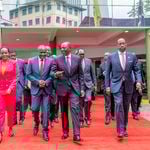
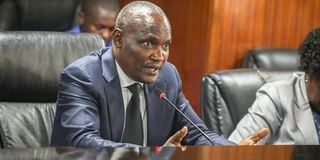
National Treasury and Economic Planning Cabinet Secretary John Mbadi when he appeared before the National Assembly Public debt and Privatization Committee at the Continental House in Nairobi on November 28, 2024.

Photo credit: File | Nation Media Group

The Treasury will sell a stake of up to 65 percent in Kenya Pipeline Company (KPC) via an initial public offering (IPO) on the Nairobi Securities Exchange (NSE) in the race to raise Sh149 billion from the privatisation of State enterprises.

Treasury Cabinet Secretary John Mbadi on Thursday informed the National Assembly’s Finance and Planning Committee that the State intends to retain a 35 percent stake in KPC.
The Cabinet on Tuesday approved the sale of the KPC stake.

Aside from Safaricom, the petroleum products transporter is the only big-ticket firm that could help the State meet its target of raising billions of shillings in a fiscal year when the Treasury avoided new taxes in the Finance Bill.

The Treasury has also announced plans to sell a mega stake in Safaricom before June next year.

The two deals promise to be the largest transactions in the region as global private equity firms prowl Africa for telecoms and energy sector deals, due to their predictable revenues and steady cash flows, which can then be used to service the debt taken on to buy the companies.

In the KPC IPO, the State has made a formal invitation to Ugandan investors for a stake in the firm, seeking to widen ownership in the region.

“Although it is profit-making, the government gets just about Sh3 billion or Sh4 billion annually as dividends. I am sure that if we privatise KPC and retain just a 35 percent stake of ownership, we could make up to four or five times more out of that entity,” Mr Mbadi told the committee.

“KPC is making revenues of over Sh30 billion and profits of just about Sh7 billion. Currently, the government only gets so much because of the expenses incurred in running the business. If the profit goes up four times, we could even get more with just a 35 percent stake.”

KPC’s net profit increased to Sh6.87 billion in the year to June last year, up from Sh4.49 billion in the same period a year earlier, reflecting a 53 percent jump. Its assets stood at Sh120.7 billion.

This makes KPC the most asset-rich and profitable firm among Kenya’s State corporations, a key magnet for investors seeking holdings beyond banks, Safaricom, East Africa Breweries Limited (EABL) and BAT Kenya at the NSE.

KPC seeks to be the key gateway to feed land-locked growing economies of Rwanda, Uganda and the DRC, which rely on Kenya's Mombasa port for fuel imports.

Its existing pipeline runs from Mombasa to Nairobi, and onwards to the town of Nakuru, and then forks to two other towns in the western region -- Eldoret and Kisumu.

Many of the products have to be trucked to countries in the region, which is slow and unreliable owing to the breakdown of trucks and damaged roads.

“We have even asked Uganda to come in and invest because by them investing, there is some assurance we will be getting, because Tanzania is also competing with Kenya to access that market. If Uganda has a stake here, it will be very easy to access the larger market,” Mr Mbadi said.

Kenya has been seeking new sources of funding since deadly nationwide protests last year forced it to pursue austerity measures and scrap planned tax hikes worth more than Sh346 billion.

The State has been short of entities deemed ripe for privatisation, as the bulk of them are struggling after years of loss-making and mismanagement.

The proceeds from the sale of stakes will back the Sh3.32 trillion revenues from taxes and ministerial levies for funding the total expenditure at about Sh4.29 trillion.

Initially, the State had selected 11 firms, including KPC, Kenyatta International Convention Centre (KICC) and New KCC, from among more than 35 companies that are slated for sale to partially help the government raise revenue in the face of growing debt repayments.

The Treasury retained a 34.9 percent stake in Safaricom worth Sh383.9 billion after selling a 25 percent stake to investors via an IPO in 2008.

The Safaricom stake could take the form of a secondary IPO or an auction to a high-net-worth investor for a block sale.

A second offer occurs when an investor sells its shares to the public on the secondary market after the first offer, with proceeds going directly to the pockets of the investor.

The sale of five to 10 percent of the government’s stake in the telecoms operator would, for instance, yield between Sh54.5 billion and Sh109 billion at the prevailing share price of Sh27.4.

Analysts have favoured an off-market transaction if the government is to unlock the maximum possible return from the planned divestiture.

This involves sales to high-net-worth investors like private equity funds that offer a premium to the market price.

PAYE Tax Calculator

Note: The results are not exact but very close to the actual.