Certainties in life, sunrise, sunset, and death. If you’ve followed hip-hop long enough, another certainty is 50 Cent’s hatred for Sean “Diddy” Combs.
At first, I used to think their beef was manufactured, another promotional stunt, the kind of thing artistes do to sell records or hype a tour.
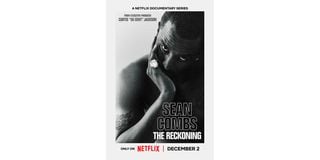
But, with time, I came to realise it’s different, personal to some extent. 50 Cent hates Sean “Diddy” Combs to the point that after Combs was sentenced in October 2025, he went as far as executive producing a Netflix docuseries on him.
Which is the show we are looking at today, to figure out whether there was a story that needed to be told or if 50 was just being petty.
Sean Combs: The Reckoning
Directed by Alex Stapleton and released on December 2, 2025, the four-part miniseries digs into the hip-hop mogul's past and sexual misconduct allegations against him. Each episode runs about an hour, and together they paint a dark, unsettling portrait of one of hip-hop’s most controversial figures.
The production credits include G-Unit Films, House of Nonfiction, and Texas Crew Productions, with 50 Cent himself listed as executive producer.
Knowing that, to be honest, I expected bias, but I was surprised by how competently put together this is. I'm going to attempt to keep the review as spoiler-free as possible.
What stood out
The first thing that had my full attention was the utilisation of archival footage and pictures. I’ve seen plenty of documentaries recycle and lazily put together the same old clips when telling this kind of story, but here I was impressed by how they were able to stitch them together.
There are moments with Notorious B.I.G. I have never seen before, plus behind-the-scenes footage from the 90s and candid recordings of Combs in later years that I had seen before on YouTube but now make compelling arguments based on how they are stitched together.
As someone who’s followed Diddy’s story closely, I thought I knew most of it, but some of this footage genuinely caught me off guard.
The edit combines interviews with former friends, business partners, and insiders to create contextually rich moments. Each episode starts and ends with text on screen. At first, I thought it got repetitive, obnoxious even.
But, by the final episode, I realised the repetition was a setup, some kind of anchor that kept reminding us where we are today with the character, tying the whole narrative together and eventually revealing something much more sinister that goes beyond what was being presented.
The series flows like a crime docuseries. You know that feeling when you’re hooked even though the subject is disturbing? That’s what happened here. The way they cut between interviews and footage makes Combs’ life feel like the profile of a manipulator, which, if we are being honest here, he is, based on what was presented, especially in episode 4.
Episodes one through three are really engaging if you love hip-hop. They take you back to the Bad Boy era, the 90s, the Tupac–Biggie beef, and the rise of Puff Daddy. For millennials, nostalgic but also revealing. It reminded me how chaotic that time was, and how Combs was the one figure who came out on top while others perished.
That survival becomes part of the bigger argument and question, revealing how he thrived in a system built on manipulation and exploitation.
One testimony that really hit me was Kirk Burrowes, a founding member of Bad Boy Records. His story about how Combs treated him was heavy. Burrowes’ account felt like the emotional heart of the series and a huge lesson on business.
I also liked the music choices and some of the classic hip-hop artistes involved. They’re woven in carefully, never overwhelming the interviews but adding to the tone, context and mood.
Gripes
The biggest issue is that the documentary sometimes tells you what to think. Instead of laying out the evidence and letting you decide, it spells out conclusions. I thought it would be stronger if it laid out the evidence and trusted the audience to piece the rest together on their own.
A lot of the material isn’t new if you’ve followed Combs’ story closely. Personally, I’d already seen most of the archival footage and pictures through YouTube clips and articles. But that’s me, for casual viewers, it’ll feel fresh.
The uniqueness, I thought, was in the editing and pacing, recent clips, and structure, how they utilised what they had to paint a compelling image.
There’s enough evidence presented in the docuseries to prove that Sean Combs is just a terrible human being, enabled by power and influence. I wasn’t convinced by the attempts to explain Combs’ behaviour through his childhood, let’s call a spoon a spoon.
I get the idea that trauma shapes people, but I thought those detours distracted from the real story. The bigger issue is the system he was mentored into, a system built on exploitation and manipulation.
And there are gaps. Some notorious aspects of Combs’ life, like his infamous parties, are barely explored. The absence of some specific celebrity voices who were around the parties across the decades felt like a missed opportunity.
I mean, a large majority of your favourite Hollywood stars attended the “freak-offs,” but we hardly see the stars get interviewed.
I would have wished to hear from other artistes who worked with Sean Combs in the past like Mase, Jay Z (which I know would be impossible based on his relationship with 50 cent) Lebron James or 112, just to get an idea of what they thought of him
What makes it unique
What makes The Reckoning work is its structure and execution. Even if much of the footage isn’t new, the way it’s assembled creates a compelling arc. It’s a portrait of a man who built an empire on manipulation and exploitation.
The repetition of text, the deliberate pacing, the balance of nostalgia and drama, all of it adds up to a documentary that looks and feels well thought through..
Final thoughts
For me, Sean Combs: The Reckoning is one of the most gripping documentaries on Netflix this year. It’s not perfect, it spoon-feeds conclusions, skips over some notorious details, and occasionally tries to soften Combs with childhood context, but it’s still very engaging. And I know this will sound strange to say, but it’s very entertaining.
If you’re a hip-hop fan, you’ll appreciate the trip back to the foundation with individuals I call the founding fathers of hip-hop. If you’re not, you’ll still be drawn in by the structured and chilling look at how one man manipulated an entire industry.