‘Another World is Possible’: Paul Onditi’s journey of creative freedom

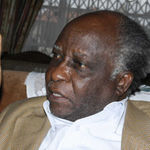
Contemporary artist Paul Onditi during an interview on his exhibition Another World is Possible at Alliance Française, Nairobi, on October 22, 2025.

Photo credit: Wilfred Nyangaresi | Nation Media Group

Paul Onditi has long been regarded as one of Kenya’s most distinctive contemporary artists. The 45-year-old painter and printmaker moved to Germany in 2000 to study at the Hochschule für Gestaltung Offenbach am Main, returning home a decade later to a vibrant but evolving Nairobi art scene.

Two years after his return, he held Another World is Possible at the Alliance Française, the exhibition that launched his career.
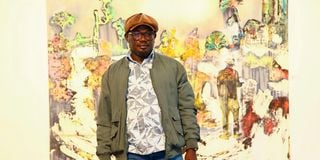
Now, more than a decade later, Onditi has returned to the same venue with Another World is Possible 2, a show he describes as a journey of gratitude.

“This exhibition is a recap of my journey as an artist,” he says. “When I came back from Germany, Alliance Française was one of the spaces gracious enough to host me. It’s where I made a name for myself — I even remember a company from Norway buying 66 of my pieces. I am a firm believer in being grateful to my roots.”

Talent first, training later

Paul speaks with disarming conviction about the origins of his artistry. For him, art is not learned — it is lived.

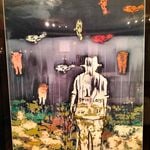
Mediation Series,” mixed media on watercolor paper by Paul Onditi, displayed at his exhibition Another World is Possible at Alliance Française, Nairobi, on October 22, 2025.

Photo credit: Wilfred Nyangaresi | Nation Media Group

“Art is inborn. It can never be an acquired profession if you don’t have it within you,” he says. “From childhood, I would doodle on the ground and call my mother to look at what I had drawn. That was my first canvas.”

Though he studied art formally, Paul insists that schooling can only refine what already exists.

“I went to university for art, but there wasn’t a day in five years when a professor walked in with a brush to teach me how to paint. Art isn’t like law, engineering, or medicine; it must start within you before it can be built upon.”

Still, he acknowledges that talent alone is not enough.

“Hard work will keep you in the stream with everybody else, swimming in a congested pool. Talent separates you from that crowd; it gives you your own pool where you can enjoy the swim.”

Beyond the technicalities of making art, he believes creativity requires constant evolution, an openness to reinterpretation and reinvention. He is outspoken about what he calls the “slum mentality” that, in his view, limits many young artists.

“It’s a mentality that the mzungu drilled into many budding Kenyan artists — that you must have dreadlocks, wear an old T-shirt, and keep telling stories about coming from the ghetto,” he says. “If you were born in Kibera and have painted the same iron sheet facades for eight years, there’s a problem. You’re no longer creative; you’re a production machine, reproducing what others want you to produce.”

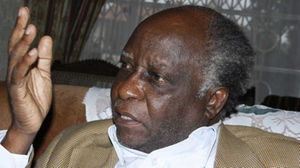
Contemporary artist Paul Onditi during an interview on his exhibition Another World is Possible at Alliance Française, Nairobi, on October 22, 2025.

Photo credit: Wilfred Nyangaresi | Nation Media Group

He pauses, before adding:“Creatives should be the software itself, not the hardware that produces from software hidden in London or New York.”

Grounded in spirit

Having exhibited on major international platforms — including the Venice and Dakar Biennales and the VOLTA New York Art Fair — Paul has earned a reputation that now outgrows most local venues. Yet he remains grounded, both by his faith and by his understanding of art as a calling that transcends mortality.

“The spirit of art keeps me grounded, it is who I am,” he says. “Even in death, my art will still be speaking. Artists don’t die; we live on. If Michelangelo and Picasso are still being talked about, I can assure you that no AI will ever create a Michelangelo. Pixels cannot replicate brushstrokes.”

He laughs lightly, adding: “At least my wife gives me my flowers while I’m still alive — that counts.”

Faith in the studio

The art world, Paul notes, is deeply secular, but he wears his faith openly, even when it costs him opportunities.

“I was born into a family with its own beliefs, and I still hold to them,” he says. “In societies where Muslims exist, their faith is respected. But I’ve noticed that when Christianity comes up, it generates heat.”

"Facade Series" Wood clear varnish and oil on glass tile by Paul Onditi, displayed at his exhibition Another World is Possible at Alliance Française, Nairobi, on October 22, 2025.

Photo credit: Wilfred Nyangaresi | Nation Media Group

He recounts an incident that left a lasting impression.

“In New York, I once lost a deal after someone asked whether I believed in God. I said yes, and the room went cold. That deal was gone,” he recalls. “But it didn’t stop me from selling out my show at VOLTA. All 17 pieces I presented there were sold.”

His takeaway is pragmatic and philosophical.

“Man is not the determinant factor in my work. If one person refuses, there are seven billion others in the world. I’ve liberated myself from leaving my art at the mercy of humans. I’ll paint and work all I can, but I always have alternative means of survival in case the human ego interferes.”

Lessons for the next generation

He sees art as both a gift and a discipline, a jealous profession that demands devotion. His advice to young artists is as forthright as his philosophy.

“Hang on and be true to yourself,” he says. “You cannot treat art badly and expect rewards. Even with talent, you must pump in the hours. Be a student of yourself — learn from your successes and failures. Don’t be in a rush; this isn’t mathematics.”

He pauses again, reflective.

Contemporary artist Paul Onditi during an interview on his exhibition Another World is Possible at Alliance Française, Nairobi, on October 22, 2025.

Photo credit: Wilfred Nyangaresi | Nation Media Group

“In the process of execution lie the small things that carry potential. That’s where you become the best version of yourself.”

For Paul, Another World is Possible2 is not just a title, it’s a statement of belief: that art, faith, and perseverance still matter in a world growing more automated and indifferent. His work — textured, experimental, and unapologetically individual — continues to challenge viewers to see differently.

“Even in the age of AI,” he says, “artists don’t die. We live on.”

The exhibition runs at Alliance Française, Nairobi, until October 27, 2025.

PAYE Tax Calculator

Note: The results are not exact but very close to the actual.