Time flies with great content! Renew in to keep enjoying all our premium content.
Prime
At a jazz village in Addis Ababa
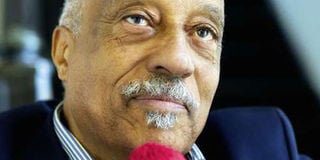
Mulatu Astatke, the father of Ethio-Jazz. PHOTO | COURTESY
At 9 p.m. on Thursday night in Addis Ababa, Ethiopia, the African Jazz Village is just coming alive as some quiet music plays in the background and a handful of people in the club sip their drinks. The stage is dimly lit and a sound technician is carrying out a final sound check.
An elderly man is seated at one of the tables and his face lights as a large group of music professionals from around Africa who are in town for a conference walk into the club.
“Welcome to the African Jazz Village!” he says. This is Ethiopia’s most successful musician, Mulatu Astatke, known internationally as the father of Ethio-jazz.
The 72-year-old single-handedly, turned this fusion of jazz, funk and Ethiopian folk melodies into a world famous genre.
“Ethio-jazz is now celebrating its 52nd anniversary and in the next few months I will be going back to New York where this music was born, for a grand performance to commemorate this anniversary,” says Mulatu.
One of his lecturers at Berklee College of Music in the US, where he was the first African student to enrol in 1958, challenged the young Mulatu to use his Ethiopian heritage to create an original sound.
Ethio-jazz was the result of years of experimentation with popular jazz, Latin American music, traditional Amharic rhythms and religious music of the Ethiopian Orthodox Church.
Mulatu’s songs have been used in major international films, notably the 2005 comedy-drama Broken Flowers that gave the whole Ethio-Jazz movement a new lease of life. US rapper Nas and Damian Marley, the son of Bob Marley, sampled Mulatu’s song “Yegelle Tezeta” for their 2010 collaboration “As We Enter.”
Mulatu, with a little help from his son, has been running the African Jazz Village located at the Ghion Hotel in Addis Ababa since 2013 and because of the sheer personality of the man, this has become the hottest venue for jazz performances in the city.
The atmosphere in the wooden panelled club with its circular shape and sunken dance floor is both electric and intimate.
“This place has seen some of the biggest acts in the world,” says Mulatu.
“Global stars like Bob Marley and Billy Ocean played at this spot in the 1970s.”
During the reign of Emperor Haile Selassie jazz bands would often play for the emperor and visiting state guests but the military regime that came to power in 1973 imposed a curfew and for the next two decades most of the clubs in the city shut down.
The music gigs were only revived after the overthrow of Colonel Mengistu in 1991.
Asli Ethio Jazz (“asli” is the Amharic word for “original”), a five-piece band has been playing at the African Jazz Village every Thursday night for two years.
Their music is a groovy mix of saxophone and guitars interspersed with the hypnotic sound of traditional Ethiopian flute called washint.
“To play Ethiopian music without paying respects our indigenous instrument doesn’t make sense because this is real innovation,” says saxophonist Jorga Mesfin.
Mesfin is a widely experienced musician who also tours with the group the Nile Project, a collective of artists from countries bordering the River Nile. He also played at the Safaricom Jazz Festival in 2014 along with Kenyan artists like Aaron Rimbui, Kasiva Mutua and Eddie Grey.
The first two songs the band plays are their original compositions before Mulatu joins them, to a warm applause, for two of his best-known songs “Yekermo Sew” and “Dewel”.
“We are privileged to be playing with Mulatu Astatke,” says Mesfin.
“This is the second generation of this movement and when he joins us on stage it is like a childhood dream because most of us grew up just hearing about Mulatu and watching him on TV.”
The band is currently recording their debut music and Mulatu will be among the guest artists on some of the songs.
While he was a fellow at Harvard University, Mulatu presented a paper titled: “Conducting is Ethiopia’s contribution to the world” which argued that the roots of classical performance can be traced to the sacred music traditions of the Ethiopian Orthodox Church.
For the last few years he has been writing an opera using ancient church music by the Ethiopian composer, scholar, and pioneer of musical notation, St. Yared.
The opera is written for a cast of 70 performers and will premiere early next year at the Barbican Centre in London with music performed by the BBC Symphony Orchestra.
Classics
Mulatu’s last album “Sketches in Ethiopia” was released in 2013 on the US label Jazz Village. “I really enjoyed recording this album.
Some of the sessions were recorded in Addis, some tracks were recorded in London and the final sessions done in a fantastic studio in Nice, France.”
His eyes beam when we ask what it feels like to have young musicians playing his classics: “It is really great to see the popularity of Ethio-Jazz during my lifetime, not just here in Ethiopia, but around the world. We have only done half a century; this music will keep growing into the future,” he says.
Unlock a world of exclusive content today!Unlock a world of exclusive content today!