Time flies with great content! Renew in to keep enjoying all our premium content.
Prime
Beauty of the cycad plant unveiled
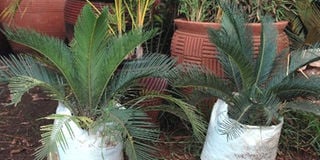
Cycad tree seedlings on Ngong Road in Nairobi. Photo/Salaton Njau
Resembling palm trees, cycads are a popular plant in the hospitality business. Nearly every hotel has the plant at their entrance or in the lush greenery of their gardens.
The green leaves are smooth to the touch, with a plastic feel to them, and razor sharp tips that could pierce the skin if one is not careful. The leaves grow in a pinnate form at the top of the stout trunks, which do not usually branch. Commonly mistaken for palm trees, the plant is especially in high demand during the rainy season.
“There are very many hotels coming up in the city and most of the developers and landscapers are looking for this plant, explains Eric Maina of Darias Gardens.
He and his partner have imported a large consignment of the plants as they align themselves to cash in the demand. According to Maina, the plants take nearly 20 to 40 years before they grow to a height of five feet.
A seven-year-old seedling goes for Sh5,000 while the more mature 20-to-40- year old seedlings go for Sh40,000 each. “The high cost is due to the time that the plant takes to mature and grow to a sizeable height,” says Maina.
When growing cycads at home, Maina give the following advice:
Cycads grow best in sandy soil with enough water. The plant, however, should not be watered as too much water kills it. The sandy soil provides the best drainage of the soil that will keep the plant from drowning in water.
However, if you are planting the cycad in soil that is not sandy, try having a raised bed. “The roots of the plant should never be allowed to sit in water for prolonged periods,” says Maina. The raised beds help improve the soil drainage.
The small seedlings should be kept in pots. Deep containers are the best for this up until the plant is about four years old. Gravel at the bottom of the pot stops the roots from rotting. The soil mix in the pot should contain plenty of sandy soil.
When growing the seedling in a pot, only water it when the top one inch of soil is dry. They plant thrives in hot temperatures so it best grows outdoors where it has direct access to sunlight.
With a liking for coastal climate, occasionally spray the leaves to provide the humidity as would be present in the coastal basin if you are growing it in areas away from the coast.
Best purchased when much older, about 20 to 40 years old, the plant can live for over 300 years and does not require much care from the owner, save for the occasional dusting.
The plant is also a good specimen for the bonsai technique. The growth of the plant can be stunted by overcrowding the roots if you want to grow it the bonsai way.
Unlock a world of exclusive content today!Unlock a world of exclusive content today!