Why Kenyans are rushing to buy hammocks this festive season

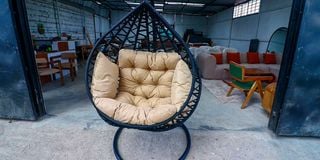
Hammock swing on display at Artwood Furniture & Interior Design, Ngong Road, Nairobi, December 6, 2025.

Photo credit: Wilfred Nyangaresi | Nation Media Group

When BD Life contacted Maurice Ochieng’, a hammock seller based in Westlands, posing as a prospective buyer, he responded in a friendly but straightforward manner.

“Please check with us in the next two weeks,” he wrote in a WhatsApp message.

This was in late November, and he had sold all of his hammocks.

Fast forward to December and another inquiry at China Square Mall produced a similar response. However, no restocking timeline was offered this time.

This pattern is unmistakable. The surge in Kenya's hammock swing market is a clear indication of how people are choosing to spend their leisure time, especially during the holiday season: Swinging.

By the time BD Life arrived at Alice Wanjiku's showroom on Ngong Road, the last piece had literally just walked out of the door, leaving nothing to photograph or examine.

"Our handcrafts men are currently working on some pieces, and they will be ready by tomorrow," Alice explained, her tone mixing pride with the pressure of overwhelming demand.

Consequently, our interview was postponed until the following day, with the hope that the new hammocks would still be available.

As it turned out, this waiting game has become a familiar experience for customers across Nairobi during the festive season. Sellers were grappling with the same challenge: demand was surging, outpacing their ability to supply.

Sangyug Enterprises Ltd Showroom Manager Raj Jethwa displays a range of hammock swings at the Big Bang building showroom, Ngara, Nairobi, December 6, 2025.

Photo credit: Wilfred Nyangaresi | Nation Media Group

What was once a niche product for outdoor enthusiasts has evolved into one of the holiday season's most unexpected success stories in the luxury furniture sector.

Retailers are struggling to keep up with demand, while customers are willing to wait weeks for their own piece of comfort and relaxation. According to Maurice, the transformation has been dramatic.

"In recent years, hammocks, particularly swing chairs and loungers, have transcended their traditional camping associations to become statement pieces for homes and gardens, symbols of leisure, comfort, and the promise of rest after a difficult year," he observes.

So what's driving this remarkable demand?  According to Alice, the digital drive is playing a big role in increasing the demand.

"Instagram-worthy garden setups and Pinterest-perfect balcony designs have normalised hammocks as décor elements rather than purely functional items. When customers see friends and influencers lounging in stylish swing chairs, the aspirational appeal becomes irresistible," she explains.

She has established a unique position by focusing on locally-made, handcrafted products created entirely from scratch.

Primarily operating online, it serves customers nationwide from Kisumu to Mombasa to Nairobi.

Each hammock swing, she says, starts with the fabrication of its metal stand.

"The metal is cut, joined, sanded, and painted before the swing chair portion is constructed and hand-sewn with either corded rope or rattan," says Alice.

The local standard corded rope hammocks cost Sh24,000, while premium rattan versions range from Sh28,000 to Sh30,000.

The product line includes two main types of swings, including single-person models supporting up to 130 kilograms, and custom double hammocks accommodating over 250 kilograms, made to order and costing between Sh35,000 and Sh42,000.

For Alice, the black hammocks have proven particularly popular this season, disappearing from inventory almost as soon as they're completed.

Her customers also have options, as they can choose between canvas materials for weather resistance or decorative fabrics suitable for indoor spaces like living rooms and bedrooms.

However, she notes that the customisation options that make each piece special also mean production cannot be rushed, a reality that has become increasingly challenging during the festive rush.

The festive rush for hammocks begins in November, with the demand increasing toward Christmas and extending through the long holiday breaks.

For Alice, this means increasing the production to stock at least five hammocks at a time.

This year, however, she notes, has been markedly different. "We can now sell anywhere from two to four hammocks in a single day during peak periods, compared to the typical four to five per week during slower months," Alice notes.

Artwood Furniture and Interior Design Sales Director Joseph Nzioka displays a selection of hammock swings at the Ngong Road showroom, Nairobi, on December 6, 2025.

Photo credit: Wilfred Nyangaresi | Nation Media Group

Yet according to her, the most significant operational challenge isn't raw materials like metal, corded rope, fabric, and paint since they remain readily available.

"It's finding enough trained workers to handle the increased holiday orders. The hand-sewing process requires skill that takes weeks to develop, and finding artisans who can maintain quality standards while working faster has proven nearly impossible," she says.

So, how does she navigate through this challenge?

"We just decline the orders, and that means potential sales lost. For a business that built its reputation on quality and reliability, turning away customers feels like a failure, even when it's actually a sign of success," she says.

Despite these challenges, customer enthusiasm remains high. While the business operates during a season typically associated with gift-giving, Alice reports an interesting trend, whereby most buyers aren't purchasing hammocks as presents.

"Occasionally, customers surprise romantic partners, but the majority are investing in their own comfort and outdoor leisure spaces," she reveals.

In terms of marketing, Alice takes a different approach. Word of mouth does the heavy lifting, with satisfied customers bringing new referrals.

She prefers to let handcrafted quality speak for itself, instead of getting into aggressive marketing campaigns.

"During the festive season, this organic approach works almost too well, generating more demand than the business can comfortably handle," she says.

Looking ahead, Alice plans to expand her capacity over the next one to two years.

The goal is to maintain an inventory of 10 to 15 hammocks rather than just five, so that we can ensure that our customers who want instant gratification receive them immediately," she explains.

Meanwhile, in the busy Ngara suburb, Raj Jethwa sells a different type of hammock.

At his Sangyug Entreprise Ltd., he has stocked two types of the hammocks, including gauze and wood stick hammocks, in different colours, which he imports from China.

Among these options, gauze hammocks emerge as clear best sellers during the festive period.

"Customers are preferring ready-to-hang, compact travel models for their convenience and portability, characteristics that for them, align well with holiday travel plans and outdoor leisure activities," he explains.

These Chinese-made hammocks, priced between Sh2,000 and Sh3,000, he says, are ideal for those spending their festivities on a budget.

Unlike the ones at Alice’s shop, Jethwa notes that his import model allows for easier scaling than artisanal production.

"We don't experience human resource constraints, no custom orders requiring special attention, no measurement issues or colour mismatches," he says.

About his customer base? "They revolve around hikers and resort operators who need functional, affordable solutions in larger quantities," says Jethwa.

Also, most individual buyers are homeowners with large gardens or spacious rooms where hammocks can serve as comfortable relaxation spots.

Additionally, urban apartment dwellers rarely feature among the holiday customers, as the product selection caters more to those with outdoor space.

Hammock swings on display at Sangyug Enterprises Ltd showroom in The Big Bang building, Ngara, Nairobi, on December 6, 2025.

Photo credit: Wilfred Nyangaresi | Nation Media Group

"My customers are seeking functional leisure accessories that can move from garden to balcony to vacation home with minimal fuss," Jethwa explains.

The festive rush for Jethwa also starts in November, which coincides with Black Friday promotions that kick start the holiday shopping season with discounts and bundles of deals.

For Jethwa, this is the busiest period as the demand reaches its annual peak, even though he does not offer any price discounts.

He notes that this is the time when resort operators stock up before the holiday tourism rush, prioritising ready-to-hang convenience and quick setup.

Beyond Black Friday promotions, he takes a low-key marketing approach, as he relies on the previously established demand patterns rather than intensive campaigns.

"The affordable prices does much of the marketing work. When customers discover they can own a hammock for the price of a nice dinner out, the decision becomes easier," Jethwa says.

PAYE Tax Calculator

Note: The results are not exact but very close to the actual.