Time flies with great content! Renew in to keep enjoying all our premium content.
Prime
Diets that set up your child for disease
Photo/Courtesy
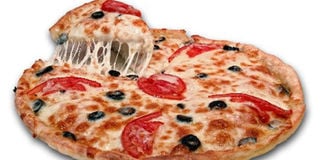
The average medium pizza has about 2,400kcal. It has a whopping 120grams of fat. This is like taking a quarter kilo tub of butter and eating half of it, says Dr Mukuhi Ng'ang'a.
Have you ever wondered when most long- term disease processes start?
Research has shown that most non-communicable disease processes start in childhood.
This has been found to be due to the role of lifestyle and diet in the development of these diseases.
Most of us grew up on a diet rich in whole grains, fruits and fresh vegetables.
We mainly drank water, fresh juice or milk instead of sodas or artificially sweetened juices.
We also engaged in plenty of physically demanding games and activities.
The situation has slowly changed for our children.
With the adoption of Western culture, there is a shift in diet towards increased intake of energy-dense foods that are high in fat, salt and sugars but low in vitamins, minerals and other healthy nutrients.
There is also a trend towards recreational past times that require decreased levels of physical activity.
Have a look at this:
A regular can of soda (355mls) has approximately 39 grams of sugar. This is the equivalent of nine teaspoons of sugar.
The average medium pizza with meat and cheese topping has about 300kcal per slice which means, the entire pizza has about 2,400kcal. It has a whopping 120grams of fat. This is like taking a quarter kilo tub of butter and eating half of it.
An average beef or cheeseburger has about 1,000mg of sodium. That is the equivalent of swallowing half a teaspoon of table salt.
A medium sized portion of French fries has about 450 kilocalories. This does not sound like much but it is the equivalent of eating 3 medium sized sweet potatoes.
These lifestyle and diet changes are being reflected in our children.
The levels of childhood obesity has risen dramatically in the past thirty years. Worldwide, about 10% of children are obese.
Profiles
A recent collaboration study carried out by Kenyatta University and several Canadian universities on a select group of Kenyan children found that urban Kenyan children have similar nutrition and physical activity profiles like their urban Canadian counterparts.
Obesity was also found to be more predominant amongst girls (16.7 per cent) than boys (6.8 per cent).
Interestingly, none of the rural children in the study was found to be overweight. (KIDS-CAN Research Alliance Study).
Obesity has been associated with several diseases. These include:
Diabetes High blood pressure
Breathing problems (especially whilst sleeping – known as sleep apnea) and asthma
Liver disease
Gastro-oesophageal reflux (manifested as ‘heartburn’)
Arthritis
High cholesterol which predisposes one to heart disease
Cancer: Increased incidence of cancers of the breast, ovary, colon, cervix and lymphoma
Psychological problems
Early puberty
Remember, that even though your child is not currently obese, they are carrying into their adulthood lifestyle habits that will eventually lead into disease.
We have the power to break this cycle.
Unlock a world of exclusive content today!Unlock a world of exclusive content today!