Time flies with great content! Renew in to keep enjoying all our premium content.
Prime
Dressing the chic woman in lesso
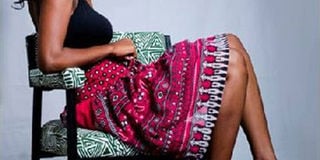
Lesoh collection. Photo/lesoh.com
In her first fashion show, Peggy Wambua’s Unapologetically Lesoh collection was all about fashionable ethnic wear.
Being her second apparel collection, it was a pure expression of the beauty of the kanga print in chiffon fabric and contemporary chic designs which are practical for the urban, chic woman.
“I want a woman to be fashionable, comfortable and chic. Every woman wants to feel like the ‘it’ whether they are old or young. My collection is for every woman from young and old,” she says.
The collection features 30 garments and includes some of the popular designs from her first collection like the flowing short skirt with a wide waist band. She now plans to do two collections a year.
Ms Wambua started her business in 2007 to export African textile home decor items; cushions, aprons, table mats and so on. They are sold in high-end retailers and wholesalers in the US and the Netherlands.
“Our target is high-end stores because our African designs are very appealing for their authenticity, patterns and colour. It raises curiosity and it’s interesting. So the fabrics are quite popular abroad,” she says
Her fashion interest stems from her teenage years when her parents run a fair trade crafts export business and the African fabrics have always been of great interest to her.
Her focus has been on the home decor business but is now looking to broaden the apparel portfolio and seeking to grow the local and international markets for the same.
Her apparel business is largely custom-made. Her dresses and tops cost between Sh3,000 to Sh5,000. Mostly selling online through her website, www.lesoh.com, people place orders using the standard sizes charts.
In her converted garage into a shop, two racks of her designs hang and on the side is a door that leads to the workshop. She has two employees to do the stitching and for the big orders, she outsources to a big workshop in Mombasa.
She does the same with jewellery; currently working with recycled materials and looking for a signature look that will suit the brand.
“I work with any African fabric like kikoy, Maasai blanket, kitenge – now called Ankara. Of course I draw my inspiration from the lesso which is a bold fabric with beautiful patterns and amazing Swahili sayings. My style is to be practical, authentic and chic,” she says.
It also includes kiondo bags made in a contemporary way which she describes as “This is traditional coming alive today”.
Ms Wambua worked briefly at the Federation of Women Lawyers (FIDA), a women’s advocacy non-government organisation. She got exposed to sad stories of women who were suffering violence and abuse as well as issues of inheritance. This is where she got a deep passion for women’s empowerment.
“The Lesoh is an ethical brand; it’s a socially conscious business. We believe that fashion has a role to play in society. We aspire to provide
opportunity for young people from challenging backgrounds by training and providing self-sustaining tools to create a sustainable livelihood out of the fashion business,” she says.
This, she says, is the part of the premise of their outsourcing model. The kiondos are made in Kitui and the Mombasa workshop hires economically-disadvantaged women.
Like many entrepreneurs, access to capital can be challenging and in the fashion industry, access to fabric is also often an added challenge. The Kenyan textile industry has been struggling and this has had an impact on the supply chain.
“It is a challenge finding good quality kanga. The factories are struggling to get cotton and at the same time struggling to make good quality fabric,” she says.
An avid buyer from Rift Valley Textile Millers (Rivertex) in Eldoret, she sometimes goes to the factory to pick the best quality or place an order for a particular print for bulk orders.
The lesso imports from Tanzania come in a few pieces and yet the export market more often than not orders a large number of pieces in one print.
“Africa is a beautiful place to be right now, full of opportunity and its people are increasingly seeking to identify with its culture. African fashion is evolving and Lesoh is here to make its mark, locally and internationally,” she says.