Time flies with great content! Renew in to keep enjoying all our premium content.
Prime
Exciting new board for your ceiling
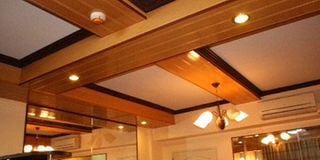
Drop gypsum ceiling with fancy lighting additions. FILE
Seven- year- old Sandra wanted a big rose flower on her bedroom ceiling with petals falling from the ceiling to the floor. And this is exactly what she got with the help of interior designer Mahindra Pednaker when Sandra’s mum sought his expertise to make the little girl’s dream come true.
“We used gypsum to create a huge rose flower on the ceiling and also used it to form the rose petals on the walls to capture the little girl’s impression of a wonderland garden from the storybook ‘Alice in Wonderland’,” says Mahindra, an interior designer at Rhino Special Products Limited.
The use of gypsum wallboard is an artistic way of bringing out various patterns and designs on walls and ceilings and has grown to be a common material used on ceilings to bring out any dramatic impressions that one may desire.
Gypsum powder, which is mined from sedimentary rocks, has been used for many years dating back to the Egyptian era of pyramid building. It is what was used to make statues and architectural designs.
The mineral, also called drywall or plaster board, is used extensively in construction projects both on walls and ceilings but has gained popularity for its multiple decorative techniques and patterns on ceilings.
“The gypsum ceiling has caught up fast in the local market pushing out the soft boards that was a common material in the industry,” says Mohindra.
The effects are more pronounced when making designs on the ceilings of buildings where it is used to highlight lighting fixtures or for making patterns.
It’s flexible, versatile and long-lasting – factors which have made it one of the best materials used by interior designers who want to be creative with patterns and structures.
The gypsum powder is mixed with water and designed according to the desired pattern which is then left to dry. After this, the panels formed are then used to make the final pattern.
The material can, however, only be used indoors as any contact with water will loosen the panel joints.
Popularly used in commercial buildings, gypsum is used to form patterns on the walls and ceilings without damaging the concrete walls of the building.
With a steady growth in the interior decoration industry, more people are including these designs in their homes especially for themed rooms. Mohindra says they have various clients who have requested them to include patterns on their ceilings with the use of gypsum in various rooms which goes with a theme.
Lighting is important on gypsum decorations; because it highlights the aesthetic values and give an added dimension to a room. Many bars and restaurants have used this technique coupled with warm coloured lighting bulbs to give a calming feel to their patrons.
Salons and spas have also picked up this decorative technique to capture that relaxed ambience that one craves when they want to totally let go and enjoy their grooming session.
Morocco is one of the countries which have used gypsum for many years; their love of sculpture and architectural designs in most of their buildings has been heightened by the use of this material.
One of the favoured features of gypsum is its ability to get rid of moisture and its characteristic lightness of weight.
A gypsum ceiling board has important specifications that make it a preference for many home builders. Despite its light weight, it’s able to buffer cold and sound.
The fact that it can be coated with different types of paint makes it very useful when it comes to solving most decoration problems as it’s also able to hide the cracks on the walls, framed windows and doors.
Gypsums board surfaces can be decorated with paint, paper, textures, and fabric or vinyl wall coverings to give it a vibrant finish. The material is also non-combustible and lasts longer than ordinary ceiling board.
The board can also be used to make various interior decorations such as shelves, columns and special types of fireplaces to add that touch of luxury.
Unlock a world of exclusive content today!Unlock a world of exclusive content today!