Time flies with great content! Renew in to keep enjoying all our premium content.
Prime
Battling the silent killer that is gangrene
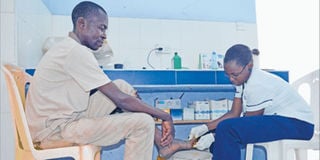
Wound dressing: Living healthy can significantly reduce chances of a person developing gangrene. PHOTO | FILE
Susan Kwamboka, 36, knows only too well the pain of losing a mother to gangrene, a condition that consumed her alive, causing some of her toes to fall off. Gangrene occurs when body tissues dies due to loss of blood supply as a result of an underlying illness, injury or infection.
Her mother was diabetic and had developed dry gangrene, a type that shows no evidence of infection because it occurs under the skin.
“You can imagine the horror of waking up in the morning to find her toes dropped on the floor,” recalls Ms kwamboka.
People with diabetes have an increased risk of developing gangrene, because high blood glucose levels can damage small blood vessels which supply blood to the nerves.
As such, patients lack the ability to feel pain as well as detect temperature changes. This makes it easy for them to injure themselves without realising.
Getting amputated
“Between 30 and 40 per cent of diabetics are prone to gangrene,” says Dr Issac Miruka, a foot and wound care specialist in diabetes at the Kenyatta National Hospital (KNH) in Nairobi.
He notes that people with diabetes suffer more due to little interventions within the health sector.
Simple educative sessions about the disease, Dr Miruka says, can potentially bring down the number of diabetics getting amputated due to gangrene.
“The tendency is that patients would ignore a little scar to their feet which can get infected and potentially lead to amputation over a period of time,” he said.
Unknown to most people though is that 80 per cent of amputations are preventable with simple interventions such as early screening, avoiding self-surgery at home and wearing appropriate foot-wear. Others include cutting nails with nail cutters as opposed to sharp objects like razor blades as well as regular self-foot examination which can help detect early signs of gangrene.
Aside from dry gangrene, there is wet and gas gangrenes, types that are acute and involve bacterial infection.
Wet gangrene is caused by infection due to bacterial invasion in the tissues, making the skin around an area grow moist. The process subsequently kills tissues.
Gas gangrene, on the other hand, is rare but fatal and it occurs when a bacteria called clostridia creates an infection that causes bubbles and toxins to develop inside the affected area.
Gangrene is a dangerous disease that does not discriminate age or race of its victims. Aside from diabetes, other intrinsic causes of gangrene include cardiovascular conditions, high cholesterol levels, smoking and severe trauma from road traffic accidents.
Critical lymphocemia is another cause. This is continued deposit of fats under the skin making it feel like a lump. Over time, the fatty deposits block blood vessels leading to limited supply of blood and subsequently oxygen to parts of the body causing tissues to die.
So what are early signs that one is developing gangrene?
Dr Miruka says gangrene is a progression disease meaning that it starts from somewhere and can be controlled from its starting point.
“For instance, when one has diabetes and makes efforts to control their blood sugar, the narrowing of their arteries will not increase to severity,” he says. When an isolated area on your foot feels cold, the best remedy is to go for a check-up as this could be an early sign of gangrene. Another telling sign is when there are recurring sores in the same place on your body and the area is numb.
There should be cause for alarm when you experience a pulling effect kind-of-pain in the leg, medically referred to as claudication.
Lymphocemia can be detected when a person experiences pain while walking for about a kilometre to a point that compels them to take a rest.
As days go by, the distance of the walks shortens and the interval between subsequent pain pangs reduces. This is a sure sign that you are progressing towards critical lymphocemia, a condition that can lead to gangrene.
There should also be cause for concern when a certain section of the skin looks swollen and shiny. This is medically referred to as dependent rubor and is a sign of air loss on the skin. Living healthy can significantly reduce chances of a person developing gangrene.
Smoking should be avoided at all costs as it thickens the blood and makes it black. It also impedes the transportation of oxygen in the blood which it replaces with carbon dioxide. Carbon dioxide is toxic to the body.
Eat healthy meals to reduce cholesterol in the body and control hypertension using blood thinners under direction of your doctor. Also, carry out regular foot examination otherwise known as peddle pulses to identify areas with nerve problems.
Unlock a world of exclusive content today!Unlock a world of exclusive content today!