The artistic dance is the latest fitness craze in Kenya. Its benefits; a lean and toned physique, faster metabolism, tight abs, butt, legs and back.
Dance-inspired fitness is now common in most Kenyan gyms and ballet is evolving beyond young girls in tutus and tights to a fun workout for mostly women.
Passion and determination are key to sustain this graceful workout, says Vincent Owoko, 26, a ballet trainer in Nairobi and Mombasa.
“Not everybody can afford to have a gym at home but almost everyone can dance,” he says.
Mr Owoko has been doing ballet for nine years and most mornings, he starts with flexibility exercises.
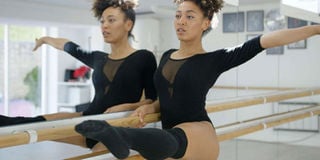
He dances for an hour. Then he spends 30 minutes on a barre, a long handrail used for balance. The barre workouts help him to stretch and tone the back, hands, neck, shoulders, waist, thighs and toes.
“Stretching is mandatory before one performs the actual dance. It enables one to be flexible and have good posture,” says Mr Owoko.
To be comfortable while training, wear leggings and a top or loose tracksuits which do not restrict movement. But avoid baggy clothes that may trip you while dancing.
Besides ballet, Mr Awoko trains contemporary dance, movement and Zumba. The dance is not for women alone and just like Zumba there are a few men joining the classes.
Mr Owoko says that at first, people used to stare as he danced ballet.
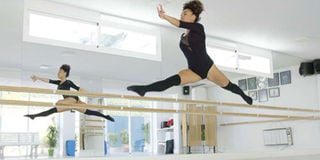
“People think that ballet is for children (especially girls), but adult classes are a great way for both men and women to stay fit,” says Mr Owoko as he slowly made a split on the smooth floor.
He is currently training 15 adults at the University of Nairobi alongside young ballerinas aged four to 14 years.
I find him exercising with young ballerinas in Mombasa. After the exercise, he dances combining all the moves; rond de jambe, tendu (leg extended, toes on floor, heel off, and stretching instep, sweeping round) and making several turns called Pirouette.
I joined the workout but gave up midway, my body was so rigid.
“Ballet is demonstrative, artistic and great for flexibility and co-ordination. For adults with no experience, they can try out the moves and with consistency, they become flexible like the little ones,” Mr Owoko says.
A young dancer practicing in a studio. PHOTO | FOTOSEARCH
Music is an important element in ballet fitness. The dance moves could be dull but the music adds excitement.
“In ballet, we mostly use classical music but you have the freedom to choose your music. I love contemporary music with a slow or medium tempo,” he added.
To master ballet, you have to know the basic moves such as pirouette turns and pliés; where you have to continuously bend the knee outward with the upper body part held upright.
Other moves include several leg positions. First, you put your heels together and toes going outwards. In second position, the feet point in opposite directions, with heels spaced approximately 12 inches apart and in third position, one foot is placed in front of the other so that the heel of the front foot is near the arch.
These leg positions total to seven.
Mr Owoko says dancing is less tiring compared to other workouts.
“I dance every day. I have never attended gym training,” says the trainer who has won ballet competitions and travelled to several countries to dance.
“I went to Israel to sharpen my ballet skills. I also represented Kenya in a Chicago competition.’’
When he is not dancing or training people how to dance, Mr Owoko draws, paints and sketches.
As more adults take up ballet to exercise and meet people, he says, the only challenge is their lack of patience.
“Most adults have no patience. But with persistence, they start loving ballet then it makes them flexible,” he says.