Time flies with great content! Renew in to keep enjoying all our premium content.
Prime
Kitchen spoons not the perfect measure for medicine
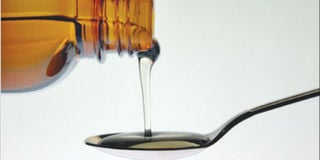
A new study says using kitchen spoons to measure liquid medicine can lead to errors. Photo/insadco Photography and World of Stock
A new study published in the January 5 issue of the Annals of Internal Medicine illustrates the dangers of using kitchen spoons to measure liquid medicine.
Former cold and flu sufferers were asked to pour one teaspoon of nighttime flu medicine into kitchen spoons of differing sizes. Depending upon the size of the spoon, the 195 former patients poured an average of eight percent too little or 12 per cent too much medicine.
“When pouring into a medium–size tablespoon, participants under–dosed. But when using a larger spoon, they poured too much medicine,” said Dr Brian Wansink, Director of the Cornell Food and Brand Lab, who led the study.
“Twelve per cent more may not sound like a lot, but this goes on every four to eight hours, for up to four days,” Wansink explained. “So it really adds up–to the point of ineffectiveness or even danger.”
Visual illusions and spatial relationships are familiar topics in Wansink’s work in food and eating behaviour. In his book Mindless Eating: Why We Eat More Than We Think, he shows how smaller plates can unknowingly decrease how much people eat, and how taller glasses can decrease the amount of alcohol poured by even expert bartenders.
“Simply put, we cannot always trust our ability to estimate amounts,” said the study’s co–author, Dr Koert van Ittersum, Assistant Professor of Marketing at Georgia Tech. “In some cases it may not be important, but when it comes to the health of you or your child, it is vital to make an accurate measurement.”
Wansink and van Ittersum recommend using a proper device — a measuring cap or dropper, or dosing spoon or syringe — to measure liquid medicine.
The study follows a 1992 study of dosing errors reported to poison control centres in the US that found that failing to distinguish between teaspoons and tablespoons was a major cause for overdosing of cough and cold medicines and liquid acetaminophen.
Although too much cough medicine is typically not a major health worry, many liquid medications contain acetaminophen, the active ingredient in Tylenol. Acetaminophen overdose is a major health concern and can lead to serious illness, liver failure and even death. And while small dosing errors may not seem like a major concern, excessive doses can add up and make it relatively easy to exceed the recommended daily limit, now four grams.
Recommendations:
Use a measuring cap, dosing syringe, or other type of measuring tool
Ask your pharmacist for a proper measuring device
Slow down and pay attention to measuring right
Follow all instructions closely
Unlock a world of exclusive content today!Unlock a world of exclusive content today!