Time flies with great content! Renew in to keep enjoying all our premium content.
Prime
Protests aftermath: Mental health crisis unravels among Kenyan young people
Free mental health services available in Kenya include the Kenya Red Cross Society, Befrienders Kenya, Niskize Helpline, Emergency Medicine Kenya Foundation (EMKF), Nacada Helpline, and LVCT/One-2-One Youth Helpline.
In the wee hours of June 26, after gunfire and smoke in the streets had died down, Waithera wa Njangi posted on X: "Are we to show up to work tomorrow like nothing ever happened?”
This tweet was about the tense situation in Kenya following anti-government protests. The disenfranchisement is not unique. It is in the minds of many young people who find themselves holding the short end of the stick. They have lost kin, friends, jobs and voices.
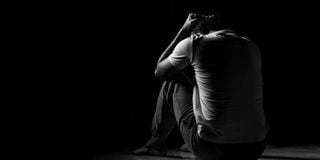
Timothy Ngome was going about his business when he was informed that his cousin, Kenneth "Mfalme" Ouma, had been shot dead while working out at a gym in Karatina.
"Mfalme had a bracelet that showed his belief in Kenya. I'm left with his memory and disdain for official statements," he says.
"I lie in bed, wondering who died last night and what absurdity the state will unleash."
His grief demands to be felt. It is the affliction of a country he hoped to grow old in.
"You are made to live through grief. You cry while washing dishes, at meetings and even through polite laughter. Eventually, grief stops asking for permission and just moves in," he says.
Timothy attempts to milk humour from the devastating experience. This is a coping mechanism, especially whenever he feels unheard.
The silence of institutions and loved ones is deafening. He avoids news bulletins.
Timothy Ngome, 29, a Legislative Clerk at Kakamega County Assembly in Kakamega Town poses for a picture on July 17, 2025.
Photo credit: Pool
How then does he cope with all these?
“I refuse to delete old photos and texts. I lie to myself that tomorrow will be better. I post good memes, write tirades on my Notes App and delete them. Late night cookies are a good distraction too," he says.
His message to fellow young people grieving and hurting?
"Don't give up. Shout if you have to and whisper if you must," he says.
Irene Linet's mornings have changed.
"I agonise for 12-year-old Bridgit Njoki who was killed by a bullet at her parent's house. When the lives of children are cut shot by police, what should we tell their siblings and friends? I'm afraid of the uncertainty that is tomorrow," she says.
"In what condition are we leaving our children? Will they see how hard we tried to improve it? The only consolation is that agencies like the Law Society of Kenya are coming to the aid of the ordinary person.”
Irene has seen life ebb from people she knew closely. "I have not even started to heal. Who will take care of the broken ones?" she asks.
“There are occasions I want to talk to people, but cannot reach out to them.”
Irene Linet, the 28 year old Language Consultant in Nairobi on July 2025.
Photo credit: Pool
She has avoided social activities weeks after the brutality meted on protesters by state security agents.
"I don't want to be seen in public. I retreat from the public eye because that is where death and violence lurk,” she says.
However, the seclusion has also been good for Irene.
"My creativity has improved. I retreat to my colouring books. I’m on my third packet of crayons. Music also helps. I turn to music, faith and silence,” she says.
Dancan Otieno wakes up with a heavy heart every morning.
"I'm not sure about my safety. The killings and destruction of property hurt. Why would a government turn against its citizens?" he asks.
He uses three words to describe his state of mind – confusion, anger and suspicion, especially towards the police.
Dancan has not lost a friend or relative in the demonstrations. He has, however, lost something important – hope.
“My heart goes out to the families whose loved ones were killed or injured," he says.
“I spend most of my time alone, reflecting quietly. I also limit my presence on social media. My Bible study group comes in handy for members are always ready to listen."
For Dancan, stress shows up as restlessness. His pain bleeds into creativity.
"My writing has changed. The themes are mostly centred around pain, hurt and betrayal,” he adds.
He finds solace in faith, books, music and in conversations with family members.
“We talk about everything – what’s happening in the country and how is affecting us,” Dancan says.
His frustrations boil over when he hears leaders telling young Kenyans not to be ambitious and that their agitation won't take them anywhere.
“Ambition should be encouraged. It takes faith to be ambitious. Our desire for social justice shouldn't be dismissed as noise," he says.
Even so, Dancan at times wonders if young people's voices matter.
“Politicians have hijacked our movement. It’s sickening," he says.
His biggest sources of strength is his family and Mamlaka Hill Chapel community.
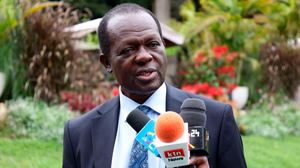
Rosemary Chege (in her thirties), Registered Counseling Psychologist, Community Health Nurse & Mental Health advocate in Nairobi.
Photo credit: Pool
"During Sunday afternoon discussions, we strengthen one another in faith and prayer," he says.
What would he tell young Kenyans on the edge of giving up?
"The fight is far from being won. We must press on until we get to the promised land. If we don't stand up to injustice, the perpetrators will only grow bolder, and our children will suffer," Dancan says.
Rosemary Chege, a registered counselling psychologist and mental health advocate, says anxiety and depression in young Kenyans may have been heightened by political instability.
"Tension creates uncertainty and an elusive perception of safety, leading to feelings of insecurity. This leads to hopelessness and helplessness," she says.
"Political uncertainty has hit the economy, increasing anxiety and stress due to loss of livelihoods."
Rosemary is worried about the impact of this instability.
“Trauma alters perception and coping mechanisms, leading to struggles in relationships. Trauma can escalate into serious mental health issues like post-traumatic stress disorder (PTSD), chronic depression and anxiety," she says.
"It also leads to loss of identity, low self-esteem, desperation, isolation and emotional shutdown."
While dark humour can be a short-term coping mechanism, relying on it can worsen mental health issues.
Rosemary says validation of these feelings is important.
"Therapy helps process traumatic memories, reducing their intensity, and preventing long-term complications. It also teaches coping mechanisms. Gen Z can channel their frustration into art, writing, music or civic education," she says.
Free mental health services available in Kenya include the Kenya Red Cross Society, Befrienders Kenya, Niskize Helpline, Emergency Medicine Kenya Foundation (EMKF), Nacada Helpline, and LVCT/One-2-One Youth Helpline.