A cancer diagnosis irrespective of the stage of the disease is one of the most dreaded experiences. After the diagnosis, most patients have a myriad of questions.
Early detection, getting the right care, seeing the right specialist, and having access to the right diagnosis equipment are very critical in cancer treatment.
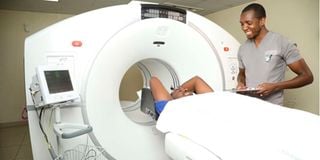
One critical diagnostic technology is the PET CT, a technology not widely understood by patients. Here is what you need to know about PET CT Scan.
PET CT stands for Positron Emission Tomography and Computed Tomography. This is an imaging machine that has two components, a PET scan, and a CT scan.
This technology combines assessment of the function of cells using a radioactive drug (tracer) through PET Scan and structural imaging using the CT scan.
Your doctor may ask you to do a PET scan because it is an effective way to identify cancer, heart disease, brain disorders, and infections. PET Scan is more accurate in the evaluation of most cancers compared to CT scan and MRI. Your doctor will use this information to help diagnose, monitor or treat your condition.
Can I do a CT scan instead of a PET scan?
PET CT is mainly for cancer imaging while a CT Scan has broader use including assessment of infections and injuries to the body. However, PET CT is specific for the evaluation of particular types of cancer.
What is the role of PET CT Scan?
It helps clinicians arrive at a diagnosis in addition to clinical and laboratory tests. It is also critical in identifying the stage of cancer, assessing whether cancer has spread in the body, assessing if the treatment is effective, and determining cancer recurrence.
Can I have a PET CT without a doctor’s request?
No.
What determines who can get the scan?
It uses radiation and is therefore not suitable for pregnant mothers unless under very special considerations.
In children, minimise the use of PET CT due to the radiation involved, instead use MRI, ultrasound, and CT scan.
PET CT is required in cancer staging and follow-up of most but not all cancers. Not all cancers can be identified on PET scan.
The Aga Khan University Hospital PET CT scanner is useful for a majority of cancers including cancers of the breast, lung, head and neck, prostate, and stomach.
Before the procedure what am I expected to do?
Fast for 6 hours to ensure the accuracy of the scan. Reduce physical exercises and carbohydrate intake 24 hours before the scan and stay well hydrated through intake of plain water.
No particular patient preparation is required for a prostate cancer PET scan apart from staying well hydrated.
What will the procedure involve?
The patient will have their blood sugar level checked and if within normal range, a small volume of the radioactive drug is administered. The patient will then rest in a quiet room for approximately one hour after which they will be moved to the PET scanner. The scan takes approximately 1 hour after which the patient is allowed home.
Are there any side effects?
It is generally a safe procedure apart from exposure to a small dose of radiation which is within acceptable medical use. The radiotracer administered is an inert material and therefore has no side effects on the body.
How long will the radiation stay in the body – do I need to isolate?
The radioactive drug administered during PET CT test has a very short half-life and will clear from the body within 24 hours and by the first six hours. Most of it will have been excreted through urine. You do not need to isolate but take a lot of water to help in clearance of the radiation from the body through urine.
How long will I wait for the results?
The PET CT examination will be reviewed and reported by doctors trained in analysing and interpreting PET examinations. At the Aga Khan University Hospital, Nairobi a PET CT Scan report will be ready in 24 to 48 hours.
After how long should I redo a PET Scan?
This depends on the type of cancer, stage, and mode of treatment. There are many considerations for repeat PET CT imaging and your doctor will advise on the need and timing of follow-up PET CT examination.
Dr Nguku is a radiologist and Nuclear Medicine Specialist at Aga Khan University Hospital
Unlock a world of exclusive content today!Unlock a world of exclusive content today!