If we aim to improve safety, law enforcement and public education should likely focus on the issues that cause the most frequent and severe accidents. Which of the areas targeted by roadside checks fall into this category, and how are the statistics used to guide these efforts collected, collated, and considered? Matthew.
That’s a very valid and important question... if the primary aim of roadside checks is to help prevent the most frequent and serious accidents.
Clearly, it’s not. Their main goal is to spot-check and penalise minor offences, to the limited extent that an officer on foot can manage while dealing with passing traffic, without unfairly harassing law-abiding drivers.
Some might argue that the overwhelming focus on check-and-punish often results in as many negative as positive outcomes. These checks have their place, but they are nowhere near the top of any safety priority list. They tend to address the issues least likely to cause a serious crash. But that’s another matter.
Your question – rightly – focuses on the “most” and “worst” accidents, and how we identify the root cause of those, and design effective action to reduce them.
I am not privy to the statistics on which traffic administrators decide what is most important in the road safety quest, but the factor most often cited in pronouncements is “speed”. Logic suggests that might be misplaced.
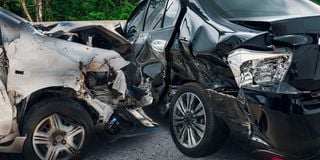
Observation suggests “most” accidents occur at relatively low speed, and the “worst” often happen within the permitted speed limits. If the vehicle and driver are competent, speeds significantly higher than the limits can be managed quite safely.
Any measure to improve safety must start with the “root cause” of what is dangerous. And in seeking that the world summarises the process of both cause and cure as “The Three Es” – Education, Engineering and Enforcement”.
Education (or lack of it) is by far, the most significant, because road users who have that can more safely cope with defects in engineering and enforcement, whereas an incompetent or delinquent road user can cause or be in danger even if the engineering and enforcement are excellent.
In almost any accident, “someone” made a mistake. The “circumstances” of the accident might reveal what the mistake was.
But that is not the “root cause”. To find that, and address it, we need to know “why” the mistake was made. Only when we know that will we have a basis for deciding what to do to prevent it.
To give that thinking a practical example: A man with a severe head injury is rushed to hospital. He was standing in the middle of a room when a heavy light fitting hanging on a chain fell from the ceiling and landed on him.
The people who investigate our road accidents would probably report the “root cause” of this incident as a falling light, and if that sort of thing kept happening, they might start composing a new knee-jerk law or crackdown to improve safety. But what would that law be?
After all, a falling light was not the cause – merely one of the “circumstances”. The strategic question is: why did the light fall? Did the chain break or did the mounting hook rip out?
And why did either of those things happen? Was there a manufacturing fault, or defective installation, or was the chain/hook not strong enough for the light’s weight? Or was a good fitting using strong materials progressively worn and weakened by some unexpected factor?
So, in an accident investigation, you are not just asking what happened, or how it happened; you’re asking “why”, and when you have answered that, you ask “why” again, and again, and as many times as necessary until there are no more “whys” to ask. Only then is the answer “strategic” enough to be a valid basis for remedial policy or law.
So why did the light fall? Because the chain holding it broke. Why did the chain break? Because a weld in one of its links was weak. Why was the weld weak? Because it moved to-and-fro in the breeze from a fan and rubbed on the ceiling hook until it was worn away. Why did it wear so easily…and so on, and so on.
That is, of course, just a hypothetical example. A deliberately bizarre one. Just to illustrate how thorough (and thoughtful) analysis must be to establish the real “root cause” of a failure, which is essential to any realistic preventive action. Anyone involved in modern “quality control” will be familiar with the process.
Anyone who attributes an accident to “excessive speed” (based on what?) might more accurately write “I don’t know”. Because, empirically, “excessive” does not mean anything without a specific benchmark.
Strategic causes are often obscure, complex, and can be far removed from the scene of an eventual failure. Especially in road accidents.
Speed, for example, is always one of the “circumstances” of an accident; it is rarely the main or only cause. As the saying goes, jumping off a skyscraper doesn’t kill you, hitting the pavement does.
How well do officers who attend traffic accidents distinguish between “circumstances” and real “cause”? What actual words do they write in the book? And how do the statisticians translate those into a themed and weighted graph or table that guides road safety administrators? And on what basis and by whom are those squiggles and numbers turned into policy imperatives, and then drafted into law (Enforcement), or better road design, marking, signage and vehicle maintenance (Engineering), or better training of drivers, designers, contractors, mechanics and administrators (Education).
Some of those questions can be answered by working backwards. Presumably, the most obsessive laws and enforcement priorities are based on the most compelling statistical evidence, which is drawn from police reports that identify the “root cause” of each accident. Do they?
Judging by the roadside priorities of traffic police, the latest traffic legislation, and the glaring issues completely overlooked by the road safety barons, that whole process clearly doesn’t start, or end, well.
If the excuse is lack of capacity and training, then woah! Why and why? Only if we know the cause can we design the real cure.