Why do so many motorists fail to turn on their headlights on foggy days? Surely they notice that other vehicles without their lights on are more difficult to see, so they themselves must also be more difficult to see. What are they trying to gain or save at a high risk of causing an accident? Mia Opiah
The flip side of that question is “what might they lose if they don’t turn on their lights?” The answer is, of course, their lives! To some people, that is quite a compelling factor. But empirical evidence suggests that does not apply to quite a lot of motorists, who make their decisions on the basis that 99 per cent of the time it will be okay, and don’t worry about the 1per cent of the time it won’t.
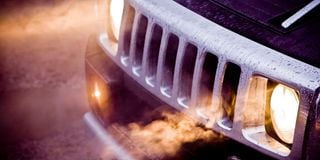
That strategy is, of course, more prevalent in people whose head makes a whistling noise when they stand in a crosswind. A solution to that problem is not easy, but we do have a special device for it: roadside checks.
Any vehicle arriving at one of those with its lights off on a misty day could be invited to park off the side of the road for as long as it takes for the driver to figure out why he might have been stopped. S/he would only have to do that once to get (and remember) the idea.
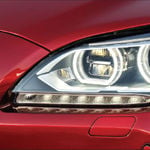
They should have been taught and tested on the knowledge that in misty conditions it is obligatory to turn on your lights – the headlamps, not just the side lights. That is the Law.
Some drivers still elect to continue fog-driving with just sidelights or no lights at all. Because that is so illogical, they must have a reason. What could it be?
The possibilities include that their lights don’t actually work. Or that only one of them does, and they don’t want to reveal that. Alternatively, they are under the misapprehension that using lights adds to fuel consumption, reduces engine power, or inflicts wear and tear on the bulbs.
And indeed, all those things do happen when you turn on the lights. Fuel consumption does go up, and power does go down, because the alternator uses engine power to generate electricity to recharge the battery.
But the scale of that effect is only slightly greater than if you added extra weight by growing a moustache! Aka actual but negligible. And not even close to the effect of driving 5 kph faster, or clumsy gear selection, or harsh acceleration, or blowing your horn, or playing loud music on the radio, or running the wrong tyre pressures, or degraded engine oil, or binding brakes, or poorly lubricated bearings, or faulty wheel alignment, or a non-aerodynamic roof load...
Another factor could be their discovery that putting lights on during the day does not help them see any better. And indeed, it does not. But, for those who haven’t figured it out, it helps other road users see you better.
This is, of course, a tricky concept for some. It requires a giant leap from...
“Me, me, me” (drivers do not “forget” to turn on their “electric” windscreen wipers when it rains, or their demister fans, or their very fuel-and-power greedy air conditioners when it is hot) to...
“Consideration for others”. And on that level, our traffic is always motoring in misty conditions, and sometimes metaphorically in the dark.