D’Angelo: The artiste who gave modern soul a new global language

American neo-soul icon D’Angelo, celebrated for his Grammy-winning albums Brown Sugar, Voodoo, and Black Messiah.

Photo credit: Pool

The late 1990s were a time when Kenyans were just getting used to the crisp sound of FM radio. The popular US urban music show Walt Baby Love heard on syndication through Nairobi’s Capital FM popularised an emerging movement rooted in the classic R&B and soul traditions of the 1960s and 70s, flavoured with a dash of traditional jazz, with underpinnings of hip-hop.

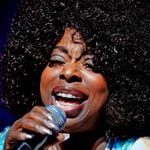
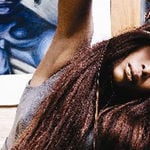
The artistes at the forefront of what came to be known as neo soul were Erykah Badu, Angie Stone, Maxwell, Jill Scott, and D’Angelo. The latter’s signature was an intricate soulful rhythm, delivered in a falsetto that immediately sparked comparisons with his idol, Prince, the preeminent R&B star of the previous decade.
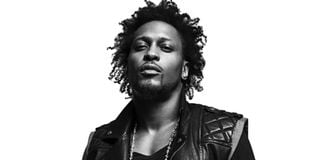
Fans the world over sat up and took notice when D’Angelo released a rendition of Smokey Robinson’s Cruisin’ with a striking video shot in retro black and white.

The death of D’Angelo at the age of 51 from pancreatic cancer, announced on Tuesday this week, truly marks the end of an era. Tragically, the demise of the singer, songwriter, producer, and multi-instrumentalist comes just seven months after the passing of his mentor and former girlfriend, Angie Stone.

Michael Eugene Archer was born on February 11, 1974, the youngest of three sons. He sang in the choir of his grandfather’s church just outside the city of Richmond, Virginia. By the age of five, he was playing the organ for the church congregation, and in later years, he would also learn the piano, bass, guitar, and drums.

His music teacher in school described him as “James Brown, Michael Jackson, and Prince all wrapped into one”. In 1991, at the age of 17, he won the amateur hour at the iconic Apollo Theatre in Harlem, New York, performing Rub You the Right Way by former New Edition singer Johnny Gill.

American neo-soul icon D’Angelo performs during a Spotify press event in New York.

Photo credit: Reuters

Archer dropped out of high school and moved to New York City in the early 1990s and was signed to his first publishing contract and eventually a recording deal with EMI Records. It was then that he took on what became his famous stage name, inspired by Italian sculptor Michelangelo.

For his first album Brown Sugar, D’Angelo was paired with singer and rapper Angie Stone, a more experienced recording artiste, who had made her career as a member of the group Sequence. Their relationship turned romantic and resulted in the birth of a child, Michael Archer Jr, in 1997.

“Together, we were a threat because they know two heads are better than one,” Stone told Ebony magazine in 2012, accusing sections of the music industry of driving a wedge between her and D’Angelo, which led to the collapse of the relationship.

Writer Faith A. Pennick describes D’ Angelo’s second album Voodoo released in January 2000, as one that not only tore down the walls between genres “but in effect vaporised his own well-made but in comparison musically straight-forward first album.” It is not just the production and songwriting craft on the album that made it a classic, the optics were a factor too, right from the cover with D’Angelo baring his well-toned physique,

The album’s first single Untitled (How Does It Feel), a homage to Prince, gained notoriety thanks to a sexually charged video with images of D’Angelo’s sweaty tattoo-adorned torso. He explained that the inspiration for the song had been misconstrued: “I was thinking about a spiritual experience. I was thinking about the Holy Ghost, and at the end, when I had to bring the emotion through, that’s where I went to get it.”

Pennick states in her book Voodoo 33/3 that, as much as D’Angelo was hailed for his musicianship and songwriting, he did not get enough credit for his singing ability. “His church choir training, his passion and ability to switch from pillow softness to full-on gospel wailing make the songs on Voodoo that much richer and multidimensional, on record and live in concert.”

Voodoo was released in January 2000, debuting at number one on the Billboard 200 album chart and selling more than 1.7 million copies in the US alone. It won the Grammy for Best R&B Album and Untitled won Best Male R&B Vocal Performance but D’Angelo struggled to cope with the consequences of his portrayal in the video in subsequent years.

After the Voodoo tour, D’Angelo withdrew from the spotlight, returned to his hometown of Richmond, and, frustrated that the sex symbol image had overshadowed his art, took a hiatus from music. He slipped into alcohol and drug abuse.

American neo-soul icon D’Angelo, celebrated for his Grammy-winning albums Brown Sugar, Voodoo, and Black Messiah.

Photo credit: Pool

In 2002, he was charged with assault, aggressive driving, disorderly conduct, and three years later was arrested for driving under the influence, possession of marijuana, and carrying a concealed weapon.

In September that year, after receiving a three-year suspended sentence, he sustained serious injuries in a car crash for which he pleaded guilty to driving with a suspended licence and driving under the influence.

Several stints in drug rehabilitation enabled him to clean up his act enough to return to touring in 2012, and nearly 15 years after his previous recording, the then 40-year-old D’Angelo released his third and final studio album Black Messiah, in 2014.

It won the Grammy Award for Best R&B Album in February 2016. At the time of his death, D’Angelo had been back in the studio working on his fourth album with longtime collaborator Raphael Saadiq. His fans will hope that some of that material will eventually see the light of day.

PAYE Tax Calculator

Note: The results are not exact but very close to the actual.