“This place brings out the best in me,” says an excited Rikki Stein, a music industry veteran best known as having been the manager of Nigerian Afrobeat legend, Fela Anikulapo-Kuti.
We are literally on the stage at the New Afrika Shrine in Lagos, as a local band belts out an Afrobeat number; this is the sound that Fela bequeathed the world. It is 11 pm, and there is still a long night ahead, as the week-long festival, Felabration, is just getting started.
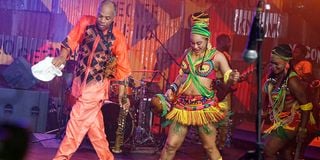
Each night during the week of Fela’s birthday (October 15) the Shrine is literally a riot of culture: live music, talent shows, fashion, food, and drink, the annual festival started by Fela’s eldest daughter, Yeni, in 1998 to celebrate her father’s legacy.
Part of the art exhibition at the Afrobeat Rebellion exhibition celebrating Fela Kuti’s legacy in Lagos, October 17, 2025.
Photo credit: Thomas Rajula | Nation Media Group
“I left here at 3am last night and the party was still bubbling,” remarks Stein, as he gestures at his reserved space marked Rikki’s Corner. Even at the age of 83, he still gets up to do a jig to the rhythm every so often.
Among the international acts performing at this year’s Felabration was the American singer, percussionist, and activist, Madame Gandhi. The Berklee College of Music graduate in sound design plays a hybrid of pre-recorded electronic beats off her computer with live drums and saxophones.
In July, the musician whose given name is Kiran Gandhi, was the opening act for Femi Kuti during the US leg of his Journey Through Life tour. It is not your classic Afrobeat style, but maybe this fusion of percussion and electronic beats is the direction that the genre will take in the years to come.
According to Stein’s 2024 memoir Moving Music, Femi and his elder sister Yeni conceived the idea of building the New Afrika Shrine as a monument to their father’s memory and to replace the original Shrine that was burnt down during an assault by the Nigerian military in 1977.
Using their share from an advance paid by Universal Music for a licence deal for the release of Fela’s remastered catalogue, they designed and built the “perfect club”. “Five times the size of the original Shrine…from its façade to its deepest recesses, it is imbued with Fela’s spirit,” writes Stein.
Part of the art exhibition at the Afrobeat Rebellion exhibition celebrating Fela Kuti’s legacy in Lagos, October 17, 2025.
Photo credit: Thomas Rajula | Nation Media Group
Right from the street in the bustling Lagos suburb of Ikeja that leads to the New Afrika Shrine, the scene is a frantic hub of activity as food and drink trucks line up the dimly-lit street, pumping loud music while hawkers line the pavements through the night.
The venue itself contains a huge stage, large dancing area, with additional sitting space upstairs. The walls are adorned with portraits of Fela, in a typical defiant pose, along with those of other revolutionaries like Patrice Lumumba, Thomas Sankara, Nelson Mandela, Kwame Nkrumah, Marcus Garvey, and Fela’s mother, Funmilayo Ransome-Kuti. The matriarch was a fierce pan-African activist in her own right who championed women’s political and economic rights.
Across the city’s island, the Afrobeat Rebellion: Fela Anikulapo-Kuti, an exhibition that was first mounted at the Philharmonie de Paris in 2022, has come home to Lagos to coincide with Felabration.
Lead curator Seun Alli and her team, with the support of the Kuti family, have reimagined the exhibition for the local audience. “This is an important exhibition to understand the life and times of Fela, says Femi, as he gets on stage, to perform at the Ecobank Pan African Centre, which hosts the exhibition until December 28, 2025.
Nigerian Afrobeat legend, Fela Anikulapo-Kuti.
Photo credit: Thomas Rajula | Nation Media Group
The performance had been organised for delegates attending the Forum Creation Africa led by Nigerian Minister for Art, Culture, Tourism and Creative Economy Hannatu Musawa and French Foreign Minister Jean-Noël Barrot.
Femi’s Positive Force is an elaborate group, reminiscent of his father’s band, complete with a horn section, guitars, percussion, and three female dancers in bright multicoloured costumes. He switches between the alto-saxophones and keyboards, instruments that he started playing in his father’s band at the age of 16.
“I am 63 and completely satisfied. I’ll go down with a smile,” he says in some of the banter between songs in the course of his 45-minute set. His set is a career retrospective, from the potent political anthem Truth Don Die to crowd favourite Beng, Beng, Beng, to Work on Myself from his latest album. “When we write, we don’t listen to our own lyrics,” he says while introducing the latter. “If I can change myself, become a better father, musician, and have more humility, be serious with work, then the change begins there.”
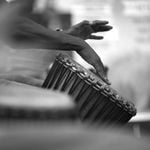
The exhibition itself is an outstanding multi-sensory timeline through Fela’s life, his music, and his politics, packed with letters, photographs, magazine and newspaper clippings, vinyl records, audio-visual, and instruments like the massive Gbedu drum from Fela’s Yoruba community that he introduced to his band in the 1980s
Part of the art exhibition at the Afrobeat Rebellion exhibition celebrating Fela Kuti’s legacy in Lagos, October 17, 2025.
Photo credit: Thomas Rajula | Nation Media Group
Visitors see his costumes, notably the trademark embroidered jackets, and in a hilarious twist, a section dedicated to the underwear that Fela was often pictured wearing when holding court in his self-proclaimed Kalakuta Republic.
It is left up to Femi to sum up his father’s idiosyncrasies: “Was Fela perfect? I’ll never lie that he was. But he was a genius, and God gave him the ability to write songs that are monumental, historical.”