You want to invest in 2026, but the questions are overwhelming. Where do you even start? How much do you need? And with memories of failed chamas, rogue apps, predatory microfinance firms, and pyramid schemes that sank people’s savings, how can you be sure your money is safe?
You’re not alone. As the year winds down, many Kenyans are thinking about how to grow their money in the new year — but fear and confusion often hold them back.
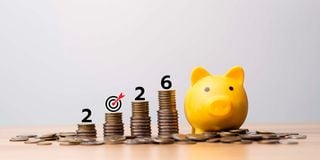
The truth is, investing isn’t just for the wealthy or financially savvy. It’s a journey anyone can begin with the right mindset and knowledge.
The first question to ask yourself is: What’s your risk appetite?
In this article, four investment experts from Absa Bank Kenya and financial expert from @the_acemt Consulting share practical insights to help you start, grow, and protect your investments in 2026.
Understanding The Basics
I’m a beginner. What are my basic investment options in Kenya?
Think of investments on a spectrum from safest to growth-focused. The main categories anyone can access are: money market funds and Treasury bills: “Near cash” options — low risk, high liquidity, great for short-term goals.
Fixed income funds and bonds: You lend money to the government or companies for interest. They offer steadier returns than cash.
Equity Funds (stocks): Buy a piece of a company; high growth potential but also higher volatility.
Balanced Funds: Mix of bonds and stocks for moderate risk and return.
Offshore/dollar Investments: Diversify globally to shield against local economic swings.
Do I need a lot of money to start?
Absolutely not. Many unit trusts let you start with as little as Sh1,000. The goal isn’t to start big — it’s to start early and stay consistent. Time, not timing, builds wealth.
I don't want to lose my money. How do I know how much risk I can actually handle?
Ask yourself five key questions, according to Mwenda Rarama: When do I need the money? (timeline) How fast can I get it out? (liquidity) Can I afford to keep contributing? (affordability)What are the total fees? (costs, taxes) and Who is managing my money? (trust and track record).
Everyone talks about inflation risk. What does it actually mean for my money?
Mercy Gatukui explains, if inflation is 5 percent and your investment earns 4 percent, you’re effectively losing 1percent in purchasing power each year. Your shillings grow in number but shrink in value.
How can I tell if an investment is too risky for me?
Mercy Gatukui suggests a practical rule: risk generally increases with complexity.
Here’s a simple risk ladder (from lowest to highest): Lowest Risk: Money Market Funds (cash-like investments); Low-Moderate Risk: Fixed Income Funds (bonds); Moderate Risk: Balanced Funds (mix of bonds and stocks); High Risk: Equity Funds (stocks); Highest Risk: Specialised/Alternative investments (e.g, cryptocurrencies, private equity).
Always ask for the fund's fact sheet. If you can't understand what it's invested in, ask for a simpler explanation. A good advisor will always provide this.
What should I do before investing?
Determine your goals and timeline — what you’re saving for and when.
Build a safety net — keep emergency cash in a Money Market Fund.
Understand your risk tolerance — know how you’d react if your investment dropped in value.
Where To Begin Safely
I’ve heard I shouldn’t just keep my money in a Money Market Fund (MMFs). Why?
MMFs are great for safety and emergency funds, but returns drop when interest rates fall — making them less suitable for medium-term or long-term goals. Fixed Income Funds usually offer better stability and returns over 3–7 years.
According to financial consultant Rhina Namsia, MMFs rarely beat inflation in the long run. They’re ideal for liquidity and short-term parking, not for wealth-building goals like retirement.
If I need to access my money quickly, which investments are truly liquid?
Liquidity ranking: bank accounts (immediate), MMFs (same/next day), Treasury bills or flexible deposits (may need notice), and listed stocks (liquid but price-dependent), says Rhina Namsia.
What's the difference between investing for retirement versus other goals?
Retirement investing through pension products often comes with tax advantages, and the long time horizon means you can afford to take more risk early on.
For shorter-term goals like buying a car or a house down payment, you'll want to prioritise capital preservation over high returns, says Rhina.
What’s the single most important piece of advice for a new investor?
Start today. Compounding — earning returns on your returns — is the engine of wealth. Delay costs more than risk.
Your action plan: Define your goals, pick a low-fee fund that matches your risk profile, start small, even with Sh1,000, and set up a standing order for monthly contributions.
How do I start practically — where do I go or who do I talk to?
Fiona Lukalo suggests: Visit any major bank branch and ask for the investment desk; contact the head office wealth team for complex needs; start online — most fund managers have downloadable application forms or digital sign-up options.
Land is a popular investment among Kenyans. Is it really a good choice—and what are the alternatives?
Mwenda Rarama notes that while land remains a trusted investment, its main weakness is liquidity—you can’t easily sell it when you need cash.
To avoid locking up funds, he recommends one not to rely on one asset class—like land—but to build a diversified portfolio that balances liquidity, income, and long-term growth.
This includes more flexible options such as MMFs for short-term needs, Fixed income funds or bonds for steady income, and equity funds for long-term growth.
Rhina cautions that land has hidden costs, and fraud risks. Alternatives include REITs (Real Estate Investment Trusts) for easier property exposure, rental properties (if you can manage them), bonds for stability, and unit trusts for diversified, hands-off investing.
Diversifying And Growing Wealth
What does “diversification” mean, and why is it like a Matatu?
It’s not putting all your eggs in one basket. Like taking a matatu — if one breaks down, you can hop on another. If one investment underperforms, others keep you moving toward your goal.
Everyone is talking about the stock market. Is it a good time to buy shares?
The Nairobi Securities Exchange is performing well. Instead of “timing” the market, focus on time in the market. For most people, equity funds offer safer diversification than picking individual stocks.
Should I be investing internationally?
International investing provides access to global industries and diversifies risk. Downsides include currency swings and higher fees. A balanced mix of local and global funds works for most investors.
Gold is considered a “safe haven.” Why recommend it when the economic outlook is positive?
Gold adds balance. When stocks zig, gold often zags — reducing overall volatility. Interestingly, gold has rallied over 40 percent this year, showing it can also deliver growth, not just safety.
Practical Smarts: Managing Fees, And Funds Managers
How are my investment earnings taxed?
Published fund returns are gross of tax — meaning tax isn’t yet deducted. A withholding tax on interest (usually 15 percent) applies for taxable investors, while some pension schemes are tax-exempt.
What are the management fees and other costs associated with a Fixed Income Fund?
Expect around 2 percent per year in management fees, usually already deducted from returns. Always ask for full disclosure of entry, exit, and transaction fees before investing.
How much do fees really matter for someone investing small amounts?
A lot. A 1 percent difference in annual fees can reduce your total returns by nearly 30 percent over 20 years. Always compare total costs between providers.
When looking at a fund fact sheet, what three things should I check first?
Asset Allocation: How much is in stocks, bonds, or cash?
Top 10 Holdings: Which specific assets make up the fund?
Performance vs. Benchmark: Is it beating or lagging its index?
How do I actually check if a fund manager is trustworthy?
Look beyond licensing. Check how they performed during tough periods for example Covid-19 or election year like 2022. Reliable managers are transparent and work with separate custodians holding client assets.
To save on costs, is it advisable to cut out the middleman and manage investments myself?
Fund managers do more than place trades, they provide research, diversification, and daily risk management. Rather than cutting them out, build a relationship. Ask questions and learn from their expertise.
According to Rhina, DIY investing saves fees and builds confidence but requires discipline, knowledge, and emotional control. “You gain freedom but also take on all the risk of mistakes.”
How do I avoid investment scams?
Only deal with CMA- or CBK-licensed institutions. Legitimate firms provide fact sheets and transparent returns. Be skeptical of “guaranteed” high returns — if it sounds too good to be true, it probably is.
Expert Panel:
Questions answered by Mwenda Rarama (Chief Investment Officer), Mercy Gatukui (Investment Manager) and Fiona Lukalo (Business Development Officer), Absa Bank Kenya. Contribution also by Financial Consultant and Planner, Rhina Namsia, and Founder @the_acemt Consulting.