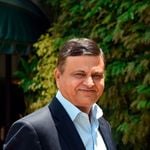
Dipti Mohanty, the managing director of Safal Group in Eastern Africa, prefers to work quietly behind the scenes, making things happen without the spotlight. As the boss overseeing the largest producer of steel roofing, he has five CEOs reporting directly to him.
“The most important thing to unlearn in my position is letting go of control. You will tend to step into the CEO’s shoes, but your job is to guide, not prescribe,” he says.
Beneath his calm exterior is a driven man who has worked around the world, including as senior marketing manager at Valvoline, and country manager at Vega Foods, and regional manager (Western India) for Shell.
Before his current role, Mohanty made his bones leading Safal Group’s operations, first in Uganda, then Tanzania, before taking over as CEO of Mabati Rolling Mills (MRM) in 2022. In 2025, he became the top boss for East Africa, with the region’s CEOs reporting to him while he reported to the Group CEO.
“What I have learned,” he says, “is that authority comes with a lot of responsibility and accountability, but we only want to enjoy the authority. But it’s not about me,” he says, as we settle inside his boardroom at Safal Group in Nairobi’s Parklands. “It should always be about the business and other people.”
What’s the most important business lesson you’ve learned from being CEO for, say, one firm in Kenya, and then now in more than five countries?
To be successful, it’s imperative to understand the business. With authority comes a lot of responsibility and accountability. We tend to enjoy the authority, but don’t take the responsibility and accountability.
It is essential to first understand the various levers. Once you have a deep understanding, you can then orchestrate the entire organisation to take it to higher levels.
Many people think that anyone can be a CEO. However, after interviewing several CEOs, it's clear that this is not the case. So, what is the common trait that most successful CEOs possess?
I'd say it’s the ability to put in the hard work and continuously learn. It is not about entitlement; just because you hold the title of CEO doesn’t mean you deserve to be there without effort.
Likewise, transitioning from, say, a position like finance director or sales director to CEO requires different skills and understanding. Many CEOs struggle because they lack knowledge of the cross-functional elements of the business, which can lead to failure.
Safal Group East Africa Managing Director Dipti Mohanty during an interview at his Nairobi office on September 22, 2025.
Photo credit: Lucy Wanjiru | Nation Media Group
Additionally, a common issue among CEOs is that they do not spend enough time engaging with their customers. When you take the time to connect with your customers, you gain valuable insights into what the business needs. This understanding allows you to adapt and guide your business effectively.
Yet the higher you rise in leadership, the less attuned you are to the people you are serving; how have you closed that loop?
When you start from the bottom, you learn. For example, I started my career as a sales engineer, which meant I went to people, understood their needs and finally, convinced them that our products were the solutions they needed.
As a CEO, you need to understand why the customer and the distributor are important and connect with them by visiting the market and your shop floor.
Most CEOs fail because they take this exercise theoretically. They do it for the optics, to show that 'I’m doing it'. They can use flowery language, intended to impress people, but when it comes to actual delivery, they have a bit of a challenge.
As CEO of CEOs, how has it been different for you?
Difficult. When you’re the CEO of an operating unit, you have the executive authority to handle situations as they unfold. But when you’re a leader of leaders, it’s all about sharing your experience, thoughts, and offering direction. Ultimately, it’s up to the individual to take them.
Most times, because many senior people report to you, they may not appreciate your wisdom. And so, they feel that they know better and do things differently until they find themselves in a situation that is not necessarily right for the business, and you again have to step in and help them take the right direction.
The biggest problem when handling senior people is the mindset. It is difficult to change the mindset of senior people because they feel they’re already successful by doing it in a certain way. So this position is about influence.
But you were once “just” a CEO, in the same position. Were you malleable?
In an operating unit, you have power and authority to execute decisions. However, when transitioning to a head office role, the dynamic changes; people report to you, making it challenging to shift from a position of power to one of influence.
I was fortunate to navigate both roles during my time as the regional marketing manager for Shell in Dubai, where I influenced Shell's marketing strategy across the entire Middle East.
Despite my role, there were still marketing managers in countries like Saudi Arabia, Oman, and Dubai, who were responsible for implementing the initiatives we developed.
In our situation, the CEO of Safal Group does not manage MRM; instead, his focus is on the company's vision and strategic direction. This role differs significantly from operational management, which deals with daily sales, cash flow, profits, and team management.
What did you have to unlearn for this role?
The most important thing to unlearn is the need to control everything. It's easy to slip into the CEO's mindset and become overly prescriptive. However, everyone has their own unique style, and it's essential to recognise that your approach may not be the best for everyone.
There is a big difference between being a player and being a coach; while you may be an excellent player, it doesn't necessarily mean you can be an effective coach.
Often, top players struggle to transition into coaching because they assume everyone should perform like they do, simply because they were great players.
Tell me about a hard decision you had to make as a leader and what it cost you
I had to let some people go because they struggled to manage the business effectively. These are standard business decisions, but they have helped to turned around several companies in our portfolio.
For instance, at Mabati Rolling Mills, we will need to make tough choices regarding personnel and business strategies, which may lead to resistance. I have found that if you ask people to change for its own sake, and they don't see tangible results after a certain period, they are unlikely to change their behavior permanently. If people are naturally resistant to change, how do you influence them to change?
For me, I don’t believe in liking someone just because they are from my hometown or for similar reasons. If a young person is working for me while in college, I will constantly encourage them to study hard.
I had a math teacher and a geography teacher. The math teacher would check to see whether I was studying and if I had submitted my homework, and he was quite strict with us.
In contrast, the geography teacher would only tell us stories, which we enjoyed. However, it was the math teacher who truly taught us valuable life lessons. What we are today is largely because of his tough teaching style.
I prefer to be straightforward; my approach is to always to push people to be more disciplined and to focus on working effectively.
What’s the misconception people have about you?
That I am a difficult person. But when they get to know me, they understand that I always work with the heart. Then they appreciate what I am trying to do.
Does leadership come easily for you?
You make leadership seem more like an art than a science. My leadership style has been shaped both by my father and significantly by my experience in engineering college.
My journey as a leader began to take shape when I was the captain of the cricket team, where I had to make decisions on how the team should play to win matches.
Safal Group East Africa Managing Director Dipti Mohanty during an interview at his Nairobi office on September 22, 2025.
Photo credit: Lucy Wanjiru | Nation Media Group
Through this experience, I learned the value of independence and how to face the world. My father, the first doctor from our village, give back to countless people seeking his medical advice, which has profoundly influenced my approach to leadership.
What do people get wrong about leadership from your perspective?
There are two ways people get it wrong. First, they believe that someone else has to take charge when, in reality, each person needs to step up. This misconception can hold individuals back from becoming effective leaders.
Secondly, there's often a sense of entitlement that people have. It’s important to remember that any role you assume is temporary. When you work, do your colleagues recognise you as an individual? What personal contributions are you making?
What surprised you about this office?
This is a small office, but my office in Athi River has many more employees. In Athi River, it often feels like everyone is working directly under my supervision, whereas here, there are only one or two people. It's crucial to make that mental transition.
Good individuals who do not possess a mindset focused on power tend to adapt more easily. Over time, you evolve into a mentor and a coach; however, many effective CEOs fail to make this transition.
What says more about a person—the house or the roof?
The house. The roof is to show off [chuckles]. If I am selling, then I’ll say the roof, but if I look at a person, I’d say the house, and what is inside the house, because that shows what is inside the person. I wasn’t prepared for that, haha! And the roof should be about 15 percent of the construction budget.
Are you a person who carries regrets?
I could have been a doctor. Or gone to the US like my brother. Going overseas gives you more opportunities so that, say, if you want to become a CEO of Pepsi or Microsoft, or Google, you can.
Here, we have the capabilities, but we don’t have the opportunities. Leaders in those countries just have more opportunities than we do here, and perhaps that could be classified as a regret.
How do you want to be remembered?
As a person who impacted people. I want people to say they positively learned from me. It’s not necessarily promoting a person or giving them a better salary, but because of what they have learned from me that they could get a better salary or have a better life. That is really what you leave behind.
What do you have that others don’t?
I put in the hard work. I understand the business because I look at it properly. I take care of people in a way that they take care of themselves, which means that I tell them to take care of themselves. I teach you a little bit the hard way, but once you have learned, you will be very good. You have to earn the ice cream.