Dr Onyambu’s long road to Nairobi Hospital leadership

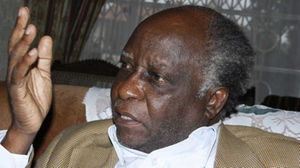
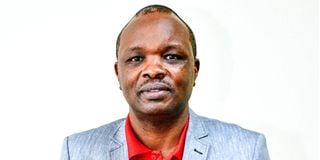
Kenya Hospital Association’s board of management chairman, Dr Barcley Onyambu, during an interview in his office on August 6, 2025.

Photo credit: Francis Nderitu | Nation Media Group

To listen to Dr Barcley Onyambu—to experience the inner workings of his mind—is to be drawn into a kind of cerebral theatre. He speaks with whistle-clean clarity, each thought laid down like a brick on fresh mortar: deliberate, careful, precise. That he is brilliant is not in doubt.

And yet here he is, taking on the chairmanship of the Board of Management at Nairobi Hospital, a place that boardroom wrangles, internal scandals, and administrative infighting have rocked.
With all his intelligence, taking this job feels almost like a kamikaze mission.

He may be walking into the fire, but he has done time in the smoke. His résumé is a map of steady, strategic movement through the corridors of medical governance: advisory roles at AAR, MP Shah, and Aga Khan University Hospital; committee work spanning quality improvement, ICT, insurance, and surgical oversight.

A consultant obstetrician-gynaecologist with over 20 years of experience, Dr Onyambu also serves as Director at Ankh Women’s Clinic, where he champions holistic, patient-centred care, specialising in fertility preservation, high-risk pregnancies, and minimally invasive surgery.

If someone broke into your office, they would not know who you are or what you do. This office decor is very generic, nothing personal either; no photos of family, nothing of you here. Is it intentional?

Absolutely, even my clinic mirrors this. Patients often comment on it. I believe in a clean desk policy: if there’s something on my desk, it means there’s work to be done, and I don’t leave until it’s cleared. That’s my approach—do the work, finish it, move on.

I’m also, by nature, a minimalist. I believe in having only what you need to do the task at hand. No extras. I hate clutter. Even before surgery, I clear my environment. It helps me focus. It’s how my mind works best—outside order reflects inner clarity.

Not too long ago, I interviewed one of this hospital’s CEOs. A week later, they came for him with burning torches, and he was hounded out of office. We’ve all read the Nairobi Hospital headlines; all the public bloodletting. So, why would anyone take this job?

My entry into the governance of Nairobi Hospital was gradual—almost insidious. I started simply as an admitting staff, a young doctor given the privilege to care for my patients there. But I got curious about how the hospital ran—especially around billing and the patient journey. I then joined committees focused on improving that journey, and from there, I kept getting asked to lead small teams.

That work led me into the Medical Advisory Committee, initially as a co-opted member championing that project and also advocating laparoscopic surgery.

That was clinical governance—orderly, disciplined, quiet. Like the military. No drama.

But things changed when I was encouraged by colleagues and members of the Kenya Hospital Association to run for the board. I did, in September 2023, and was elected both as a board member and as a representative of the admitting staff. Now, the board is essentially the management arm of the Kenya Hospital Association—the body that owns Nairobi Hospital.

And being an open association, it inevitably comes with politics. Anytime you have elections, you have lobbying. Some of that leaks to the press and is misread as a scandal.

People want influence, they want representation, and sometimes, they play rough. Unfortunately, that noise can cast the hospital in a negative light.

Did your wife think you were mad?

She wondered why I’d want to wade into what she called murky waters. But she knows me. She knows my resilience and forthrightness. She trusted that if the space became too messy, I wouldn’t let myself be dragged into it. That confidence in my character gave her peace.

My children, who are 23 and 21 now—both finishing college—were excited. To them, it was cool seeing their dad’s name in the papers, even when the coverage wasn’t always flattering. But I’m glad they get to see this.

It’s important for them to watch their father navigate leadership with integrity—to understand that even in a society where doing the right thing is hard, it’s still possible. That’s a lesson worth modelling.

What frame of mind did you take this job with?

That’s really my mindset—that you can be upright, that it’s possible to do the right thing, even in complex environments. Look, Nairobi Hospital, in many ways, reflects our society. It’s owned by an open association—membership is accessible, unlike exclusive clubs with high thresholds. That openness was intentional, but with that inclusivity comes a mirror of the wider society—its strengths and its noise.

The association draws people from all walks of life, and their behaviours, opinions, and politics inevitably surface, especially in governance.

What’s the most challenging thing you've done in your life?

[Chuckles] That’s an interesting question—because every time I think I’ve faced the most challenging task, the next one proves even tougher.

Right now, I’d say leading this organisation is among the most demanding things I’ve ever done. Managing the different stakeholders, working at the board level and trying to balance various interests and personalities is no small feat.

What habits have you adopted to keep your mind or brain astute?

When I think about lifestyle, I break it down into eight elements—but let me focus on just one: nutrition. Nutrition is critical. And I believe we should eat according to the work we do.

If your job is largely mental—like mine, as a doctor, or any desk-based profession—then your diet should support cognitive performance. You can't eat like someone doing heavy manual labour and expect to maintain sharp mental clarity.

You need brain food—salads, nuts, whole grains, and fruits. Foods that fuel intense mental activity. They’re everywhere, and easy to learn about. I’m a vegetarian—mostly. Occasionally, I’ll do fish, but I avoid meat. That’s the kind of diet that supports my mental clarity. That said, if you invite me over and you’re serving nyama choma, I won’t refuse. I’ll enjoy it. But that’s an occasional indulgence—not my daily fuel. I eat whole, plant-based foods, as close as possible to their original source—that’s the kind of food that powers the mind.

Interesting.

There’s one podcast I follow religiously—it’s by Andrew Huberman, a neuroscientist. His podcast has taught me a lot about how to stay mentally and physically active—whether you’re young, middle-aged, or older. He shares the latest discoveries in neuroscience, especially around how to maintain mental sharpness over a lifetime.

And even if you strip it all down to the basics, you’ll find this: humans are wired to eat a certain way. The biggest difference between humans and animals is their brain and their nervous systems.

Because there are animals that can swim, run, and climb faster than we can, but there is no animal that has the cognitive function that the human being has. And that's what gives us superiority.

And it behoves humans to think about it and to enhance it. I mean, if you have an advantage, you enhance the advantage. So yes, we should be intentional about improving brain health.

Diet plays a major role. So does exercise. Water. And of course, avoiding harmful substances—drugs, alcohol, anything that diminishes the body or brain. It’s about honouring what makes us human.

I suppose you don't drink alcohol

No, I don’t. Alcohol has been shown to be harmful to the brain cells.

Are you a Seventh Day Adventist?

[Chuckle] Yes, I am but it’s got nothing to do with Seventh Day. Maybe the background was always there, but now science backs it.

You seem to have pretty good control of your life, but what do you struggle with?

Everything is a struggle, Biko. [Laughs] I may sound confident, even forthright—but the truth is, none of this comes easy. Living a healthy life is a daily fight.

Kenya Hospital Association’s board of management chairman, Dr Barcley Onyambu, during an interview in his office on August 6, 2025.

Photo credit: Francis Nderitu | Nation Media Group

One day you get it right, the next you fall off the rails. Then you pick yourself up again. Same with exercise. Same with leadership. Running a place like this? It’s a daily struggle. You wake up not knowing what the day will throw at you.

You brace for the unexpected. But over time, I’ve learned to find peace in the struggle. To trust that the day will bring what it must—and that whatever it brings, I will meet it. I will overcome it.

How was your childhood?

I grew up in Kisii, in a family of eight. I'm the second-born in that family. My mother was a bank worker, and my father changed jobs here and there, but finally worked with a church organisation at a church bookstore.

They were both loving parents who raised me within a Christian environment. We learned early to share the little we had. I think that (sharing) was very instructive for me growing up in a family of eight.

I went to boarding school at St. Mary’s Mosocho—back then, it was one of the good ones. Catholic-run. The missionaries did a solid job shaping us. They planted something in us—values; Honesty. Sincerity. The sense that others come before self. That stayed with me.

St. Mary’s taught me that there’s a kind of richness in life that goes beyond money. Beyond material things. A deeper fulfillment. Now, much later, I’ve learned there's actually a name for that in economics: The ultimate utility. I’m digressing.

No, go ahead.

…that the real worth of anything lies in how it makes you feel, not just superficially, but in a deeper sense of contentment and peace. Whether it’s a car, a house, or good health, the goal is always the same: to feel whole.

But it matters how you seek that feeling. I’ve chosen a path that chases that deep, fulfilling joy—the dopamine, if you will—through ways that do not harm myself or others. That, to me, is the real pursuit of a meaningful life.

When did you run into medicine on this journey?

[Chuckles] Medicine was a deliberate choice, and it started early—Standard 4, to be exact. I still have a letter I wrote back then saying I wanted to become a doctor. My children read it now and laugh, but I meant it. That desire began when I was frequently battling tonsillitis as a child.

My father would take me to Dr Hezron Manduku [the late] in Kisii, he was close family friend. He treated me with such care, made me feel safe, and eventually resolved the tonsillitis completely. He made you feel seen. He had what we now call excellent bedside manners—and that left a lasting impression on me. I wanted to be that kind of doctor.

You mentioned your dad worked in a bookstore. Did that influence you in any way?

I’m a reader because of my father. He spoke to us through books—about everything, even the things our culture wouldn’t let him say out loud.

When I hit my teens and began to fumble around the edges of my sexuality, he didn’t sit me down for a talk. He simply placed the right book—never handed, just placed—where I’d find it. On the dinner table. On a couch. Among many books, this one always caught your eye.

We’d all sneak peeks, reading shyly in corners, learning things parents weren’t supposed to say. I still remember one: God Invented Sex.

That’s how I learned about relationships. And there was another—You and Your Health, a four-volume set that translated complex medical knowledge into plain family language.

I devoured those books while my siblings ignored them. None of them became doctors. I did. Looking back, I think that’s when the seed was planted. My curiosity bloomed quietly, between pages my father never once told me to read.

You are 55 years old now. What’s the one question that you're asking yourself in this season?

The question that lingers, more than any other, is this: Have I given this life—this one chance—everything I possibly could, given who I am? Have I applied myself fully, or have I been slack in some places?

At 55, I know the bulk of my life is behind me. Even if God were generous with time, I’ve crested the hill. So the question becomes: can I catch up? Not in material things—those have never been the point—but in effort, in excellence, in applying myself wholly to every endeavour I take on.

Whether it’s running this office or being a clinician, have I truly given my best? Where I fell short before, am I learning from it? That question—it won’t leave me. It nudges me to continuously improve. Every day. In every way. Because life is limited. You don’t get another run. And I don’t want to look back and find I still had more to give.

PAYE Tax Calculator

Note: The results are not exact but very close to the actual.