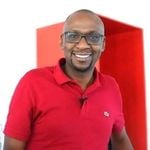
Behind his handsome residence, at the edge of a quiet garden, under his large, elegant gazebo, Ken Njoroge often mulls over the questions that cling to quiet minds. “I generally don’t think that human beings have changed for generations. Instruments have changed, though,” he reflects, before launching into a dense and thoughtful anthropological diagnosis of the world — and what it all means for the ground beneath his feet.
Ken builds companies. First, Three Mice, a web development firm, started with friends. Then his crown jewel — Cellulant— the financial technology company that began as an idea sketched on a serviette.
Cellulant went on to become a pan-African success, offering digital payment solutions in dozens of countries across Africa. In 2021, he burnt out and stepped down soon after. “There is a deep internal solitude you feel when you’re carrying something heavy no one else can fully understand.”
Now, energised, he is onto his new venture: PANI — focused on supporting, coaching and investing in African founders. One of PANI’s flagship initiatives, Komini — a coaching programme built for founders by founders — is designed to help founders “arrive together.”
He recently turned 50—a good age to “sit with the weight and lightness of it all, to look back, and to seek better answers.”
Shall we start from the beginning?
Sure. I grew up in Nakuru, and I don’t like to call it poverty because my childhood was very happy. My mum was a single parent for a large part of our lives.
The way she brought us up and how we were socialised, the idea of poverty wasn’t a concept we understood. There was just not having money. It’s made me believe that poverty is merely a mind-set.
Dreaming costs nothing. You could read second-hand books and explore the world. My mum was very good at finding these books. So, I had access to books, encyclopedias, and it was a rich upbringing in that sense.
We strived for very high standards, through simple things like how you washed your dishes. We lived around people with mud houses, wooden houses, one-roomed houses, and it also made me ask myself, why is life this way? This, and others are the questions I grew up with.
Where was your dad in all this?
My dad was in our lives for a bit, until I was in class five. The marriage didn’t work out. My mum told me this story when I was older. One day, she came to school. I was always top of my class, but my grades started dropping drastically.
The teacher asked her; Is everything okay at home? She says that's the moment she had a wake-up call about being married to my dad. And very shortly thereafter, that ended. He passed on in the early 90s.
Did you reconnect at some point, have any conversation?
Not, not at all…[pause] yeah, not at all.
Who were your father figures that you remember?
My mum’s younger sister lived in Nairobi. Her husband was in the Air Force. During my holidays, I came to spend time with my cousins and then after my high school.
As a military career man, he was all about discipline and all of that. That was a beauty to observe, so much so that my first career choice was actually to join the Air Force.
I dropped out of Nairobi University, where I was studying pharmacy, to pursue computer science, which I had found fascinating while studying computer science at Strathmore.
My other father figure was my first business partner for my first company, Three Mice, Paul Kokubo. I loved Paul. He was a much older guy. I admired what he was doing in the career world. I had a couple more figures over the last 20 years.
Kui’s dad [his father-in-law], who was my customer at Three Mice, became my father figure. He eventually introduced me to Kui. She had just finished high school. I met her once and lost touch for a few years when she was working at the bank. We started dating and eventually got married. Kui’s dad eventually became a chairman at Cellulant.
Would you say entrepreneurship has been kind to you?
Yes, though it’s been a tough journey. First, it gave me confidence. Consider this, you’re a kid from Nakuru—you haven’t seen much, so mentally, you’re built for the grind. You come out of that with this quiet belief that you can do anything you set your mind to.
Entrepreneurship lets you validate that early. You start to realise: wait, I can dream things up, build them, and they can come to life. My path also took me to interesting places, introduced me to amazing people around the world. And I realised—those people in bigger economies? They’re not fundamentally different from me. That’s powerful. It builds resilience.
How would you describe your risk appetite?
Very high. [laughs] I’ve also got a high tolerance for it—and for tough situations too, but like everything, they come with a light and a shadow.
My appetite for risk has let me make bold bets, often with very little information, moves most people wouldn’t make. It’s almost instinctive. I don’t sit down and calculate the risk in a structured way.
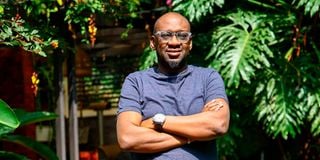
Cellulant Group founder and former CEO, Ken Njoroge, during an interview at his home in Lavington, Nairobi, on July 24, 2025.
Photo credit: Wilfred Nyangaresi | Nation Media Group
I just look at the two percent chance that something might work and ask: If it does, would it matter? Would it be impactful? Then I focus on what needs to happen to make that two percent a reality.
The tricky part is, while I might be built for that way of living, I’m rarely alone in the consequences. You’re pulling others along—your spouse, children, team, and shareholders. And most of them won’t share that same risk tolerance.
That’s the shadow side—you’re often the only one fully seeing or willing to take the risk, yet everyone feels the impact of the outcome.
What risk would you not take again, in hindsight?
That’s always a tough question. Honestly, I wouldn’t change a thing. The decisions that have served me best were all incredibly risky. I did three years at Strathmore, then ended up at the University of Nairobi.
I spent a year and a half in pharmacy school before dropping out—something no one thought was wise. But it completely changed the trajectory of my life. So no regrets there.
Even with personal life—marriage, for instance—Kui and I came from very different family backgrounds. Just choosing to be with her felt like a risk. But again, it’s one of the best decisions I’ve made.
Risk, for me, has been a superpower. I wouldn’t take less of it. What I would do differently, though, is learn to carry people along better—family, partners, teams.
Not everyone is built for risk the way I am, and I think that’s where I’ve had the biggest lessons. Looking ahead, it’s not about avoiding risk—it’s about being better at bringing others with me.
Does your appetite for risk show up in your social life as well?
But where does business end and social life begin? Life is life, right? And generally, how you do one thing is how you do everything. I’m quite conservative socially. I’m an introvert. I’m not the guy you call on a whim to check out a new spot. I tend to go to the same places, order the same things.
If I travel to a new country, I might try something new—but only if I’m with my family. If I’m alone, I’m happy in my hotel room. I go to my meetings, maybe give a talk, connect with one or two people, then I retreat. I read, write, or watch Netflix—even if I’m in the most beautiful city in the world. So yeah, my social life is very quiet, very conservative. But in business? I’m like a Formula One driver.
What have been your three most prominent turning points in life?
The first was switching career paths—from pharmacy and medical sciences to computers. But it wasn’t just a shift into tech; it was the decision to build something in that space. That move completely altered the trajectory of my life.
The second was getting married. That came with an entirely different dynamic— I was no longer living life alone. We had three children in quick succession, and today they’re 21, 19, and 17. Then, not long after, we were given two more children to raise.
So very quickly, I went from being solo to having a life partner and a family of seven. That was a massive shift. Suddenly, I’m not just building for myself—I’m carrying others, and they become witnesses and contributors to my life.
The third was stepping away from Cellulant in late 2021. That was a very difficult transition, not quite on my own timing. It was more on Kui’s timing. After nearly 20 years of being completely immersed in the mission of building an impactful tech company, leaving was disorienting. I went through two years of slowing down, healing, and reflecting.
That phase forced me to ask deep, existential questions: Why did it all matter? What did I learn? What were my expectations, and where was I in relation to them? It became a period of recalibration. Since 2021, it’s been a very reflective journey.
Coaching entrepreneurs during that time has been both meaningful and therapeutic. It’s like marking an exam script—you walk alongside others through their journeys while carrying the weight of your own hindsight and experience. That work kept me mentally engaged and gave my experiences new value.
What’s your maxim on money now?
I think about money quite logically. There’s a baseline, an amount below which life gets hard. If you’re always stressed about bills or school fees, life harasses you.
So first, earn enough to cover life with ease, but beyond that, more money doesn’t make you happier. If you don’t have a clear purpose for it, it can become destructive. That’s where many people get lost chasing more without ever defining what “enough” looks like.
We call it the “enough number.” It’s different for everyone. For some, it’s yachts and multiple homes. For me, one car, one home, that’s enough. I love my house. I don’t crave another one at the Coastal region. After that, money needs direction. Otherwise, it stops being a tool and becomes your master. And money makes a terrible master.
What was your hardest period in life?
Starting a business, especially in the early days of Three Mice and Cellulant was brutal. There was no startup capital. The usual path— have an idea, get funding, go to market — didn’t apply.
We were building from nothing, needing resources we couldn’t afford. So we worked through the deficit for years. All this while raising a big family. When I look at old photos, I see it in my face, the wear, the pressure.
Then came 2019, when we lost people in the Dusit attack. We knew the road would be hard, but not like that. That kind of loss wasn’t part of the story, and we were right in the middle of it.
Leaving the company was another deep cut, jumping off when neither I nor the business felt ready. All our energy, wealth, identity wrapped in one thing. Walking away from that was painful. Those were moments of deep aloneness. Not loneliness, just alone. Even with people around, you carry something no one else can fully understand.
What’s the one thing you wish you could forgive yourself for?
Actually, I’ve spent the last few years forgiving myself, so maybe the better question is: what have I already forgiven myself for?
By nature, I tend to see the glass as half empty. So when I looked back on my journey at Cellulant, I saw it mostly through the lens of mistakes, things I could have done better, decisions I got wrong. And I didn’t just reflect on them casually. I meticulously costed them. Literally. I’m even writing about them, maybe a chapter in a book—called $9.6 Billion Worth of Lessons. Ten big mistakes. All carefully quantified.
This process started in therapy—my first time seeing a therapist, and honestly, my first real appreciation of what therapy could offer.
During that period of healing, my therapist told me something that stuck: You can’t heal until you name the things you haven’t forgiven yourself for. That hit home. So I did the work. I named them, one by one. I examined the context, the intention, the cost, and then I forgave myself.
What’s your big question at 50?
In the last chapter of my life, Kui used to joke that Cellulant was either my firstborn child or, in some settings, my co-wife. I poured everything into that mission.
Cellulant Group founder and former CEO, Ken Njoroge, during an interview at his home in Lavington, Nairobi, on July 24, 2025.
Photo credit: Wilfred Nyangaresi | Nation Media Group
But now, with our children almost out of the nest and growing independent, I’m very clear: in this season, Kui is the priority. No co-wife. No firstborn company. Just her.
But here’s the tension: work brings me deep joy. And I don’t know how to do work in any way that’s not about large-scale impact. So the question I sit with now is: How do these two things coexist? Can I serve both masters; my commitment to impact and my commitment to Kui—with equal integrity? That’s my big question at 50.
Your son is 20 now. What do you fear for him?
My greatest fear is whether he’ll find the right balance between chasing his big ambitions, and staying grounded in the values we hold dear as a family.
We’ve talked a lot about those values: a deep love for the continent, a fear of God, and being a good human being to others. He wants to build wealth, and that drive is strong. But in the grind to achieve that, I hope these core values don’t get lost—that they become just as important to him as they’ve been to us. That’s my greatest fear, that in his pursuit, he doesn’t lose what truly matters.
What frustrates your wife most when it comes to you?
I think it’s that I default to thinking long-term about everything. Money, decisions, life. I naturally sacrifice short-term comfort for long-term gain.
We’ve been married 20, 21 years—and I’m still thinking long-term. So her frustration is: Haven’t we sacrificed enough already? Can we now enjoy some of what we’ve built? It’s counterintuitive for me. Honestly, I’m like a child learning how to think in the short-term. And I think that’s what frustrates her the most.
What do you believe about the world now?
The world is a deeply confusing place. And truthfully, I don’t believe people have changed much over the generations. We like to say we’re more civilised now, but I’m not sure that’s true.
The tools have changed, violence may look different, but human nature hasn’t evolved that much. There’s always a cabal of dangerously evil people. I honestly think some are born that way.
Then there’s a large group that is dangerously passive and another, just as large, which is worryingly submissive. These people have simply accepted that this is how life is.
Then there’s a small group that genuinely wants to do good, but it lacks the boldness to shift things. It knows better, but it doesn’t step up in ways that can actually change the world.
So what ends up happening is the bold shape the world, often for the worse, while the good remain quiet, timid, doing small things. And that’s how it’s always been. From the days of Hannibal and Genghis Khan, nothing much has changed.
In which group do you fall in?
I believe I fall into the group that wants to do good, and should be bolder, more courageous. That’s the tribe I belong to.
What’s stopping you?
Nothing, really. That’s what my life has been about: pushing through that fear. I’ve done bold things in my career. I’ve tried to do a lot of good. I hope, one day, it grows into a critical mass enough to actually make a dent in the world. I admire leaders like that. I want to be one of them.