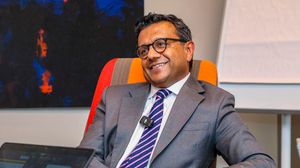
Until recently, the Kenyan working man was mostly seen with a laptop bag or, back in the day, a leather briefcase.
The corporate man then struggled to carry stuff, let alone office lunch. Today, the briefcases have mostly disappeared, and many men walk into offices with lunch boxes complete with a balanced meal of ugali, githeri, sandwiches, or beef stew, fruits and snacks.

Personally, I can think of nothing more depressing than carting the remnants of last night’s dinner into the office, but it does have one obvious advantage.
BDlife spoke to the corporate men who have ditched restaurants for home-packed lunch.
For Malik Mwangi, a 31-year-old information technology specialist based in Nairobi, what began as a frugal decision has slowly evolved into a quiet act of self-discipline, and perhaps even rebellion.
He recalls the first time he walked into his office carrying a container of food from home.
“At first, it felt weird,” he says. “You know, you look around and see all these guys walking in with nothing. No bags, no lunchboxes, nothing. And here I was, with my food in a microwavable container and a small tote bag.”
But he stuck with it. What initially drove him to start carrying his meals was a financial reality that many young professionals can relate to.
“It started as a way to save money,” he says. “I was spending between Sh200 and Sh400 a day on lunch. Compounded with things like transport, by the end of the month, it added up to a serious amount. It just didn’t make sense.”
Beyond saving money, Malik quickly realised other benefits. Eating food he had cooked himself gave him a sense of control over what he was eating, over how much he spent, and even over his energy levels.
“I noticed I wasn’t getting those afternoon crashes anymore,” he explains.
“When you eat a heavy, oily lunch from the kibanda or some random fast food joint, you spend the rest of the day sluggish. But when I eat what I packed — something lighter, balanced — I’m more productive. I stay sharp.”
Malik isn’t alone. At first, some of his male colleagues were skeptical, even amused about carrying packed lunch. “They’d tease me,” he says with a laugh. “Things like, Umeolewa? [Are you married] or Na ni nani anakupikia? [And who is cooking for you?] But I just ignored it.
Now they ask me for tips. Some even bring their own food. It’s like the culture is shifting.”
On Sundays, he dedicates a portion of his afternoon to meal-prepping for the week — portioning out rice, vegetables, some grilled chicken or lentils into clean, reusable containers. He packs everything neatly into a small cooler bag, which he brings to work daily.
“It’s become part of my routine,” he says. “Like brushing my teeth. It gives me structure.”
For him, this seemingly small change reflects a broader generational shift. “Our generation is more conscious — of spending, of health, even of time,” he says. “Carrying food is just one way that’s showing up. It’s not just about lunch. It’s about choosing yourself.”
Malik, who is currently single, says carrying a packed lunch to work has had some unexpected social perks, especially with the women in his office.
“Now office girls from my workplace think that I’m a good fit for them,” he says with a laugh. “They actually talk to me in suggestive ways, and I think this has added me some points.”
He admits that when he first started, bringing a lunchbox felt “too feminine” and awkward. “It looked odd at first. But once you start seeing the benefits, you begin to appreciate everything,” he adds.
Enriched workplace relationships
For Mwalaghelaghe Nyambu, carrying lunch to the office is a habit that began with a life change. The marketing and consumer insights specialist, who works as a senior research executive at Worldpanel by Numerator, started doing it in the first quarter of 2023—“probably January or February thereabouts,” he recalls.
It was just after he married his wife. “Previously, I don’t remember ever carrying lunch to work,” he says.
“That changed after marriage. Now, on most days, what’s in my lunchbox is simply what we cooked the previous night—rice in one form or another, maybe pilau, Mandi rice, rice and beans, or rice and stew. Other times it’s chapati and beans. Rarely ugali—we don’t really cook it often anyway.”
He has never felt awkward about it, nor judged by colleagues. If anything, he finds it makes life easier. “It sorts me out,” he says. “It’s affordable, and I think it’s great.”
The only time it ever drew comment was in the first days after his marriage was announced to the office.
Mwalaghelaghe Nyambu, a senior research executive at Worldpanel by Numerator, carries home-cooked meals to work daily, a habit he picked up after marrying in early 2023.
Photo credit: Pool
“An email went out congratulating me, and one colleague replied with, ‘cheers to packed lunch now.’ The next day I carried my lunch, and someone took a picture. It was all in good humour, nothing awkward or judgmental.”
For him, the practice is both a financial and a health decision.
“Spending-wise, you’re using food that’s already been cooked and is part of your monthly budget,” he explains. “Health-wise, you’re sure of what you’re eating when it comes from home. At hotels or vibanda, you don’t know the cooking process or the ingredients. I’d rather be certain.”
When he doesn’t have food prepared, he joins his colleagues in one of their usual lunch spots. “There’s a place for ugali and samaki that we like to go to, and if we’re broke, chapati dondo is my go-to,” he says. “But if dinner was cooked the night before, I’ll carry my portion without thinking twice. It’s just normal for me.”
He’s aware of the stereotypes. “People will often assume that if a man carries lunch, he’s married, and his wife packed it,” he says. “It’s rare to see a bachelor do it. I have a colleague who only brings lunch when his wife is at home.”
His own decision, he admits, was influenced by his wife, since they often cook enough to leave leftovers. “Marriage had a lot to do with it. We cook, and I carry mine. It’s that simple.”
Nyambu believes the habit has enriched his workplace relationships.
“In my team of eight, there are four of us who bring lunch from home, and we always eat together. It’s become a daily bonding time—we talk, we sometimes discuss work, but mostly it’s a chance to connect outside our tasks. If more men did this, I think it would challenge the stereotype that only women carry lunch and also encourage better financial decision-making.”
Mix of the practical
Elsewhere, for Emmanuel Kiptoo, 30, a communications practitioner working in an international PR agency, carrying lunch to the office is a habit that began in 2023. The decision was born out of necessity rather than trend.
“We used to work in Parklands, and there was no affordable joint where one could have a nice and affordable combination,” he recalls.
“That’s when I started carrying packed food to the office, and since then I haven’t stopped.”
On a typical day, his lunchbox is a mix of the practical and the comforting: rice with minji, a chapati or two, maybe some doughnuts or mandazi tucked in alongside. Everything is cooked at home, packed neatly in a lunchbox, and then placed inside his backpack before he leaves for work. “It’s easy,” he says. “Even when I use public transport, I just enclose the food in the lunchbox, put it in my bag, and that’s it.”
The benefits, in his view, go beyond convenience. Bringing lunch has changed how he thinks about both health and spending. “It allows me to carry a variety of menus, so I can choose what I want after getting it cooked at home,” he says.
Emmanuel Kiptoo, a communications practitioner in Nairobi, began carrying packed lunch to the office in 2023 to cut costs and control his diet, a habit he now considers permanent.
Photo credit: Pool
“And it reduces spending—on a daily basis, I save at least Sh400. If you calculate that over a month, that’s about Sh8,000 I would otherwise spend on a lean menu if I bought lunch every day.”
His colleagues have noticed the habit, and their reactions have been mostly light-hearted. “One of them once joked that my better half is doing a good job by ensuring I get the best food,” he says with a laugh.
Emmanuel believes there’s still a social bias in how men and women are perceived when it comes to bringing food from home. “Men are judged differently,” he says.
“Some people question why a man is depicting what they see as female behaviours, like carrying packed food or even carrying an umbrella. They tie those things together and label them as feminine.”
If more men embraced packed lunches, Kiptoo believes it would go beyond individual savings. “It would change how we view carrying packed food and allow people to accept that men do it too,” he says.
His lunchbox is never a token
Jared Omache, 35, a psychologist, has been carrying packed meals since his campus days, a habit he’s never dropped. His lunchbox is usually heavy: ugali with mboga or meat, sometimes githeri, always with a side of fruit. A hot-and-cold mug completes the kit, filled daily with milk, tea, or even porridge.
“When I got into working, I never dropped the habit because it was working for me,” he explains. “From campus until now, I’ve been doing it, and I’ll keep doing it.”
His lunchbox is never a token snack. It’s a proper, heavy meal. Fruits are a non-negotiable extra. “Fruits are a must,” he says. Alongside the food, he always carries a hot-cold mug filled with milk; fresh, tea, or even porridge on some mornings.
The ritual has not been without its awkward moments. Omache recalls episodes when colleagues cracked jokes, often suggesting a wife must be the one packing his meals.
“Sometimes you try to tell them, even a man can take care of himself. You don’t necessarily need a wife to do it for you,” he says. Other times, people assume bringing lunch means you can’t afford to buy food.
“What they don’t know is sometimes I’m carrying something way more expensive than what they buy. If I’ve done some liver or a really nice meal for myself, it’s way beyond the average lunch cost.”
Jared Omache, a psychologist, has carried packed meals since campus, a habit he says keeps him healthy and in control of his diet.
Photo credit: Pool
The jokes haven’t stopped entirely, colleagues still toss around light-hearted comments about women “forcing” men to carry lunch, but Omache meets them with humour. “Even men are human beings. Men can take care of themselves,” he says.
Omache has an easy system for packing: separate dishes for ugali, greens and meat, another for fruits, and the trusty mug for his milk or porridge. He drives to work, so carrying everything is no hassle. Even back in campus, using public transport, he managed fine — “like someone going to work with two bags.”
For him, the habit is deeply tied to health. He’s in control of what he eats, avoiding the guesswork of restaurants. “I’m highly allergic to eggs,” he says, “and many restaurants mix eggs into dishes or veggies. By the time I take it, I get a bad reaction. So to control that, I make sure I’m carrying my own food most of the time.”
His packed meals have also changed how colleagues see him. At first, the teasing was common, but now they’re more likely to hover around his desk when they smell githeri or spot fresh fruit.
“Some of them even ask for a spoon,” he chuckles.
On days he doesn’t pack, he admits he feels bad — the time lost going out to find food, the risk of a stomach upset, the uncertainty about how meals were prepared. He often keeps snacks in the office as a backup to avoid resorting to restaurant lunches.
The jokes haven’t stopped entirely, colleagues still toss around light-hearted comments about women “forcing” men to carry lunch, but Omache meets them with humour. “Even men are human beings. Men can take care of themselves,” he says.
He admits men are sometimes judged differently from women in this regard, but insists it’s ultimately about personal choice and health responsibility.
He believes if more men brought their own food, office culture could change. “We’d be more conscious about our health. Look at the ladies, many won’t miss a bottle of water with chia seeds or some herbs. They’ll tell you it’s medicinal. Men can do the same, controlling what we eat instead of consuming anything just because it’s available.”
For Omache, the habit is here to stay. “Health is a personal responsibility,” he says. “Most of our health comes down to what we consume. If we want to stay healthy for the long term, we must know how our meals are prepared, and the best way is to prepare them ourselves.
When Jacob Kahome, 36, first joined the corporate world, lunch hour was not the highlight of his day; it was something he quietly dreaded.
“Food in town was too expensive,” he recalls. “Even at the food courts nearby, prices were high. And I’m quite health-conscious, so seeing my food swimming in oil didn’t help my appetite, or my post-meal energy levels.”
That combination — costly meals and less-than-healthy options — pushed Kahome to start carrying his own packed food to work. What began as a personal experiment has now become a firmly embedded habit.
At first, he admits, the thought of planning meals ahead felt like a chore. “You have to think about groceries for the week, then spend hours cooking,” he says. “But after a month of consistently packing my own lunch, the benefits became clear; for my wallet, my health, and even my mood.”
For Kahome, the savings are hard to ignore. “A simple meal in town can burn a Sh600-sized hole in your pocket and still not keep you full till the end of the day. That same amount can buy groceries that last you twice as long.”
But it’s not just about the cost. Packing his own meals gives him control over what goes into his body. “When you know exactly what’s in your food, it’s easier to balance your diet and avoid guilt,” he says. “I portion my meals so they fit my lifestyle — which, like many office workers, is mostly sedentary.”
Since routinely bringing his own food, Kahome no longer feels the persistent pain in the back of his neck that used to trouble him because of constantly spending too much time on his laptop. “For breakfast, I usually bring salad, boiled food, and sometimes fried food. For lunch, there’s rice and home-cooked meals,” he says.
There’s also a sense of pride that comes with the routine. “Packing your own meal feels like the embodiment of adulting,” Kahome laughs.
“You’re taking charge of your nutrition, cooking, cleaning, and saving money. In a chaotic workplace, your lunchbox becomes that one constant.”
Kahome is also pleased because carrying lunch has also strengthened his bond with colleagues at the office who do the same. Beyond saving money, he says the process of preparing meals brings him inner peace.
"Cooking at night after work relieves my mind from office matters. I feel that when I cook at home, it means I've truly come home. My mind is distracted from things like planning presentations and meeting clients. If I just sit idle after work, I sometimes still dwell on those things," Kahome said.
And then there’s the joy factor. “It’s as simple as food makes me happy,” he says. “Opening my lunchbox to find a perfectly poached egg or fresh avocado — it just lifts my mood.”
For him, the lunchbox is part of a carefully considered system. He doesn’t just toss random leftovers into a container; he’s refined a routine that balances convenience, nutrition, and variety.
“My strategy is to try to have all of these things working for me. I’m not above bringing leftover ugali, beef stew, or githeri; things that are easy to reheat. I do resort to the grab-and-go style of fruits like bananas or oranges at least once a week. And I often try (I really do) to pack a few components separately and then ready them for microwaving at lunchtime.”
Kahome says eating out daily not only drained his wallet, it left him unsatisfied and sometimes sluggish.
“In most vibandas in Nairobi, you either get tiny portions that don’t keep you full, or you get meals so oily that you need a nap after. I realised I was paying for food that didn’t work for my body, so I decided to take charge.”
Kahome, who describes himself as an introvert, has also found that carrying lunch buys him something rare in the workday; quiet time. “Sometimes, I just want to walk alone during lunch and recharge. Having my own food makes that possible.”
A few years ago, he admits, carrying a lunchbox to work felt awkward for men. That changed when stylish man-bags became more common in Nairobi offices.
“Before, you’d see guys trying to stuff a lunchbox into a laptop bag or carrying it in a supermarket branded paper bag — it just looked off. These days, with a good sling bag or satchel, you can carry your lunch, laptop, and notebook without feeling like you’re doing something strange.”
Kahome believes style has played a role in making lunch-carrying more acceptable for men.
“Fashion has helped. A nice leather crossbody or a branded tote makes it look intentional, not like you’re just dragging food from home because you have no choice. Now it’s a lifestyle choice, and one that’s catching on.”
Still, he’s not militant about it. “Some days, I’ll join colleagues for a meal out. But even carrying lunch once or twice a week changes how you feel, and how much you spend.”