60,000 share accounts switched off in clean-up as inactive ones hit 1.54 million

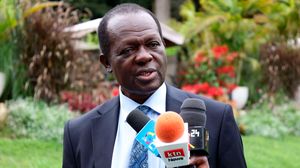
Mumo Mutisya, Central Depository and Settlement Corporation (CDSC) general manager for strategy, commercial and technology.

Photo credit: Pool

The Central Depository and Settlement Corporation (CDSC) deactivated 60,000 share accounts held by investors on the Nairobi Securities Exchange (NSE) last year.

The move, it said, is part of a clean-up exercise for stock brokerage firms that have ceased operations as the number of inactive share accounts grew by 28 percent to 1.54 million between 2022 and 2024.

CDSC, which provides automated clearing, delivery and settlement of NSE transactions, says the deactivation is largely driven by clients transferring from brokers who had ceased operations, with a total of 60,000 accounts switched off in the last three years.

The move saw the total number of share accounts fall from 1.64 million in 2022 to 1.58 million in 2024.

“Yes, we did deactivate some accounts largely driven by clients transferring from brokers who had ceased operations. It’s an ongoing clean-up process," Mumo Mutisya, the CDSC’s general manager, strategy, commercial and technology, told the Business Daily. “Most of the deactivations were done in 2022/2023. There’s no set target per year etc. It’s driven by investors as they take action and move their shares to other brokers.”

The CDSC previously froze accounts that had been inactive for over two years barring them from trading or receiving dividends unless the owners applied for reactivation.

However in the fourth quarter (October-December) of the year 2022, the corporation lifted the ‘dormancy’ on all affected accounts and revised the requisite rules and procedures resulting in 81,890 accounts participating in trading between January 2022 and December 2023. The CDS Account Dormancy was first introduced in March 2019 as a fraud prevention mechanism to protect investor assets.

An account was marked dormant to prevent any activity on the account if there was no recorded transaction for a continuous period of 24 months.

However, following enhancements to technology, processes, controls, and surveillance of the central depository system (CDS), it was no longer necessary to mark accounts as dormant. In 2022, the NSE and CDSC started encouraging individual investors to either buy, sell or lend their securities to keep their accounts active.

Amongst clients whose accounts were switched off included those which belonged to the South African-based African Alliance Group that shut down its brokerage business in Kenya in 2020, opting to focus on asset management and treasury business.

“Investors moved their assets to other brokers and their accounts under African Alliance were closed over time,” said Mr Mutisya.

Fresh data from CDSC also shows that a majority of share accounts on the Nairobi bourse are not actively trading, with the number of inactive share accounts growing by 28 percent to 1.54 million in three years over the three years.

This reflects a trend where investors are largely keeping shares for corporate dividends amid reduced financial headroom to make additional investments in equities.

The share of inactive share accounts (formerly referred to as dormant accounts) grew to 97.5 percent in 2024 from 97.15 percent and 97.4 percent in 2022 and 2023 respectively.

The CDSC is seeking to grow the share of active accounts to total share accounts to above three percent this year.

Only 40,300 and 39,500 share accounts were actively trading in 2023 and 2024 respectively.

Usually, inactive shares reduce equity trading activities on the Nairobi bourse which in turn denies the exchange, CDSC and brokers revenues in terms of trading commissions and levies.

Several reasons have been fronted to explain the absence of trading on share accounts including reduced participation of retail investors who were drawn to the market during the initial public offering (IPO) boom of the 2000s, particularly the KenGen and Safaricom IPO.

Others are the absence of significant new listings on the NSE and prolonged periods of market downturn which usually discourage investor participation in the market. The Nairobi bourse is still below the peak seen at the height of the last bull market which ended in early 2015.

PAYE Tax Calculator

Note: The results are not exact but very close to the actual.