CBK eyes Sh20bn in bond switch as investors urged to extend date of maturity

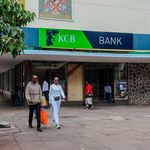
The Central Bank Of Kenya.

Photo credit: File | Nation

The government has opened the first switch bond transaction for the fiscal year, seeking to roll over the maturity of a 10-year bond of Sh103.4 billion into a 15-year paper.

The bond prospectus published by the Central Bank of Kenya (CBK) on Tuesday shows that the Treasury is asking holders of the 10-year paper, due to mature in August next year, to move their funds into a reopened 15-year bond issued in April 2022.

The government’s fiscal agent is targeting a rollover of Sh20 billion in the bond switch, with investors being asked to effectively lengthen their exposure from six months to 11.3 years.

This is aimed at helping the government avoid short term debt refinancing pressure amid lagging revenue performance and high recurrent budget costs.

The 15-year bond pays a coupon of 13.94 per cent and has an outstanding value of Sh129.2 billion. It was most recently reopened for sale last month, raising Sh33.35 billion from bids of Sh57.58 billion.

The destination bond’s coupon is however lower than the 15.04 per cent interest that the maturing 10-year paper has been paying, but investors are likely to favour the switch given the falling interest rates that have seen the 10-year yields in the secondary market fall to 12 per cent from about 15 per cent a year ago.

“Participation in the auction is on a voluntary basis, and investors may opt to switch part or the entire holding (face value) in the bond,” said the CBK in the prospectus.

“Investors with outstanding pledges need to cancel them five days before the switch value date to be eligible to participate in the switch auction.”

A switch bond issuance involves the direct conversion of maturing Treasury bills and bonds into a longer term security, cushioning the exchequer from a liquidity crisis.

Domestic debt maturities are usually funded by rolling over the debt via new bond issuances, and rarely through repayments from tax collections since the government is already running a budget deficit.

Refinancing the debt through ordinary bond sales however means that rollovers can affect the government’s ability to make new borrowing for budgetary purposes, especially when these bonds are under-subscribed.

Swapping a bond therefore helps avoid the competition for funds between maturities and new borrowing.

The National Treasury’s 2025-2026 annual borrowing plan indicates that the government intended to issue six switch bonds between September and June next year, targeting total maturities of Sh555.5 billion.

The first of these bonds was a Sh76.5 billion, three-year paper that is due to mature in May next year.

However, the government instead opted to do a partial buyback of Sh20 billion on the paper last month, reducing its outstanding value to Sh56 billion.

The other bonds targeted for switching include a five-year bond maturing in November next year (Sh66.1 billion), a three-year bond maturing in January 2027 (Sh91.6 billion) and a 15-year paper that is exopected to mature in September 2027 (Sh144.5 billion).

Switch bonds are however a relatively recent liability management tool for the government.

The National Treasury brought its first such bond in June 2020, offering investors a six-year infrastructure paper in exchange for a maturing one-year Treasury bill. This netted Sh20.2 billion out of a target of Sh25.6 billion.

The second switch bond was sold in December 2022, seeking Sh87.8 billion via a six-year infrastructure bond, targeting holders of maturing Treasury bills worth Sh31.96 billion and a maturing two-year bond which had an outstanding amount of Sh55.85 billion.

This bond raised Sh47.8 billion, with holders of the two-year bond accounting for the bulk of the switch at Sh39 billion.

PAYE Tax Calculator

Note: The results are not exact but very close to the actual.