Kenya does not believe that securitised arrears should form part of its public debt stock, marking a major point of difference in ongoing discussions for a new programme funded by the International Monetary Fund (IMF).
Treasury Cabinet Secretary John Mbadi says the government’s position is that securitised debt should not be part of the sovereign’s liability as the buck of responsibility is passed to a special purpose vehicle, which owns the arrears on the State’s behalf.
The difference of opinion between Kenya and the IMF comes as Kenya securitises part of the collections from the Road Maintenance Levy Fund to pay investors who buy bonds, which will be issued by the Kenya Roads Board (KRB) for sector pending bills.
Kenya has previously indicated that it would also securitise other pending bills as a cure to the runaway arrears, as it struggles to pay the bills through tax revenues.
“The issue of securitisation is not that the IMF thinks it’s the wrong idea. They are supporting securitisation, saying it is one of the most innovative ways of raising funds,” said Mr Mbadi.
“The concern is an accounting matter on whether we should capture it as a sovereign debt or not. Our position as the government is that once you sell a right to a special purpose vehicle (SPV), then there is no risk to the government at all. The IMF feels that we should treat it as a sovereign debt. Whichever way, we will agree.”
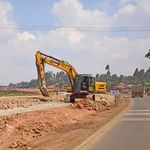
Kenya plans to issue road bonds totalling Sh300 billion, which will be covered by hiving off Sh12 out of every Sh25 per litre of petrol or diesel sold, representing the Road Maintenance Levy Fund.
About Sh7 will be used to pay investors buying into the first tranche of the Sh175 billion bond to cover current pending bills to road contractors.
The balance of Sh5 will cover payments to a second bond estimated at Sh125 billion, which is to foot future bills to contractors.
A special purpose vehicle—Oak Assetco SPV Limited has already been established to hold the securitised portion of the fuel levy.
Special-purpose vehicles are distinct legal entities created to isolate a specific asset, liability or financial risk.
In the case of Kenya, the securitisation of pending bills through the Oak Assetco SPV means that Kenya would no longer be responsible for the arrears.
The Sh175 billion first tranche of the roads bond is expected to be issued this month upon the conclusion of a market sounding process. Proceeds from the bond are expected to first fund a Sh104 billion bridge loan facility from a syndicate of commercial banks, including the Trade and Development Bank, KCB Bank Kenya, Absa Bank Kenya and UBA Kenya Bank.
The KRB has distributed Sh93 billion from the bridge facility as payments to road contractors through its specific agencies, including the Kenya National Highways Authority, the Kenya Rural Roads Authority and the Kenya Urban Roads Authority.
The treatment of securitised debt could determine whether Kenya gets a new funded programme with the IMF, a successor to a previous arrangement terminated prematurely in March.
Kenya has stated that it has managed its expectations on the possibility of new IMF funding, making no budgetary appropriations over the medium term to June 2030.
“You would note that we did not factor in an IMF-funded programme. If it comes, it will be a windfall in a sense in that it will help us reduce some other loans, whether domestic or external,” said Mr Mbadi.
He said several follow-up talks are yet to take place before Kenya can clear a new programme with the fund.