NSE gets a rating upgrade after easing market access

DNNSE2504S

Nairobi Securities Exchange (NSE) trading floor. FILE PHOTO | NMG

Global index provider FTSE Russell has upgraded its market access rating on the Nairobi Securities Exchange (NSE) following the recent move by the bourse to allow investors to trade in multiples of a single share compared to the previous minimum lot of 100 units.

FTSE Russel’s annual review of markets that was carried out in September raised the NSE from ‘Restricted” to ‘Pass’ status on its efficient trading mechanism criterion, reflecting the improved access to the market by investors as a result of the change in minimum lot size.
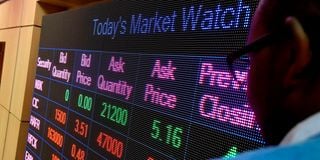
The index provider assesses the quality of markets under a number of criteria which cover regulations, foreign exchange access, dealing, custody and settlement.

The ratings are done on a sliding scale, starting from Pass which signals that the market is meeting the minimum requirements of a particular criterion.

A Restricted rating indicates that a market has partial failure to meet some of the required metrics, while Not Met indicates failure to meet the minimum standards.

In a statement following the review, the NSE said the upgrade will improve the Kenyan market’s standing among global asset allocators, while reinforcing confidence in the country’s capital markets.

“FTSE Russell’s flagship equity indexes are trusted worldwide for portfolio construction, risk analysis, and asset allocation, making this development a strategic win for Kenya’s integration into global investment flows,” said the NSE in its statement last week.

“By enabling trading in single-share multiples, the NSE opens doors for retail investors, making participation more accessible than ever before. The change also drives liquidity, creating deeper, more active markets that benefit all stakeholders.”

Starting August 1, the Nairobi bourse changed its trading rules to allow for trades of shares in multiples of a single unit, while also shutting down its odd lots board that previously handled such small trades since the market’s automation in 2006.

The new rules ended two decades of a two-tier trading board system, collapsing the odd lots and the normal board—which had a minimum trading stipulation of 100 shares— into a single new platform that has no trading size restriction.

The NSE also created a new recovery board which will temporarily host listed firms that are technically insolvent, non-compliant with listing obligations or whose operations are considered prejudicial to the interests of investors.

Trading boards are electronic platforms or systems where shares and other securities such as bonds are traded. Both normal and restricted boards sit across the NSE’s main and SME market segments.

Under the old system that had minimum trading sizes of 100 shares, stocks with high nominal process were often out of reach for retail investors, locking them out of the dividends and capital gains that are usually available on such counters.

Such market access roadblocks did not favour the NSE’s standing with global index providers such as FTSE Russel and the Morgan Stanley Capital International (MSCI), which are keenly watched by foreigners looking to invest in emerging and frontier markets such as Kenya.

Inclusion in the indices is dependent on meeting conditions such as free float liquidity for key stocks, market accessibility for investors and availability and free flow of foreign currency.

The NSE has 10 of its companies included on the FTSE Africa Extended Index, which tracks 239 stocks with a combined market capitalisation of $463.3 billion (Sh60 trillion) in seven African markets.

Kenya has the fourth highest number of firms on this index behind South Africa (120), Egypt (55) and Morocco (37), and is ahead of Tunisia (nine), Côte d'Ivoire (seven) and Tanzania with one company.

The NSE is also represented on the MSCI frontier markets and frontier small cap indices by 14 companies.

The firms on these global indices comprise the largest at the market by valuation, including Safaricom, Equity Group, KCB Group, EABL, Standard Chartered Bank Kenya and Co-operative Bank of Kenya.

PAYE Tax Calculator

Note: The results are not exact but very close to the actual.