Time flies with great content! Renew in to keep enjoying all our premium content.
Prime
Rea Vipingo CEO to earn Sh100m in buyout offer
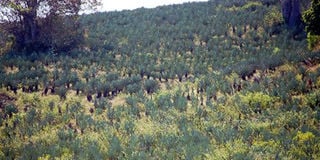
A Rea Vipingo sisal estate in Kilifi county. Rea Trading Company, owned by two British brothers, has offered to take over all the shares of Nairobi Securities Exchange listed operator of sisal farms in Kenya and Tanzania. Photo/FILE
Neil Cuthbert, the chief executive of NSE-listed Rea Vipingo Plantations, is set to earn nearly Sh100 million from sale of his 3.91 per cent stake in the impending takeover of the company.
Mr Cuthbert has slowly grown his shareholding in the company over the past few years from just 1.4 million shares or a 2.29 per cent stake in 2010 to about 3.91 per cent as per the company’s latest annual report dated September 30 last year.
The 2.35 million shares that he owns are valued at about Sh94 million going by the announced takeover price of Sh40 per share, but it is not clear whether his shareholding has changed in the past one year.
“Neil Cuthbert has been managing director since 2000 having previously been group general manager. He has had overall responsibility for the Kenya estates since the formation of the company and has worked for the REA group in Kenya since 1979,” says the company in a statement.
Available data shows that the CEO has not sold his shares since 2004 when he held the same stake of 2.29 per cent for years until 2010, before raising it in 2011 and again in 2012.
Two UK-based brothers, who already hold about 57 per cent of Rea Vipingo, have offered to buy the entire stake of the other shareholders at Sh2.4 billion, meaning that shareholders will be Sh750 million richer if they all take up the offer.
The brothers intend to de-list the sisal-growing company out of the Nairobi Securities Exchange (NSE).
The price of the company’s shares has been fairly low in nominal terms over the years, but has lately risen to Sh27, before its trading was suspended on Thursday following announcement of the planned takeover.
But just as the CEO is set to reap big, several investors who cashed out of the counter too early will miss the boon should the Sh40 per share buyout offer succeed.
Some of the investors listed in the top ten shareholders’ roll who have sold their stock over the past six years include the East African Development Bank, Dyer and Blair Investment Bank and Aly-Khan Satchu, who heads financial advisory and data vending firm Rich Management.
Dyer and Blair, majority owned by billionaire investor Jimnah Mbaru, held a 2.94 per cent stake or 1.762 million shares of Rea Vipingo in 2007, but was no longer listed on the top ten shareholders’ roll by the end of 2009.
If the investment Bank still held all the shares it had in 2007, it would have sold at Sh70.5 million in the new offer.
Dyer and Blair still holds some shares of the agricultural firm.
“Dyer and Blair has not exited Rea Vipingo [completely] and we still hold the shares and had taken a long-term view. On the face of it the offer looks reasonable but we are still looking at the numbers to make a final decision,” said Paul Nyaga, the deputy chief executive.
He, however, declined to confirm how much the company still held, either in its own name or those of nominees.
Mr Satchu’s stake of 811,400 shares (1.35 per cent) held in 2007 would be worth Sh32.5 million. He, however, exited in 2012.
Rea Vipingo owns nearly 70,000 acres of land in Kenya and Tanzania, and has offered minority shareholders a 47 per cent premium on the 90-day average price to sell their stake.
Rea Vipingo is the largest sisal fibre producer in Africa, although it also cultivates horticultural crops and has a spinning factory where it converts sisal fibre into yarns and twines.
Shareholders will get an offer document within the next 75 days after which they will have at least 30 days to accept or reject the offer. The transaction is expected to be completed no later than April 30, 2014, unless the buyers and the regulator agree to delay it.
The group says on its website that it employs more than 3,000 people, most of who are housed on the estates.