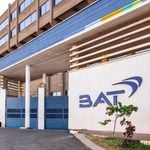
Cigarette manufacturer BAT Kenya has no immediate plans to undertake major capital investments after shutting down its nicotine pouch machinery, a move that has freed up cash and enabled it to pay bumper dividends to shareholders.
The company, which is listed on the Nairobi Securities Exchange (NSE), announced a dividend payout of Sh7 billion to its shareholders, more than the net profit of Sh5.25 billion that it made in the year ended December 31, 2025.

This means that the company will dip into its retained earnings to top up the difference in a policy informed by the lack of major capital commitments in the medium term.
In 2024, BAT also distributed a dividend exceeding its Sh4.48 billion net profit, maintaining high rewards for shareholders including its UK-based parent company BAT Plc which holds a 60 percent stake in the cigarette manufacturer.
Rather than ploughing back the surplus earnings into the business, BAT has opted to redistribute the cash to shareholders, with its managing director Crispin Achola explaining that the firm has excess capacity in its factory to take on any new business.
“So if you look at our retained earnings, we've been sitting on retained earnings of a little bit over Sh6 billion and considering the fact that we can't see any immediate significant investments that we need to do, we have opted to redistribute some of this back to shareholders,” Mr Achola said.
The company closed 2025 with retained earnings of Sh11.86 billion, down from Sh12.07 billion the year before.
Its cash and cash equivalents however grew to Sh6.22 billion from Sh5.39 billion at the beginning of the year. BAT, like other cigarette firms, converts its products into cash at a faster rate than most manufacturers.
Mr Achola noted that over the last six years, the company had been building up a war chest of retained earnings to be deployed in the construction of modern oral nicotine machinery as it sought to pivot from the riskier combustible cigarettes.
However, the company in 2024 sold the plant after it had remained idle for five years due to regulatory headwinds, saying that it would instead rely on imports once it got the nod to bring the pouches back to the market.
The equipment had remained dormant after the government suspended the marketing, sale, and consumption of nicotine pouches, which BAT insists are less harmful compared to cigarettes.
“We felt that it was only fair. Because it's funds that have been generated out of profit that, if we don't have a visible need … we redistribute it back to the shareholders,” said Achola.
Mr Achola, who described BAT as the “dividend king of the NSE” due to the company’s generous redistribution of its profits to shareholders, was quick to clarify that the decision to dip into the retained earnings does not point to a cash crisis.
“Even without having to dip into retained earnings, we had a meaningful profit of Sh7.7 billion and an operating profit growth of 2 percent. So the underlying fundamentals of the business are solid,” said Achola.