Time flies with great content! Renew in to keep enjoying all our premium content.
Prime
Clearing agents lock horns with KRA
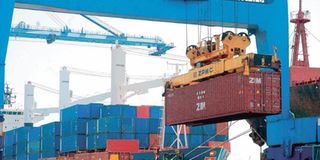
A container is offloaded from a ship at Mombasa port. KRA directed that payments should be paid directly by importers, not their appointed agents.
Clearing and forwarding agents have threatened to boycott paying taxes on behalf of importers if Kenya Revenue Authority (KRA) does not rescind its decision to withdraw passwords from them.
The agents say they cannot access the Simba System 2005 of lodging documents online and are unable to clear imports, presently stuck in the system.
But KRA says there is a new automation project that will allow importers to pay customs duties online instead of relying on agents. The programme, that has been tested, was first implemented in July.
Under the initiative, importers will be required to pay duty directly to KRA in a move likely to drive freight forwarders out of the market.
KRA expects to save importers money and stop possible loss of cash to unscrupulous agents.
“Payment should be made by a banker’s cheque only, and should be paid directly by the importers, not their appointed agents,” read the KRA notice in part.
On July 16 , KRA’s customs services through the Simba System 2005 of paying taxes electronically, warned clearing agents that their passwords would be withdrawn if they did not make payment within seven days after lodging their entries.
Revocation of licenses KRA’s acting Commissioner for Customs Beatrice Memo stated that failure to comply with the directive would result to the revocation of the licenses, but Kifwa protested and asked its members to stop submitting the tax they collected on behalf of KRA.
“The notice is against EAC’s Customs Regulations 2006 and will affect the import and export business,” said Kifwa national chairman Gerald Kagumo.
The threats rekindle conflicts between KRA and the clearing and forwarding agents that begun in October last year when the agents were asked to relocate from the port following automation of cargo clearing operations.
Appointed agents “Already, over 600 clearing and forwarding agents have had their passwords withdrawn for having hanging entries from January without paying taxes to the Customs Department,” said KRA in the notice dated July 16.
A notice published earlier in February, this year the year stated that payment of cheques to KRA should be made direct by the importer (not their appointed custom agent) to designated banks, contrary to the East African Community Customs Management Act 2004.
The Act also stipulates that an importer is allowed to make payment within 21 days or goods will be declared to be under Customs Warehouse and attract rent payable to the commissioner of customs services department.
Automation follows success of the Simba and Camis systems, which have already been interfaced to Kenya Ports Authority’s ( KPA) Kilindini Waterfront Operating System (Kwatos) that also automates all the ports’ cargo handling operations.
Presently, clearing agents pay to the National Bank, which is also linked to the KRA automation system. Kifwa national chairman Gerald Kagumo maintains that the mandate to pay taxes lies with the importer and not the clearing agent.
It is this failure to comply with the KRA directive- requiring importers to pay taxes within 7 days that has led the clearing agents passwords to be withdrawn, KRA says.
But Kifwa insists that withdrawal of their passwords by the taxman was disrupting business as they are unable to serve other importers who pay taxes without delays.
Mr Peter Mambembe, another Kifwa official says the directive is contrary to the East African Community Customs Management Act 2004, which stipulates that cargo which has overstayed at the port for more than 21 days should be gazetted and sold by public auction by Custom officials.
“It is punitive, harsh and without backing by the law,’ he said in a statement to Business Daily.
Instead, Kifwa suggests that KRA’s customs division should block the importers identification pins instead of withdrawing passwords for clearing agents who are acting on behalf of the importers.
At weekly meetings of port users last Friday, it was agreed that customs services department should block the importers pins until full payments were made. “There will be heavy penalties on clearing and forwarding firm who delay in paying duties.
“Importers are providing fake clearing documents thereby leaving customs agents with queries and passwords suspended. Importers should be held accountable for fake documents provided and have their Pin withdrawn to stop them from importing,” said Mr Kagumo.
Unlock a world of exclusive content today!Unlock a world of exclusive content today!