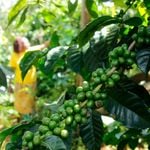
Coffee has overtaken key cotton clothes like men’s suits and shorts to become the country’s leading export to the United States, even as the textile sector reels from the expiry of the African Growth and Opportunity Act (Agoa).
Coffee exports to the world’s largest economy surged by 83.50 percent in the first half of 2025 to Sh5.71 billion, latest data from the Kenya National Bureau of Statistics (KNBS) shows, up from Sh3.1 billion in the same period last year.
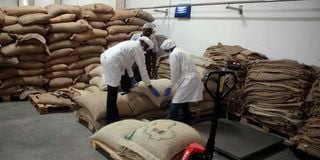
This jump catapulted coffee ahead of cotton trousers and shorts, whose exports fell 2.22 percent to Sh3.16 billion between January and June 2025 from Sh3.23 billion in the same period last year.
Cotton trousers, bib and brace overalls, breeches and shorts — which are sourced from Kenya by top American clothing brands such as H&M, Levi’s, JCPenney and Wrangler— were the single largest export to the US in the first half of 2024.
Besides cotton, Kenya also exports clothes made from synthetic fibres to the US.
The contraction of exports of apparel helped cut Kenya’s exports to the US by double-digit (10.28 percent) in the first half of 2025 to Sh38.50 billion from Sh42.91 billion in the same period last year.
The turnaround marks a reversal of fortunes for the coffee sector that had lost ground to apparel manufacturers under the Agoa deal, which expired on September 30.
The resurgence in coffee export earnings also coincides with renewed efforts by the government and private sector to revitalise the coffee value chain.
Since February 2023, the government has undertaken several reforms in the coffee sector, including placing Nairobi Coffee Exchange (NCE) under the Capital Markets Authority (CMA) and the licensing of brokers to take over roles previously undertaken by marketing agents.
The United States Department of Agriculture (USDA) said earlier in the year that it sees Kenya’s coffee farmers investing more in the application of fertilisers and pest control, buoyed by higher global prices.
“Following a year of high prices, farmers will be able to increase fertiliser application and improve disease and pest control. In addition, coffee plantations will be at the peak of the biennial production cycle that is characteristic of Arabica coffee,” the US agency wrote in a report dated May 15.
The agency added that the trend of uprooting coffee trees for real estate—previously rampant in peri-urban counties such as Kiambu, Thika and Nyeri— has slowed sharply due to stagnation in housing development.
“This is helping to stabilise the area under coffee cultivation,” it said.
Between 2020 and 2024, Kenya’s coffee acreage declined by 6.25 percent, from 112,000 to 105,000 hectares, according to official numbers. But the USDA expects the area under cultivation to grow marginally as the government rolls out a coffee expansion programme targeting both traditional and new growing zones.
The coffee revival has come when apparel exporters are facing steep headwinds following the collapse of Agoa, which had provided duty-free access to US markets for African textile products for more than two decades from 2000.
US President Donald Trump, who returned to the White House in January, has been key to renegotiating past trade deals like duty-and quota-free AGOA, which he insists are “non-reciprocal” and “outdated”, and is instead pushing for reciprocal bilateral trade arrangements.
As part of the Trump administration’s protectionist trade policies, Washington has imposed a baseline 10 percent tariff on Kenyan exports.
The United Nations Conference on Trade and Development (UNCTAD) warned on September 29 that the expiry of the Agoa would hit African economies such as Kenya hard.
“Eligible economies would face a compounded impact. Country-specific and sectoral tariffs would apply on top of most-favoured-nation rates instead of the current preferential treatment,” UNCTAD said.
“This sudden jump in tariffs could disrupt long-standing trade relations and severely disadvantage African exporters, particularly in highly protected sectors like textiles and apparel, where Agoa has so far provided critical market access. For example, Kenya would see its trade-weighted average US tariff nearly triple, jumping from 10 percent to 28 percent.”
Kenya’s textile and apparel industry, one of the top AGOA beneficiary on the continent, earned a record Sh60.57 billion from US exports in 2024, representing a 19.2 percent increase from Sh50.82 billion in 2023.