Kenya’s goat meat exports to the United Arab Emirates (UAE) increased by Sh300.36 million in the first half of 2025 amid President William Ruto’s national livestock vaccination campaign and renewed bilateral trade ties with the Gulf nation.
Kenya’s goat farmers earned Sh5.47 billion between January and June 2025 from sales to the UAE, latest data from the Kenya National Bureau of Statistics (KNBS) shows, representing a rise of 5.8 percent from Sh5.17 billion in a similar period last year.
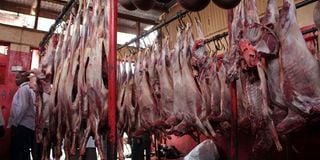
Analysis of official data shows the Emirati country accounts for the bulk of Kenya’s exports of chilled and frozen goat meat to the Gulf region.
The growth came on the back of an aggressive government-led vaccination programme it argued will align Kenya’s livestock health standards with international market requirements with a key focus on the Middle-East.
President Ruto last December launched the programme targeting 85 percent of livestock, a major leap from an estimated 10 percent coverage, to combat foot-and-mouth disease in cattle and peste des petits ruminants — a viral disease which affects sheep and goats.
“We are determined to carry out the vaccination programme for our livestock in an effort to increase prices for our livestock products and meet international market standards,” Dr Ruto said on December 17.
The vaccination programme faced resistance from a section of farmers and opposition leaders who questioned its safety and potential genetic effects on livestock.
Dr Ruto, however, maintained the vaccines were important in helping farmers expand the lucrative meat export markets in the Gulf region.
“We are using vaccines produced locally by Kenyan scientists with knowledge in this field. Leaders who have no understanding of the livestock sector and agriculture should spare us their ignorance,” the President insisted.
The UAE has been one of President Ruto’s most frequently visited destinations since taking office in September 2022. The travels were largely aimed at unlocking trade and investment opportunities for Kenya.
During a January visit, Nairobi and Abu Dhabi signed the Comprehensive Economic Partnership Agreement (CEPA) aimed at liberalising markets, easing export procedures and boosting bilateral trade volumes between the two countries.
The pact is awaiting parliamentary approval.
Kenya has for years targeted Middle East’s economic powerhouse as a major destination for its meat products, fermented tea, fruits and vegetables under its export diversification strategy.
“The government has been trying to align [with deal signed with UAE] because one of the entry barrier for meat, for example, to some of these [livestock] markets is the diseases that it could be having,” Mr Lee Kinyanjui, Trade Cabinet Secretary said during an interview on NTV on May 8.
“So the first thing is to vaccinate, the second thing is to do market awareness and the third is to ensure people commercialise their agriculture.”
The KNBS data shows the gap between exports and imports widened to Sh131.57 billion in the first half of 2025 from Sh98.18 billion in the same period a year ago.
This was after imports, largely petroleum products, climbed 13.33 percent to Sh178.66 billion, while total exports (including re-exports of jet fuel) contracted 20.82 percent to Sh47.09 billion.
The signed bilateral agreement is expected to expand market for expand the market for Kenyan livestock products— alongside avocados, flowers and vegetables— in the UAE.
“They have temperatures of 40 degrees, and so agriculturally, they are down,” Mr Kinyanjui. “We have that advantage — we can grow almost everything. In five hours by flight you are in UAE and in seven days by sea, you are there, which means our products have a ready market.”