The Kenya Agricultural and Livestock Research Organisation (Kalro) has applied for approval to commercialise genetically modified cassava varieties in 18 counties, marking a major step in mass rollout of the crop after years of research.
Kalro has submitted an environmental impact assessment (EIA) report to the National Environment Management Authority (Nema), proposing to move eight varieties of the crop from research and testing in laboratories and controlled field trials to widespread public use.
The 18 counties are Lamu, Kilifi, Kwale, Taita Taveta, Makueni, Kitui, Machakos, Tharaka Nithi, Embu, Nakuru, Baringo, Kakamega, Bungoma, Busia, Vihiga, Kisumu, Migori and Homa Bay.
“The proponent, Kenya Agriculture and Livestock Research Organisation, proposes to commercialise genetically modified cassava in 18 counties across Kenya,” said Nema in the gazette notice.
Commercialisation will enable farmers, seed companies and other stakeholders to buy, plant, sell, and trade cassava as they would any other crop on the market.
If approved, cassava will be the first genetically modified food crop to be commercially cultivated amid divided opinion over the use of genetically modified organisms (GMOs) in the country.
In 2019, the government approved the planting of genetically modified cotton.
GMOs are products of modern biotechnology involving the manipulation of organisms' genetic material through engineering procedures. The National Biosafety Authority (NBA) overseas the transfer, handling and use of GMOs in the country.
In mid-June 2021, NBA approved the application for the environmental release of genetically modified cassava following years of laboratory, greenhouse and confined field trials conducted by Kenyan scientists in Mtwapa, Alupe, Kandara and Nairobi.
The proposed varieties have been engineered to resist cassava mosaic disease (CMD) and cassava brown streak disease (CBSD) — two infections which have devastated cassava yields across East Africa.
These diseases can destroy up to 80 percent of a harvest, threatening food security and incomes for smallholder farmers.
Kalro says the commercialisation aims to help farmers access certified, disease-resistant cassava planting materials, thereby boosting production and improving livelihoods.
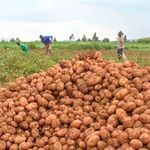
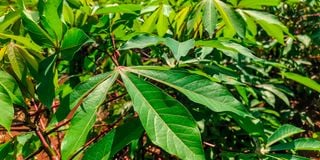
Cassava is a vital crop for millions in Kenya’s semi-arid regions, serving as a drought-tolerant alternative to maize and ensuring food security.
However, its production has been declining over the years, mainly due to CMD and CBSD — a trend that Kalro seeks to reverse.
“All approved varieties have an early maturity period of between 8-12 months, therefore inspiring its adoption by farmers who had shifted to other fast-growing crops,” says Kalro.
Further, Kalro says the genetically modified varieties of cassava have low cyanogenic levels, making them sweet and safer for consumption for those who use cassava leaves as vegetables.
Cassava is a vital crop for millions in Kenya’s semi-arid regions, serving as a drought-tolerant alternative to maize and ensuring food security.
Photo credit: Alex Odhiambo | Nation Media Group
The agency plans to collaborate with agricultural extension officers across counties to disseminate information to farmers on the GM cassava and also use its stations for multiplication and bulking of cultivars.
Nema has now invited members of the public to review and comment on the EIA report within 30 days. The agency will consider all submissions before granting or denying an environmental licence.