High external debt service needs will strain Kenya’s forex reserve buffers if no new concessional inflows are received, global sovereign credit rating firm Moody’s has warned.
Although the country has a five-month import cover, it said, external loans amortisation of around three percent of the Gross Domestic Product (GDP) could lead to a drawdown on reserves or renewed commercial borrowing in the absence of fresh multilateral funding.

Amortisation of loans is a repayment structure that requires regular, equal loan repayments for a set period.
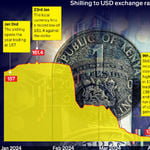
A spot check on the country’s US Dollar reserves trend shows the reserves of the greenback have remained stable since January 2025.
The dollar reserves crossed the 10 billion mark on March 13 and fell below that mark dismally to 9.956 billion just two weeks later on March 27. As of July 17, Kenya’s US dollar reserves stood at $11.185 billion, the Central Bank of Kenya records show.
This stability was occasioned by significant inflows: concessional disbursements from the World Bank and the International Monetary Fund (IMF) in early 2024 and another commercial facility from the Trade Development Bank.
“Despite these positive developments, external debt service needs remain large, averaging about $3.5 billion(Sh452.35 billion) annually in interest and principal payments. This includes a $1 billion(Sh129.24 billion) eurobond maturity in 2028, repayment of a loan to the Export-Import Bank of China, and various syndicated loans,” Moody’s said in a note.
“Meeting these obligations without eroding the central bank's reserve buffer will require continued access to concessional and market-based external financing,” it added.
Under the current 2025/26 national budget, an estimated Sh1.901 trillion will go into debt service, both in principal and interest payments.
Of this, Sh476.402 billion is for external principal debt payments, while the interest payable is Sh228.522 billion for external debt.
Kenya’s subdued revenue performance puts pressure on borrowing, both externally and domestically, to plug budget holes. Increased foreign borrowing would pile pressure on dollar demand and hit forex reserves already threatened by high external debt service needs.
The Kenya Revenue Authority recorded another shortfall in its 2024/25 performance, pointing to borrowing pressure. The taxman missed its collection target by Sh48 billion for the ended financial year to June 30, 2025, hurt by a tough economy that limited disposable income among consumers.
Treasury data shows that tax receipts stood at Sh2.257 trillion for the full year, compared to a revised estimate of Sh2.305 trillion. The realised collections are lower than the original target set at Sh2.745 trillion at the beginning of the fiscal cycle.
Chances of concessional external funding remain shaky amid mixed signals by funders. Already, the World Bank backpedaled on its intentions to fund the country’s budget needs by $750 million (Sh96.93 billion) for Development Policy Operation (DPO), the disbursement of which was delayed from fiscal 2025. The World Bank was faulting the country’s fiscal framework.
DPO is a type of financing provided by the World Bank to support a country's policy and institutional reforms aimed at promoting sustainable development. The DPOs are designed to address a range of challenges, including poverty reduction, economic growth, and improved governance.
“If our current fiscal forecast materializes, we project Kenya's debt-to-GDP ratio would decline by about 0.5 percentage points per year and fall to 64 percent of GDP by the end of fiscal 2029. Although slower than that envisioned by the government, this would reflect the first period of sustained debt reduction in over a decade,” Moody’s explained.