Time flies with great content! Renew in to keep enjoying all our premium content.
Prime
Vast benefits await corporate Kenya in marine reserve
Hopes are high that the UN will grant Kenya’s claim to a portion of the continental shelf, easing the voyage for companies out to explore and exploit resources therein
Kenya has moved to secure a marine reserve rich in natural resources, potentially easing the cost of doing business for extraction companies and saving billions more over time in access rights for infrastructure companies.
Only geopolitics now stand in the way of the UN granting Kenya her claim of an additional 103,320 square kilometres of sea bed off its coastline, a vast region home to plant and water species needed to support the country’s off shore fishing sector, medicinal research, film and adventure tourism.
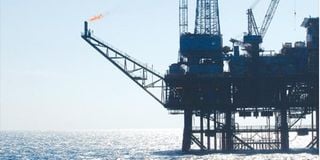
The sea bed is also believed to contain petroleum and natural gas deposits for whose exploration the government is in the process of establishing a sound legislative and regulatory framework.
The area in question extends beyond Kenya’s Exclusive Economic Zone, an area stretching 200 nautical miles from the coastline protected under the UN Convention on the Law of the Sea (UNCLOS).
Kenya staked its claim to the extended zone on May 6, just weeks before the deadline given to coastal states to claim the outer limits of the continental shelf by the end of this month.
Analysts had feared that Kenya was dragging its feet in seizing the initiative, leaving the exploration and exploitation rights to be taken up by the International Sea Bed Authority.
That would have effectively meant the government had blown away chances of cashing in on any fortunes that may arise from deposits situated within these regions, known as the outer continental shelf.
Failure by the state to secure such rights would also leave firms eyeing investments in such zones to navigate tedious and expensive processes to secure permission from ISA to engage in any kind of operations in these locations.
Proclamation of the continental shelf is deemed key to Kenya because it harbours ambitions of striking oil and gas deposits off its coast line.
Analysts say should Kenya strike oil or gas it would immensely benefit from privilege provisions of the Convention which exempts a developing state which is a net importer of a mineral resource produced from its continental shelf from making payment in annual contribution for exploration of non-living resources beyond the 200 nautical mile limit. Kenya being a net importer of oil and gas and qualifies for the exemption.
Energy minister Kiraitu Murungi recently indicated that Kenya was still determined to explore for oil deposits off its coastlines despite past botched attempts.
According to the UN Convention a coastal state would ordinarily make payments or contributions in kind in respect of the exploration of the non-living resources of the continental shelf beyond 2000 nautical miles from the base line from which the breath of the territorial sea is measured.
Kenya is however a net importer of oil and gas and qualifies for the exemption.
It is now emerging that the government had to navigate turbulent tides of its own before gathering confidence to claim the territory which was also being coveted by Tanzania and law less Somalia. Kenya recently held discussions with the two countries on its intended claim of the extra sea bed.
This culminated in Foreign Affairs minister Moses Wetangula signing a memorandum of Understading (MoU) with Somalia Prime Minister Omar Abdirashid Ali Sharmarke on the matter on April 3,2009.
Officials at the Foreign Affairs ministry said Tanzania had also consented to the plans hence the move by the government to forward its submissions to the UN Commission.
“In accordance with the Rules of Procedure of the Commission, a communication is being circulated to all Member States of the United Nations, as well as States Parties to the Convention, in order to make public the executive summary of the submission, including all charts and coordinates contained in that summary,” the UN Commission on the Limit of Continental Shelf said while confirming the claim for extra sea bed by Kenya.
In a bid to save its fortunes and help attract earnings from the targeted zone, Kenya hastily set up a task force in 2008 to speed up attempts of having in place a legal framework delineating her potion of the continental shelf extending up to 350 nautical miles of the coast line.
“We have to proclaim our potion of the outer continental shelf and deposit a submission in accordance with the UN Convention or lose management of it,” said John Kagasi, a joint secretary of the task force in a recent interview with the Business Daily.
Sources said a final report by the task force was concluded early this year and endorsed by the Cabinet before being handed in to the UN Commission on May6, 2009.
Kenya in its submission said its extended continental shelf is composed of the submerged prolongation of the landmass of Kenya extending seaward in a south-easterly trend toward Seychelles in the Western Somali basin and extended into the northern part of the Madagascar basin.
The commission said the consideration of the submission made by Kenya will be included in the provisional agenda of the twenty-fourth session of the Commission to be held in New York from August 10 to September 11, 2009.
Secure rights “Upon completion of the consideration of the submission, the Commission will make recommendations pursuant to Article 76 of the Convention,” it further stated.
Besides oil and gas exploration, Kenya is involved in several telecoms infrastructure projects that will see lengthy stretches of fibre optic cables weave through its sea bed off the coastline- meaning the move to secure rights over the zone would help ease operations for firms engaged in the infrastructure projects.
One of the projects, expected to significantly lower the cost of communication in Kenya, is dubbed “The East Africa Marine Cable (TEAMs)” which entails the passage of submarine cable through the continental shelf which requires uniformity with other States.
A group of private investors are also working on another project dubbed “SEACOM” which seeks to cut through the Indian ocean and link South Africa, Madagascar, Mozambique, Tanzania, Kenya, India and Europe. The cable is expected to be completed in June 2009.
The official claim to the extra sea bed is also expected to boost operations in the country’s EEZ fisheries industry. Lack of a policy framework for managing off shore ventures has hindered development of exploitation and management programmes both within and beyond the EEZ.
The Fisheries Department estimates that close to 15,000 tonnes of fish worth about Sh15 billion goes unexploited annually because of the situation.
Kenya’s Marine fishery is divided into a coastal fishery and an EEZ fishery. The coastal fishery operates within the 12 nautical miles range of the 640 km coastline, and hosts a largely species such as snappers, tuna, crustaceans, such as shrimps and lobsters, and cephalopods including octopus and squids.
The EEZ is currently exploited by distant waters fleet (DWF) from countries such as the EU, Japan, China and Korea under an access fee licensing arrangement with the Department of Fisheries.
Currently the government charges $20,000 per annum for purse-seines, $5000 per month for long liners, $7,000 for 3 months and $12,000 for 12 months. In a bid to address these constraints, the government has proposed to phase out fisheries access licensing, and replace it with favorable Fisheries Partnership Agreements (FPA) with Distant Water Fishing (DWF) nations and fleets.
It argues that this would ensure fair financial compensation for the products harvested within the EEZ; enhance development of the country’s fisheries industry; promote conservation of natural resources and the ecosystem and evolve partnership in value-addition activities and Monitoring, Control and Surveillance (MCS) programs.
Statistics from the Fisheries department show that in 2004 the country licensed 39 long liners and 27 purse-seines collecting about $1.1 million a paltry sum compared with countries which have entered into access agreements.
“The current licensing structure of fishing in Kenyan waters and the licensing regime in the EEZ does not ensure sustainable exploitation of the stocks to adequately benefit the resource owners,” the department said in a recent report titled : “Overview of Kenya Marine Fisheries.”
Unlock a world of exclusive content today!Unlock a world of exclusive content today!