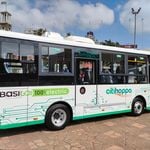
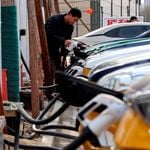
Tuk tuk, the three-wheeled vehicle has garnered admiration for its versatility and efficiency, finding popularity across international markets. In Kenya, its slim profile, combined with its ability to carry substantial loads, has made these vehicles powered by internal combustion engines, an economical choice for various transportation needs.
Safety is a prominent feature; the driver is nestled comfortably within a protective cabin, creating an essential barrier from the surrounding environment and in case of an accident. With a low upfront price, petrol powered tuk tuks have became the go-to option for last-mile delivery services and taxi operations.
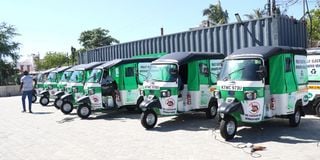
Yet despite these advantages, tuk tuks these three-wheelers create frustrating noise pollution, which frequently contributes to maddening traffic congestion.
Understandably, many hotels in the Coastal city of Mombasa, in response, have taken the step of prohibiting tuk tuks from delivering guests directly to their doorsteps, relegating them to distant drop-off points that force weary travelers to trek to the hotel lobby.
With the recent introduction of electric tuk tuks in the Kenyan market, residents of this vibrant city, and elsewhere in Kenya, don't have to endure the pollution.
The arrival of electric tuk tuks heralds a dynamic solution to these long-standing issues. With their silent operation, they promise a more peaceful urban environment.
Operators can strategically band together, creating organised groups that establish clear pick-up and drop-off points—an approach that will significantly ease road congestion.
They can also monitor each other’s adherence to traffic regulations, fostering a culture of discipline that has proved effective in the boda boda sector in Rwanda. If it has succeeded there, it is entirely feasible to replicate that success in Kenya’s tuk tuk industry.
The public transport sector is overdue for a complete transformation. The chaos that currently reigns is largely driven by intense competition for passengers, intensified further by the meager profit margins many drivers face due to the high operating costs associated with traditional vehicles.
Switching to electric options can ease this financial strain, enabling drivers to focus on building sustainable livelihoods rather than merely scraping by.
To address the often prohibitive upfront costs of electric tuk tuks, e-mobility companies have emerged with innovative battery leasing services, employing a battery-as-a-service model.
This strategy allows these companies to maintain control over the batteries as valuable assets while offering convenient swapping services to customers.
Users benefit from the assurance of reliable, well-maintained batteries, ensuring long-lasting performance as long as they follow proper maintenance protocols. This system creates a mutually beneficial scenario, generating recurring revenue for leasing companies and fostering customer satisfaction.
As the push for decarbonising the transport sector accelerates, the three-wheeler market stands out as a remarkable business opportunity in an evolving landscape. It’s an invitation for stakeholders to seize this moment and shape a more sustainable and efficient future for urban transportation.
Unlock a world of exclusive content today!Unlock a world of exclusive content today!