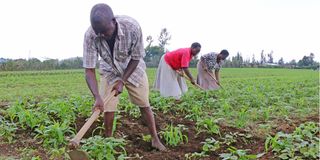
Agriculture plays a significant role in Kenya's economy, with millions of farmers producing staple crops like maize, beans, potatoes, and vegetables.
However, despite our agricultural potential, hunger and food insecurity still affect many households. The question we must ask is, how do we bridge this gap? The answer lies in value addition.
Value addition refers to the process of enhancing the value of raw agricultural products by processing, packaging, or improving them to meet market standards. It transforms crops from basic products into higher-value goods, making them more attractive to consumers and more profitable for farmers.
One of the main causes of hunger in Kenya is the significant amount of food lost after harvest. Poor storage, inadequate processing, and lack of preservation methods mean that a large percentage of crops are wasted.
For example, maize, our staple food, often spoils due to poor storage. By encouraging farmers to mill maize into flour and package it properly, they can extend its shelf life, ensuring more food is available for longer periods. This not only reduces food waste but also ensures that farmers can sell their products at higher prices, leading to improved incomes and more food on their tables.
Raw agricultural products have limited market potential, often fetching low prices due to oversupply and competition. Value-added products, on the other hand, have a much higher demand, both locally and internationally.
Value addition also plays a role in diversifying Kenya’s food basket, by processing crops like cassava, millet, and sorghum into flours, cereals, and snacks. This diversification reduces over-reliance on maize and ensures that communities have access to a wider variety of foods, even during difficult growing seasons.
When more nutritious, processed foods are available, the country’s vulnerability to hunger is reduced, and our food systems become more resilient.
Through simple value addition techniques, for example, a small-scale farmer growing tomatoes can make tomato paste, sauce, or dried tomatoes, which have a longer shelf life and higher market demand. This not only boosts the farmer’s income but also ensures a stable food supply throughout the year.
Lastly, value addition is a key component of creating a sustainable agricultural sector. By focusing on value-added agriculture, we reduce waste, improve productivity, and ensure that farmers can make a living while feeding the nation.
The writer is Director-General, Agriculture and Food Authority (AFA)
Unlock a world of exclusive content today!Unlock a world of exclusive content today!