Planning Principal Secretary Esther Koimett has handed Kenya Airways’ #ticker:KQ Privately Initiated Investment Proposal (PIIP) to Parliament’s Transport, Housing and Public Works Committee, but asked MPs to treat it as a confidential document given the sensitivity of financial proposals contained therein.
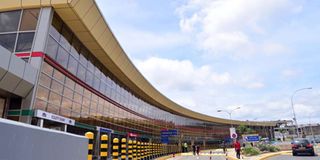
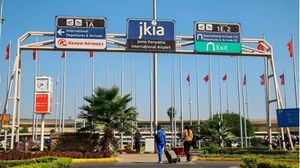
Two Parliamentary Committees are conducting hearings on the proposal to merge operations of Kenya Airways (KQ) and the Jomo Kenyatta International Airport (JKIA), in a transaction aimed at handing the national carrier a financial lifeline.
“Because of confidentiality on financial data, we request the PIIP should be taken under confidentiality arrangement of Parliament. This is sensitive information we don’t want other airlines to get,” Ms Koimett said.
The Public Investments Committee (PIC), a separate Committee of Parliament, last week directed suspension of the proposed transaction, pending conclusion of its ongoing investigations into the proposed deal, which the Kenya Airports Authority managing director Johnny Andersen said the regulator did not initiate.
Mr Andersen, who Tuesday appeared before the Transport Committee alongside Ms Koimett and the Kenya Airways chief executive Sebastian Mikosz, agreed on the need to restructure the country’s aviation sector to reverse the trend where Kenya has been losing aviation market share to its competitors in the region.
Mr Mikosz said the PIIP is one of main steps towards Public Private Partnership (PPP) structure and is aimed at making KQ remain one of the top three airlines in Africa.
“It is obvious for us as an airline that we are losing market share. The Kenyan aviation sector is facing a steady decline characterized by the turbulence experienced by the national carrier, as well as loss of business at JKIA to other competing hubs,” said Mr Mikosz.
He said other players, especially Ethiopian Airlines and Rwanda Air have adjusted faster to the changes due to their governments’ decisions to change the mandate of their aviation sector to become a strategic economic growth instrument in order to grow tourism and draw foreign investments.
“The primary objective of Project Simba is to adapt and copy successfully implemented aviation strategies. KQ will be able to invest in fleet expansion and also secure funding necessary for development of JKIA (Investment in terminals and improvement of runway capacity) while at the same time establishing new profit centres,” Mr Mikosz said.
He said the base case scenario assumes KQ’s growth of at least 23 aircraft and more than 20 new international destinations over the next five years, resulting in increased annual passengers ferried from 4.1 million to 6.9 million.
“The direct effect of capex investments in JKIA is an increase in annual traffic in the Nairobi hub from 7.4 million to 11.3 million by 2022.
“Fundamentally, the joint assets will result in synergies, boosting airline-related revenues, increasing exports of goods and creating 25,000 to 30,000 jobs in the future,” Mr Mikosz said in a brief.
He said KQ had come up with a proposal that government puts all aviation assets together to work in one direction and not opposite so that they don’t compete.
“Mr Mikosz description of aviation sector is correct. We are losing market share to competition. Looking at the sector, we are in support of government policy but the proposal on table could not be the right thing. However we need to do something otherwise we lose market share,” Mr Andersen said.
Ms Koimett said the proposed transaction is at the initial stages and therefore not possible to state its financial structure.
“The PPP Unit at the Treasury will guide the transactions. This is an opportunity for growth for both KAA and KQ that aims to grow JKIA as an aviation hub and enhance its competitiveness,” she said.
Unlock a world of exclusive content today!Unlock a world of exclusive content today!